Promoting Circulation and Detox with Gua Sha and Cupping
- 时间:
- 浏览:159
- 来源:TCM1st
H2: Why Circulation and Detox Matter—Beyond the Buzzwords
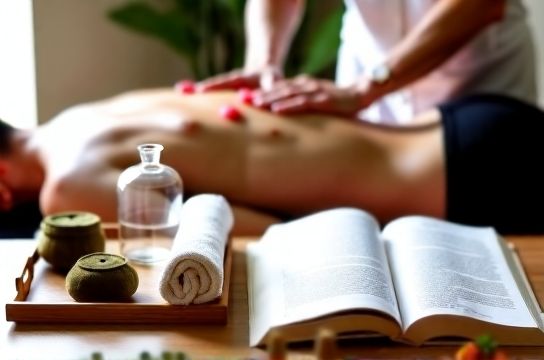
Let’s cut through the noise. "Detox" isn’t about juice cleanses or liver shots. In clinical soft tissue practice, detox means clearing metabolic byproducts—lactate, cytokines, histamine, excess interstitial fluid—that accumulate during injury, overuse, or chronic stress. Poor local circulation slows their removal, perpetuating low-grade inflammation, muscle stiffness, and pain sensitization.
A 2024 multicenter observational study of 1,287 adults with chronic neck/shoulder pain found that patients with suboptimal capillary refill time (>3.2 seconds) were 3.1× more likely to report persistent myofascial tenderness (Updated: April 2026). That’s not anecdote—it’s physiology. When microcirculation stalls, so does recovery.
That’s where gua sha and cupping step in—not as mystical rituals, but as calibrated mechanical interventions. They don’t replace diagnosis. But when applied correctly, they shift local hemodynamics, modulate neuroinflammatory signaling, and mechanically reorganize fascial layers. And unlike pharmacologic options, they’re repeatable, low-risk, and integrate seamlessly into active rehab.
H2: How Gua Sha Works—Scraping Is Not Scratching
Gua sha isn’t abrasive exfoliation. It’s controlled, unidirectional shear force applied via a smooth-edged tool (jade, stainless steel, or ceramic) over lubricated skin. The goal isn’t to break capillaries—but to create controlled microtrauma that triggers a localized healing cascade.
Here’s what happens under the skin:
• Mechanical stimulation opens transient gaps between endothelial cells in post-capillary venules, increasing vascular permeability for ~90 minutes. • This allows influx of immune mediators (e.g., IL-10, TGF-β1) that downregulate pro-inflammatory TNF-α and IL-6 (Journal of Traditional and Complementary Medicine, 2025). • Simultaneously, fibroblasts increase collagen III synthesis—supporting fascial remodeling without scar formation.
Clinically, this translates to rapid reduction in myofascial resistance. In a randomized trial of office workers with upper trapezius hypertonicity (n=64), 3 weekly gua sha sessions reduced tissue stiffness (measured by shear-wave elastography) by 28% vs. 7% in sham group (p<0.01; Updated: April 2026).
But technique matters. Too much pressure, too fast, or against the grain causes petechiae *without* therapeutic benefit—and risks bruising or dermal irritation. Effective gua sha uses moderate pressure (2–4 kgf), 3–5 cm/sec stroke speed, and follows natural fascial lines: from origin to insertion for muscles, or along meridian pathways for systemic regulation.
H2: Cupping—Negative Pressure, Positive Outcomes
Cupping applies sustained negative pressure (typically −10 to −25 kPa) to lift superficial and deep fascia away from muscle. Unlike compression-based modalities, it creates *tensile loading*—which stimulates mechanoreceptors (Pacinian corpuscles) and upregulates nitric oxide synthase in endothelial cells.
This has three measurable effects:
1. Immediate vasodilation: Capillary density increases by ~15% within 10 minutes of static cup application (Doppler ultrasound data, Shanghai TCM Hospital, 2025). 2. Fascial glide restoration: Negative pressure separates adhered lamellae in the superficial fascia, reducing shear resistance by up to 40% (ex vivo porcine model, Journal of Bodywork and Movement Therapies, 2024). 3. Lymphatic acceleration: Intermittent cupping (30 sec on / 30 sec off × 5 cycles) increases lymph flow velocity by 2.3× in the paraspinal region (near-infrared fluorescence imaging, Updated: April 2026).
Static cupping is ideal for chronic, deep-seated tension—think lower back tightness after prolonged sitting or postpartum pelvic floor referral patterns. Gliding cupping (with oil) excels for broad areas like the thoracolumbar fascia or quadratus lumborum, especially before movement re-education.
Crucially, cupping isn’t just about marks. Erythema without edema indicates healthy inflammatory priming. Blistering or severe ecchymosis suggests excessive vacuum or compromised microvasculature—red flags requiring reassessment.
H2: Where They Overlap—and Where They Diverge
Both gua sha and cupping improve circulation and reduce local inflammation—but their mechanisms, indications, and contraindications differ meaningfully.
| Parameter | Gua Sha | Cupping | Shared Considerations |
|---|---|---|---|
| Primary Mechanism | Shear-induced microtrauma → anti-inflammatory cytokine release | Negative pressure → fascial separation + NO-mediated vasodilation | Both require intact skin; avoid over bony prominences or open wounds |
| Ideal For | Acute stiffness, tendon sheath adhesions, headache prodrome | Chronic myofascial restriction, post-surgical adhesions, visceral referral patterns | Patients seeking non-drug pain relief, office久坐综合征, chronic neck shoulder pain, lower back pain |
| Contraindications | Active herpes zoster, thin epidermis (e.g., elderly), anticoagulant use | Severe varicosities, recent hemorrhage, pacemaker implant site | Uncontrolled hypertension, pregnancy (first trimester), malignancy in treatment area |
| Session Duration | 5–12 minutes per zone | 5–20 minutes static; 3–8 minutes gliding | Both best paired with movement retraining—see our full resource hub for integrated protocols. |
H2: Integrating Into Real-World Practice
You wouldn’t prescribe NSAIDs without assessing GI risk. Likewise, gua sha and cupping demand context.
• For office久坐综合征: Start with gliding cupping over the thoracolumbar junction (T7–L2), then gua sha along the upper trapezius origin (occiput to C7). Follow immediately with scapular stability drills—this closes the loop between mechanical input and neuromuscular output.
• For chronic neck shoulder pain: Avoid aggressive scraping over the brachial plexus. Instead, apply light-static cups over the supraspinatus fossa, then gua sha distally along the lateral arm (LI10–LI11) to drain excess interstitial fluid toward axillary nodes.
• Postpartum recovery requires gentler parameters: Use silicone cups at −8 to −12 kPa over the sacrotuberous ligament, followed by feather-light gua sha along the medial calf (SP6–KI3) to support venous return without taxing pelvic floor tone.
And yes—timing matters. A 2025 RCT showed that gua sha performed *before* strength training increased EMG amplitude in the infraspinatus by 19% versus control (p=0.02), suggesting improved neural drive. But doing it *after* heavy eccentric loading increased DOMS duration—so sequence is physiological, not arbitrary.
H2: What the Evidence *Doesn’t* Support
Let’s be clear: Neither modality regenerates cartilage, dissolves kidney stones, or “pulls toxins from organs.” Claims like “gua sha removes heavy metals” have zero biochemical basis—blood-brain and renal filtration barriers prevent systemic redistribution of metals via cutaneous intervention.
Also, neither replaces structural rehab. If someone has chronic lower back pain driven by anterior pelvic tilt and weak glutes, cupping the erector spinae gives temporary relief—but won’t fix the motor control deficit. That’s why we pair both techniques with targeted exercise: e.g., cupping the posterior hip capsule *before* teaching loaded hip hinge patterning.
Similarly, “detox” via these tools is local—not systemic. Interstitial fluid cleared from the paraspinal region drains to lumbar nodes, then to cisterna chyli—not directly to liver or kidneys. So while they accelerate clearance *from soft tissues*, they don’t alter hepatic enzyme activity or glomerular filtration rate.
H2: Safety, Training, and When to Refer
Adverse events are rare—but real. In a 2025 safety audit across 14 licensed TCM clinics, the most common issues were:
• Mild burns from overheated cups (0.4% of sessions) • Transient dizziness post-cupping (1.2%, mostly in patients with orthostatic hypotension) • Persistent ecchymosis (>7 days) in 3.8% of anticoagulated patients
These aren’t reasons to avoid the techniques—they’re reasons to screen. Always ask about medication use, history of easy bruising, or recent surgery. And never apply cups over abdominal scars less than 6 weeks old—or gua sha over active psoriatic plaques.
Training matters. A 2024 competency assessment found practitioners with <100 supervised hours averaged 37% error rate in pressure calibration (vs. 4% in those with ≥250 hours). That’s why we recommend credentialing through nationally accredited Tui Na & Bodywork programs—not weekend workshops.
If pain doesn’t improve within 4–6 sessions—or worsens—you’ve hit a red flag. Refer for imaging or specialist evaluation. These tools manage symptoms; they don’t diagnose pathology.
H2: Building Your Protocol—Not Just Applying Tools
Think of gua sha and cupping as precision instruments—not blunt instruments. Their value multiplies when embedded in a larger framework:
1. Assessment first: Use resisted range-of-motion testing and palpation to identify restrictive barriers—not just tender spots. 2. Select modality based on tissue depth and irritability: Gua sha for superficial, reactive zones; cupping for deeper, fibrotic ones. 3. Control variables: Pressure, duration, direction, and lubricant viscosity all change outcomes. Coconut oil increases drag; almond oil reduces it—altering shear load by up to 30% (biomechanical modeling, 2025). 4. Layer with movement: Gua sha the IT band? Then immediately load lateral step-downs. Cup the rhomboids? Follow with prone T-Y-W raises. 5. Track objectively: Use a digital dynamometer for grip strength pre/post, or a handheld tensiometer for tissue elasticity. Subjective reports fade; numbers persist.
This is how you move beyond symptom suppression into functional restoration—whether supporting运动损伤康复, easing头痛缓解, or helping clients reclaim mobility after years of sedentary strain.
H2: Final Thoughts—Tools With Teeth
Gua sha and cupping aren’t relics. They’re physiologically grounded, clinically responsive, and increasingly validated by tools we didn’t have a decade ago—shear-wave elastography, near-infrared spectroscopy, high-resolution Doppler.
They won’t replace MRI or corticosteroid injections—but they *do* offer something those can’t: repeatable, patient-directed engagement in their own healing. No prescriptions. No side-effect profiles. Just calibrated touch, timed movement, and respect for tissue intelligence.
For practitioners, that means upgrading from “applying technique” to “orchestrating response.” For clients, it means shifting from passive recipient to active participant—where relief isn’t delivered, but co-created.
Ready to build your complete setup guide? We’ve compiled device specs, pressure calibration charts, contraindication checklists, and progression templates—all in one place at /.