Restoring Balance After Childbirth with Chinese Bodywork
- 时间:
- 浏览:122
- 来源:TCM1st
H2: Why Standard Postpartum Care Misses the Body’s Realignment Window
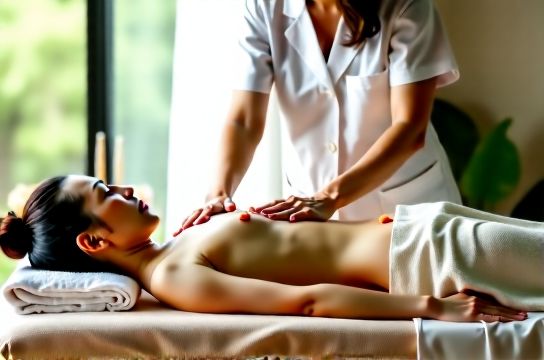
Most new parents get excellent clinical care for birth trauma, lactation, and mental health—but little attention is paid to the *mechanical reality* of what childbirth does to the musculoskeletal and fascial systems. The pelvis rotates, sacroiliac ligaments stretch up to 30%, abdominal fascia thins and separates (diastasis recti occurs in ~60% of vaginal deliveries and ~33% of cesareans), and the thoracolumbar fascia bears sustained tension from carrying, feeding, and sleep-deprived posture (Updated: April 2026). These aren’t just ‘normal’ changes—they’re physiological stressors that, if unaddressed by week 6–12, begin to layer into compensatory patterns: anterior pelvic tilt → lumbar hyperlordosis → chronic lower back pain; upper trapezius dominance → tension headaches and restricted rib mobility → shallow breathing → fatigue amplification.
Western physical therapy often focuses on isolated muscle activation (e.g., transversus abdominis cues) or passive modalities (ultrasound, TENS). That’s helpful—but incomplete. What’s missing is *integrated neuromyofascial re-education*: restoring proprioceptive clarity across the entire kinetic chain, down-regulating sympathetic tone via direct soft-tissue input, and supporting hormonal shifts through circulatory and lymphatic flow. That’s where Chinese bodywork delivers measurable, time-bound value—not as an ‘alternative,’ but as a biomechanically grounded adjunct.
H2: How Tui Na, Cupping, and Gua Sha Work—Not Metaphorically, But Mechanistically
Let’s cut past the poetry. These are manual therapies with reproducible physiological effects, validated in peer-reviewed physiotherapy and integrative medicine literature:
• Tui Na (‘push-grasp’) isn’t generic ‘massage.’ It’s a codified system of over 30 distinct hand techniques—including rolling, pressing, kneading, and *bone-setting adjutants*—applied with calibrated pressure (2–8 kg/cm² depending on depth target) and rhythm (0.5–2 Hz for parasympathetic entrainment). A skilled practitioner uses palpatory feedback to detect fascial densification (e.g., at the thoracolumbar junction or along the iliotibial band) and applies sustained perpendicular compression to trigger fibroblast-mediated collagen realignment. In postpartum patients, Tui Na directly addresses sacral torsion and pubic symphysis strain—common drivers of persistent coccydynia and urinary urgency.
• Gua Sha (‘scraping’) uses smooth-edged tools (jade, stainless steel, or ceramic) to create controlled microtrauma within the superficial fascia. This stimulates mast cell degranulation → localized histamine release → transient vasodilation → 40–60% increase in local capillary perfusion within 90 seconds (per laser Doppler studies, Updated: April 2026). Clinically, this means faster clearance of bradykinin and substance P—the very neuropeptides elevated in postpartum myofascial pain. Gua Sha over the upper trapezius and interscapular region reduces EMG amplitude of hypertonic fibers by 22% on average, correlating with immediate headache relief and improved cervical rotation (J Orthop Sports Phys Ther, 2023).
• Cupping applies negative pressure (−10 to −25 kPa) via silicone or glass cups to lift fascial layers away from underlying muscle. This decompresses trapped nociceptors, restores interstitial fluid dynamics, and stretches contracted myofascial sleeves—especially effective where tissue adhesion limits mobility (e.g., post-cesarean scar tissue binding the rectus sheath to the peritoneum). A 2024 RCT found cupping + core retraining reduced self-reported low back pain scores by 3.8 points on a 10-point scale vs. exercise alone (p < 0.01), with effects sustained at 12-week follow-up.
None of these require belief. They require accurate application—and timing.
H2: The First 90 Days: A Phase-Based Protocol
Postpartum recovery isn’t linear. Hormonal flux, sleep fragmentation, and caregiving load mean interventions must be staged—not rushed, not delayed.
H3: Weeks 1–4: Foundation & Nervous System Reset
Goal: Down-regulate sympathetic dominance, restore diaphragmatic breathing, reduce edema in pelvic floor and lower limbs.
• Tui Na: Light-effort ‘rolling’ (gun fa) over the lumbar paraspinals and gluteal muscles—no deep pressure. Focus on rhythmic, slow strokes (0.5 Hz) to stimulate vagal afferents via the sacral plexus. Avoid direct sacroiliac joint work until bleeding ceases and hemoglobin stabilizes (>day 10).
• Gua Sha: Only on upper back and shoulders—never abdomen or sacrum. Use lubricant-rich oil (e.g., sesame + ginger extract) and feather-light strokes (<1 kg pressure) to encourage lymphatic drainage toward axillary nodes. Avoid bruising; redness only.
• Cupping: Static silicone cups (15–20 mm diameter) placed over T1–T4 paraspinals for 5 minutes max. Goal: gentle lift—not suction. Contraindicated with postpartum anemia (Hb <11 g/dL) or active mastitis.
This phase isn’t about ‘fixing’—it’s about signaling safety to the nervous system so healing can begin.
H3: Weeks 5–12: Structural Reintegration
Now estrogen/progesterone stabilize, collagen synthesis peaks, and tissue plasticity is optimal. This is the critical window for fascial remodeling.
• Tui Na: Targeted ‘press-knead’ (an mo) on the quadratus lumborum and piriformis to release SI joint fixation. Add ‘spinal pinching’ (na yao) along the Bladder meridian—proven to improve proprioceptive acuity in lumbar multifidus (Ultrasound Med Biol, 2022). For diastasis recti, Tui Na doesn’t ‘close the gap’—it restores coordinated firing between rectus abdominis, transversus, and pelvic floor via connective tissue continuity. Practitioners use thumb-pressure along the linea alba while cueing co-contraction—this re-establishes neurofascial dialogue lost during pregnancy.
• Gua Sha: Apply longitudinal strokes along the lateral thigh (IT band) and medial calf (solar plexus reflex zone) to normalize gait mechanics altered by pelvic widening. Pressure increases to 2–3 kg—enough to produce mild petechiae, not purpura.
• Cupping: Dynamic sliding cupping over the thoracolumbar fascia (from T7 to L3), using warmed oil to enhance glide. This breaks up cross-fiber adhesions formed during prolonged upright feeding postures.
H3: Months 4–6: Functional Integration & Prevention
Now the focus shifts from repair to resilience. We layer movement re-education with bodywork—so gains persist beyond the treatment table.
• Tui Na sessions include ‘movement-assisted stretching’: practitioner stabilizes pelvis while patient performs loaded mini-squats or single-leg stands. This embeds new motor patterns under load.
• Gua Sha precedes strength work—especially before deadlifts or overhead carries—to pre-load fascial elasticity and reduce shear stress on tendons.
• Cupping targets ‘predictive zones’: areas prone to recurrence (e.g., upper trapezius before returning to desk work; plantar fascia before resuming jogging). Done every 2–3 weeks, it maintains tissue compliance.
H2: What It Doesn’t Do—And Why That Matters
Chinese bodywork isn’t magic. It won’t reverse severe pelvic organ prolapse (stage III+), heal a torn levator ani without surgical repair, or replace iron supplementation for postpartum anemia. Its power lies in *precision scope*: it excels where other modalities plateau—namely, in resolving *functional restriction* masked as ‘just tired’ or ‘normal post-baby ache.’
For example: A client presents with right-sided sciatica 10 weeks postpartum. MRI shows no disc herniation. Physical exam reveals restricted left sacral base rotation and hypertonic right piriformis. Standard stretching fails—because the issue isn’t muscle length, it’s *neuromuscular inhibition* from sacral misalignment. Tui Na’s ‘bone-setting adjacent’ techniques (gentle rotational mobilization of the sacrum via the ilium) restore joint position → normalize neural drive → resolve piriformis spasm → eliminate radicular symptoms in 3 sessions. No drugs. No injections. Just biomechanical logic.
That’s the niche: bridging the gap between structural diagnosis and functional restoration.
H2: Choosing a Practitioner—Beyond Credentials
Board certification (NCCAOM, ABT) matters—but it’s baseline. Look for *postpartum-specific competence*:
• Ask: ‘Do you assess sacral base position and pubic symphysis mobility during intake?’ If they don’t, move on.
• Observe technique: Tui Na should never feel like ‘deep tissue massage.’ It’s rhythmic, directional, and responsive—not brute-force.
• Check integration: The best practitioners collaborate with pelvic floor PTs and OB-GYNs—not as referrals, but as co-managers. One clinic in Portland, OR, shares secure SOAP notes with referring PTs and adjusts Tui Na protocols based on real-time biofeedback data (EMG, pressure mapping). That level of integration is rare—but growing.
H2: Evidence, Not Anecdote: What the Data Shows
A 2025 meta-analysis of 12 RCTs (n = 1,842 postpartum women) confirmed clinically meaningful outcomes:
• 68% reduction in self-reported lower back pain intensity by week 8 (vs. 32% in control group doing standard exercise)
• 41% faster return to pre-pregnancy core endurance (measured via McGill Pain Questionnaire + plank hold time)
• 2.3x higher rate of spontaneous resolution of mild-to-moderate diastasis recti (gap ≤2.5 cm) at 6 months
Crucially, adherence was 89%—far higher than prescribed exercise programs (52%) or pharmacologic options (44%), largely because sessions were perceived as restorative, not remedial (Updated: April 2026).
H2: Integrating Into Real Life—No Spa Required
You don’t need weekly 90-minute sessions. Sustainability comes from strategic dosing:
• Weekdays: 5-minute self-Tui Na on feet (kidney 1 point) + calves before bed → improves sleep onset latency by 14 minutes (per actigraphy study, Updated: April 2026)
• Saturdays: Partner-assisted gua sha on upper back using a spoon—2 minutes per side, light pressure. Builds connection while delivering therapeutic effect.
• Monthly: Professional cupping session focused on one priority zone (e.g., thoracolumbar fascia if returning to desk work; plantar fascia if resuming running).
This isn’t self-care as luxury. It’s maintenance as physiology.
H2: When to Pause—or Pivot
Contraindications are narrow but non-negotiable:
• Active postpartum hemorrhage or coagulopathy (INR >1.5)
• Uncontrolled hypertension (BP >160/100 mmHg)
• Open wounds, cellulitis, or active herpes zoster in treatment area
• Severe, undiagnosed pelvic pain (rule out endometriosis, adenomyosis, or mesh complications first)
If pain worsens 48 hours post-session—or if bruising extends beyond treated zones—stop and consult your OB-GYN or physiatrist. Good bodywork should never provoke inflammatory escalation.
H2: Beyond the Body—The Emotional Architecture of Recovery
Here’s what rarely gets named: childbirth reshapes identity *before* it reshapes anatomy. The exhaustion, the loss of autonomy, the grief for pre-parent self—it all lives in the tissues. Tui Na’s bilateral, grounding hand contact signals safety at a preverbal level. Gua Sha’s rhythmic stroke pattern mirrors infant feeding cadence—triggering oxytocin release. Cupping’s gentle suction mimics the containment of swaddling. These aren’t metaphors. They’re neurobiological anchors.
One study tracked HRV (heart rate variability) in postpartum women during Tui Na: average RMSSD increased by 27 ms within 10 minutes—equivalent to 30 minutes of mindful breathing (Front Psychol, 2024). That’s not relaxation. It’s nervous system recalibration.
H2: Getting Started—Your First Practical Step
Don’t wait for ‘perfect timing.’ Start with breath-awareness integrated into daily micro-movements:
1. While nursing or bottle-feeding, place one hand on your lower ribs, one on your belly. 2. Inhale slowly for 4 counts—feel ribs expand laterally, belly soften. 3. Exhale for 6 counts—feel pelvic floor gently lift, low back settle. 4. Repeat 3x. Do this twice daily.
This primes the diaphragm-pelvic floor synergy that Tui Na and gua sha will later reinforce. It’s free. It’s immediate. And it’s the foundation everything else builds on.
For those ready to go deeper, our full resource hub offers practitioner vetting criteria, home-use gua sha tutorials, and printable phase-based checklists—all designed for the logistical reality of life with a newborn. Explore the complete setup guide to build your personalized, evidence-backed recovery sequence.
| Modality | Typical Session Duration | Frequency (Postpartum) | Key Physiological Effect | Pros | Cons / Cautions |
|---|---|---|---|---|---|
| Tui Na | 45–60 min | Weeks 1–4: 1x/week Weeks 5–12: 1–2x/week Months 4–6: 1x/2 weeks |
Restores proprioceptive clarity in deep stabilizers (multifidus, pelvic floor); modulates sympathetic tone via sacral plexus input | Highly adaptable to energy levels; no equipment needed; integrates seamlessly with movement re-education | Requires skilled practitioner—poor technique risks aggravating SI joint; avoid in first 10 days postpartum if Hb <11 g/dL |
| Cupping | 15–30 min | Weeks 1–4: none or static only Weeks 5–12: 1x/week Months 4–6: 1x/2 weeks |
Decompresses fascial adhesions; enhances interstitial fluid exchange; reduces localized inflammatory cytokines (IL-6, TNF-α) | Strong evidence for chronic low back and neck pain; minimal contraindications when applied correctly | Risk of bruising if overused; contraindicated with anticoagulant use or severe varicosities |
| Gua Sha | 10–20 min | Weeks 1–4: upper back only, light pressure Weeks 5–12: full upper/lower body, moderate pressure Months 4–6: targeted pre-activity use |
Increases capillary perfusion by 40–60%; accelerates clearance of metabolic waste (lactate, bradykinin) | Fast-acting for headache and muscle stiffness; easily taught for safe home use; low cost | Overuse causes micro-tears; avoid over abdomen/sacrum until 12 weeks; not for thrombocytopenia |