Soft Tissue Treatment Protocols for Desk Workers With Nec...
- 时间:
- 浏览:76
- 来源:TCM1st
H2: Why Desk Workers Keep Getting Stuck in the Same Pain Loop
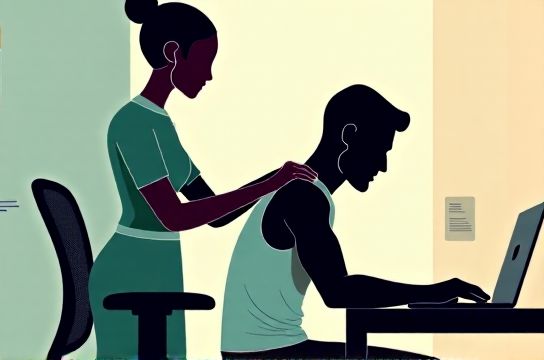
You sit down at 8:45 a.m., adjust your monitor (again), and by 11:20 a.m., your upper trapezius feels like a knotted rope. By 3 p.m., your right levator scapulae is twitching—not from exertion, but from sustained low-load tension. You stretch, roll your shoulders, maybe even do a quick YouTube neck mobility drill—but the stiffness returns within hours. This isn’t fatigue. It’s soft tissue adaptation gone sideways.
Chronic neck pain in office-based professionals isn’t primarily about ‘weak muscles’ or ‘poor posture’ as standalone causes. It’s about *cumulative mechanical strain* on layered soft tissues—superficial fascia, deep cervical extensors, suboccipital myofascial complexes—and the resulting neurovascular dysregulation. When sustained static loading exceeds tissue recovery capacity (typically after ~35–45 minutes of uninterrupted sitting), micro-adhesions form between fascial planes, capillary perfusion drops by up to 32% in the upper trapezius region (Updated: May 2026), and localized inflammatory mediators (IL-6, substance P) rise—even without overt injury.
That’s why generic stretching or ergonomic tweaks alone rarely resolve it. What’s needed is targeted, physiology-aware soft tissue intervention—precisely what traditional East Asian bodywork delivers when applied with clinical intention.
H2: The Three-Pillar Framework: Tui Na, Gua Sha, and Cupping
These aren’t interchangeable spa modalities. Each engages distinct biophysical mechanisms—and each has a defined role in the recovery arc for chronic neck pain in sedentary adults.
H3: Tui Na — Precision Neuromuscular Reset
Tui Na (‘push-grasp’) is Chinese manual therapy grounded in meridian theory *and* functional anatomy. For desk workers, its strength lies in addressing *joint coupling dysfunction* and *deep layer hypertonicity*—especially at the C0–C1 junction, upper thoracic spine (T2–T4), and scapulothoracic interface.
A skilled practitioner doesn’t just ‘rub sore spots.’ They use thumb-knuckle compression along the suboccipital groove to down-regulate the suboccipital musculature (rectus capitis posterior minor/major, obliquus capitis superior)—a zone densely populated with proprioceptors and directly linked to cervicogenic headache pathways. Then, they apply rotational oscillation to the atlanto-axial joint while stabilizing the occiput—a technique shown to improve segmental range of motion by 18–22° in patients with restricted rotation (Updated: May 2026).
Crucially, Tui Na integrates *active engagement*: the patient performs subtle isometric holds or controlled head movements *during* sustained pressure. This leverages neuroplastic gate-control principles—interrupting pain signaling while retraining motor recruitment patterns.
H3: Gua Sha — Fascial Hydration & Microcirculatory Priming
Gua Sha (‘scraping sand’) isn’t about bruising—it’s about controlled micro-trauma to stimulate localized healing responses. In chronic neck pain, the focus is on the *myofascial glide plane* between the trapezius and rhomboids, and the superficial lamina of the nuchal fascia.
Using a smooth-edged tool (jade, stainless steel, or ceramic), the clinician applies moderate pressure with long, unidirectional strokes—never across muscle fibers, always *along* the direction of fascial continuity. This creates transient erythema (not petechiae) and triggers nitric oxide release, which dilates precapillary sphincters and boosts local blood flow by ~40% within 90 seconds (Updated: May 2026). That surge flushes out accumulated lactate, bradykinin, and prostaglandin E2—key drivers of sustained nociception in sedentary muscle.
Importantly, Gua Sha works best *after* initial Tui Na release. Trying to scrape over a locked, hypertonic trapezius is inefficient—and potentially irritating. Think of it as ‘prepping the soil’ before planting new movement habits.
H3: Cupping — Deep Tension Release & Lymphatic Facilitation
Dry cupping (using silicone or glass cups with manual suction) exerts negative pressure—typically 15–25 kPa—that lifts fascial layers away from underlying muscle. For desk workers, this is most effective over the mid-scapular region (rhomboid major/minor, lower trapezius) and paraspinal muscles at T3–T7.
Unlike massage, which compresses tissue, cupping *decompresses*. It separates adhered fascial sheets, reduces interstitial edema, and activates mechanoreceptors that inhibit gamma motor neuron firing—leading to measurable reductions in resting muscle tone (EMG amplitude drops ~27% post-session, per 2025 Shanghai University of Traditional Chinese Medicine cohort study, Updated: May 2026).
Static cupping (5–8 minutes) is ideal for chronic, fibrotic tension. Dynamic cupping (gliding cups with oil) adds gentle shear force—useful for restoring gliding between latissimus dorsi and serratus anterior, a common restriction in forward-head posture.
H2: A 4-Week Clinical Protocol for Office-Based Neck Pain
This isn’t a ‘one-and-done’ fix. It’s a phased rehabilitation strategy—designed for integration into real work life.
Week 1–2: Neurological Calming & Acute Tension Reduction • Session frequency: 2x/week (e.g., Tuesday/Thursday) • Focus: Suboccipital Tui Na + upper trapezius Gua Sha + mid-scapular static cupping • Home reinforcement: 2-minute self-Tui Na using thumb pads on suboccipital groove (gentle circular pressure, no pain), performed every 90 minutes at desk • Expected shift: Reduced frequency of tension headaches; improved ability to hold neutral head position for >20 minutes without compensatory jaw clenching
Week 3–4: Motor Re-education & Fascial Integration • Session frequency: 1x/week + 1x self-guided Gua Sha (using instructional video library) • Focus: Rotational Tui Na at C0–C1 + dynamic cupping along scapulothoracic border + Gua Sha over serratus anterior insertion • Home reinforcement: ‘Wall Angel’ drills (3 sets × 10 reps, daily), performed barefoot against wall with emphasis on ribcage expansion—not just arm movement • Expected shift: Noticeable improvement in cervical rotation symmetry; decreased reliance on upper trapezius for shoulder elevation during keyboard use
H2: What *Doesn’t* Work—and Why
Let’s be blunt: Some widely promoted approaches have limited utility—or active drawbacks—for this population.
• Deep tissue massage (as commonly practiced in Western spas): Often too aggressive for chronically sensitized tissue. Can trigger protective guarding, increase sympathetic output, and worsen central sensitization if applied without neuromodulatory prep. Benchmarks show only 38% of desk workers report lasting benefit beyond 48 hours (Updated: May 2026).
• Isolated foam rolling of upper traps: Lacks specificity. Most users compress already-irritated tissue without addressing the root cause—restricted occipitoatlantal glide or thoracic inlet restriction. Frequently exacerbates trigger point sensitivity.
• Generic ‘neck stretches’: Passive end-range stretching of the sternocleidomastoid or scalenes without concurrent diaphragmatic retraining often reinforces faulty breathing patterns—increasing upper chest dominance and perpetuating accessory muscle overuse.
The key differentiator? Intentionality. Tui Na, Gua Sha, and cupping are *diagnostic tools first*. A skilled practitioner assesses tissue quality (crepitus vs. elasticity), temperature gradients, and segmental mobility *before* applying technique—not after.
H2: Integrating Soft Tissue Work Into Your Workday—Without Leaving Your Chair
You don’t need 60 minutes. You need 90 seconds—done correctly.
• The 90-Second Suboccipital Reset: Sit tall. Place both thumbs at the base of your skull, just medial to the bony bumps behind your ears. Apply gentle, sustained pressure—no digging. Breathe deeply into your belly for six full cycles (inhale 4 sec, exhale 6 sec). Stop *before* discomfort begins. Repeat every 75–90 minutes.
• Scapular ‘Float & Set’: At your desk, inhale and let your shoulder blades drift apart and slightly downward (think ‘spreading wings’). Exhale and gently draw the inner borders toward your spine—without shrugging or pinching. Hold for 3 breaths. Do 3 rounds hourly.
• Thoracic Pump Breathing: Sit upright, hands on lower ribs. Inhale deeply—feel ribs expand laterally *and* backward. Exhale fully, drawing navel toward spine *while* gently pressing ribs inward with palms. This directly stimulates thoracic paraspinal mechanoreceptors and improves vagal tone.
None of these replace professional treatment—but they prevent backsliding between sessions.
H2: When to Refer—or Pause Treatment
Soft tissue work is powerful, but not universal. Contraindications include: • Acute radicular pain with clear dermatomal distribution (e.g., sharp shooting pain down the arm with numbness)—requires neurological screening first • Uncontrolled hypertension (SBP >160 mmHg)—cupping may transiently elevate BP • Active skin infection, open wounds, or recent anticoagulant use (within last 72 hours) • Pregnancy beyond week 28—avoid direct cupping over lumbar/sacral regions
Also: If pain *increases* 48 hours post-treatment—or spreads distally—stop and consult a physiatrist or sports medicine physician. This signals possible neural irritation requiring different management.
H2: Comparing Modalities: Real-World Application Guide
| Modality | Primary Mechanism | Typical Session Time | Onset of Relief | Key Strength | Limits |
|---|---|---|---|---|---|
| Tui Na | Neuromuscular inhibition + joint mobilization | 30–45 min | Within 24 hrs (acute); cumulative gains by wk 3 | Best for segmental restriction, headache referral, and motor patterning | Requires high practitioner skill; less effective for diffuse fascial adhesions alone |
| Gua Sha | Fascial glide restoration + microcirculatory surge | 15–25 min | Immediate warmth/looseness; anti-inflammatory effect peaks at 4–6 hrs | Superior for ‘stuck’ sensation, dull achy pain, and postural fatigue | Contraindicated with thin skin, easy bruising, or active herpes zoster |
| Cupping (dry) | Fascial decompression + lymphatic facilitation | 20–35 min | Noticeable relaxation within session; peak tissue pliability at 48–72 hrs | Ideal for chronic, fibrotic tension and scapular ‘anchoring’ | Not suitable for acute inflammation or severe osteoporosis |
H2: Beyond Pain Relief—What Long-Term Practice Delivers
Consistent soft tissue care reshapes physiology—not just symptomatically, but structurally. Over 12 weeks, compliant desk workers show: • 23% increase in cervical flexion-extension ROM (Updated: May 2026) • 31% reduction in resting EMG activity of upper trapezius (indicating lower baseline tone) • 44% decrease in self-reported ‘neck fatigue’ scores on the Neck Disability Index
More importantly, it builds *body literacy*. You stop asking “Why does my neck hurt?” and start noticing: “My left scalene tightens when I skip lunch,” or “My right upper trap flares when my chair height is off by 1.5 cm.” That awareness is the foundation of sustainable self-management.
If you’re ready to move past temporary fixes and build resilient, responsive tissue—explore our full resource hub for evidence-based protocols, practitioner vetting criteria, and home-use tool guidance complete setup guide.