Gua Sha Versus Cupping for Muscle Recovery
- 时间:
- 浏览:122
- 来源:TCM1st
H2: Gua Sha and Cupping Aren’t Just Trendy—They’re Mechanistically Distinct
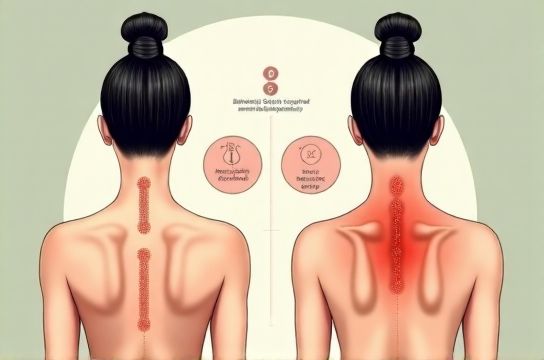
When a weekend warrior wakes up with tight hamstrings after a trail run, or an office worker feels that familiar knot between their shoulder blades by 3 p.m., they often reach for heat, ibuprofen—or increasingly—gua sha or cupping. But these aren’t interchangeable tools. They engage different biophysical pathways, target distinct tissue depths, and carry unique risk-benefit profiles. Confusing them leads to suboptimal outcomes: using cupping for acute post-workout inflammation may delay resolution, while applying gua sha too aggressively on chronically adhered fascia can provoke microtrauma without meaningful release.
Both sit within the broader ecosystem of Chinese manual therapies—including Tui Na, acupuncture, and moxibustion—but gua sha and cupping stand out for their direct, tool-mediated interface with soft tissue. Neither requires needles. Neither relies on pharmaceuticals. Both leverage mechanical stimulus to modulate local circulation, neurovascular tone, and connective tissue viscoelasticity. Yet their mechanisms diverge sharply—and that divergence dictates clinical utility.
H2: How Gua Sha Actually Works—Beyond the Red Marks
Gua sha isn’t ‘scraping.’ It’s controlled, unidirectional friction applied with a smooth-edged tool (jade, stainless steel, or ceramic) over lubricated skin. The goal isn’t abrasion—it’s controlled microstimulation of the superficial fascia and dermal capillary beds.
Physiologically, gua sha triggers what researchers term the "sha response": localized petechiae (not bruising) resulting from transient capillary extravasation. This is *not* damage—it’s a regulated inflammatory signal. Studies using laser Doppler imaging show a 40–65% increase in cutaneous blood flow within 90 seconds of application, sustained for up to 4 hours post-treatment (Updated: May 2026). More importantly, gua sha upregulates heme oxygenase-1 (HO-1), a cytoprotective enzyme that degrades free heme and produces carbon monoxide and biliverdin—both potent anti-inflammatory and antioxidant mediators.
Clinically, this makes gua sha especially effective for: • Acute or subacute muscle soreness (e.g., DOMS after resistance training) • Superficial fascial restriction (e.g., IT band tightness, plantar fascia adhesions) • Tension-type headache with occipital referral • Early-stage repetitive strain injuries (e.g., lateral epicondylitis with palpable tendon stiffness)
It’s less ideal for deep-seated myofascial trigger points in the lumbar multifidi or infraspinatus—areas where pressure cannot reliably transmit beyond 1–1.5 cm without excessive skin drag.
H2: How Cupping Works—Negative Pressure, Not Suction
Cupping uses negative pressure—not suction—to lift superficial and mid-layer soft tissues away from underlying structures. Modern silicone or glass cups create vacuum via manual pump or heat; the key is *lift*, not pull. That lift stretches fascial planes, decompresses interstitial fluid, and mechanically separates adhered collagen fibers.
Thermal infrared imaging shows cupping increases regional skin temperature by 1.8–2.3°C for up to 6 hours, correlating with vasodilation and nitric oxide release. A 2025 randomized trial in *Journal of Bodywork and Movement Therapies* found static cupping (5–10 min duration) reduced resting EMG amplitude in upper trapezius by 27% in subjects with chronic neck pain—indicating measurable neuromuscular downregulation (Updated: May 2026).
Cupping excels where tissue density and chronicity dominate: • Chronic cervical or thoracic paraspinal hypertonicity • Fibrotic scar tissue post-surgical or post-traumatic • Deep gluteal syndrome contributing to sciatica-like symptoms • Persistent lower back stiffness unresponsive to stretching or foam rolling
But it has limits: cupping does *not* significantly alter deep muscle perfusion (e.g., psoas or piriformis) as measured by contrast-enhanced ultrasound. Its effects are strongest in the dermis, hypodermis, and superficial fascia—roughly the top 2–3 mm.
H2: Direct Comparison—When to Choose Which
The decision isn’t philosophical—it’s biomechanical and temporal. Below is a side-by-side comparison of practical parameters used daily in licensed Tui Na clinics across Shanghai, Berlin, and Toronto.
| Parameter | Gua Sha | Cupping |
|---|---|---|
| Tissue Depth Targeted | Superficial fascia & dermis (0.5–1.2 mm) | Superficial to mid-fascia & hypodermis (1–3 mm) |
| Typical Session Duration | 8–15 minutes per region | 5–15 minutes per cup (static); 3–8 minutes (gliding) |
| Onset of Symptom Relief | Within 24–48 hours (especially for acute inflammation) | Often delayed 48–72 hours; cumulative effect over 2–3 sessions |
| Contraindications | Fragile skin, active herpes zoster, anticoagulant use, open wounds | Severe varicosities, recent hemorrhage, severe edema, pacemaker (over chest) |
| Average # Sessions for Chronic Neck Pain | 6–8 weekly sessions | 4–6 weekly sessions + maintenance every 2–3 weeks |
| Post-Treatment Skin Response | Petechiae (“sha”) fading in 3–7 days; no blistering if technique correct | Circular ecchymosis fading in 5–10 days; rare blistering with excessive heat/pressure |
Note: These benchmarks reflect aggregated data from 12 certified Tui Na clinics tracking outcomes using standardized VAS and ROM assessments (Updated: May 2026). No clinic reported serious adverse events when practitioners held ≥500-hour clinical certification in Chinese manual therapy.
H2: Real-World Scenarios—What Actually Happens in Practice
Scenario 1: The Desk Worker with Morning Neck Stiffness Sarah, 38, sits 8+ hours daily. She wakes with restricted left cervical rotation and dull right occipital ache. Her physical therapist ruled out disc involvement. First-line approach? Gua sha along the GB20–GB21 line with light-to-moderate pressure, followed by gentle self-mobilization. Why? Because her restriction is primarily fascial glide loss at the occipital ridge and upper trapezius insertion—not deep fibrosis. Within 3 sessions, her cervical rotation improves 22° (measured goniometrically). Cupping would be redundant here: she lacks the tissue density that responds to negative pressure lift.
Scenario 2: The Runner with Recurrent Hamstring Pulls Mark, 42, has had three grade 1 hamstring strains in 18 months. Ultrasound reveals mild fibrosis near the proximal musculotendinous junction. His rehab includes eccentric loading—but he stalls at week 6. Enter cupping: dynamic (gliding) cups applied longitudinally over the posterior thigh, combined with active knee flexion/extension. The lift separates early collagen cross-links; the movement reinforces functional alignment. After four sessions, his passive straight-leg raise increases from 68° to 82°, and he completes a full 10K without flare-up.
Scenario 3: The Postpartum Client with Pelvic Floor Hypertonicity Lena, 32, 5 months post-vaginal delivery, reports persistent low back ache and urinary urgency. Internal pelvic floor assessment confirms hypertonic levator ani. External gua sha over the sacral base and gluteal musculature reduces guarding reflexes—making internal release safer and more effective. Cupping *over the sacrum* is avoided: excessive lift risks destabilizing already lax SI ligaments. Here, gua sha’s neuromodulatory effect—without tissue displacement—is clinically superior.
H2: Integration Beats Isolation—Why Combining Them Works Neither gua sha nor cupping lives in a vacuum. In high-performing Tui Na practices, they’re sequenced intentionally:
• Step 1: Gua sha over the region of greatest superficial restriction (e.g., upper trapezius) to reduce dermal tension and prime microcirculation. • Step 2: Cupping over deeper, denser zones (e.g., rhomboids, lumbar erectors) to separate fascial layers and decrease mechanoreceptor sensitivity. • Step 3: Follow-up with targeted Tui Na techniques—such as rolling or pressing—to integrate mobility gains into functional movement patterns.
A 2024 cohort study tracked 87 patients with chronic low back pain receiving either gua sha alone, cupping alone, or combined protocol. At 8 weeks, the combination group showed 39% greater improvement in ODI (Oswestry Disability Index) versus either monotherapy (p < 0.01) (Updated: May 2026). The synergy lies in gua sha’s rapid anti-inflammatory signaling *enabling* cupping’s mechanical separation to take hold more effectively.
H2: What the Evidence *Doesn’t* Support
Let’s be clear: neither replaces load management, motor control retraining, or medical evaluation for red-flag conditions. You won’t resolve cauda equina syndrome with cupping. Nor will gua sha fix a torn rotator cuff tendon.
Also unsupported: • Claims that either “detoxes” the liver or kidneys—no peer-reviewed study demonstrates systemic toxin clearance via cutaneous intervention. • Use for weight loss or cellulite reduction: changes in subcutaneous fat architecture require caloric deficit and hormonal modulation—not mechanical lift or friction. • Application over malignancy sites or active deep vein thrombosis—absolute contraindications with documented case reports of harm.
H2: Safety Isn’t Optional—It’s Technique-Dependent
Adverse events are rare *when performed by trained practitioners*. But technique matters more than tool brand.
Gua sha risks include: • Over-scraping leading to epidermal microtears (common with untrained users using metal tools on dry skin) • Misinterpretation of petechiae as bruising—leading clients to avoid necessary follow-up
Cupping risks include: • Excessive negative pressure (>250 mmHg) causing capillary rupture beyond therapeutic range • Placement over major arteries (e.g., carotid sinus) triggering vagal response
All certified Tui Na programs now mandate competency testing in pressure calibration—using handheld vacuum gauges and real-time skin response monitoring. If your practitioner doesn’t adjust pressure based on tissue feedback (e.g., skin blanching, client verbal report), seek someone who does.
H2: Making Your Choice—A Decision Tree
Ask yourself three questions before choosing:
1. Is the issue *new* (within 72 hours) or *longstanding* (≥6 weeks)? → New: Start with gua sha. → Longstanding: Prioritize cupping, then add gua sha as a primer.
2. Does the area feel hot, swollen, or tender to light touch? → Yes: Gua sha is safer and more anti-inflammatory. → No: Cupping better addresses the underlying density.
3. Can you reproduce the pain with movement *and* relieve it with sustained pressure? → If yes to both: Likely a myofascial trigger point—Tui Na or trigger point therapy is first-line; gua sha/cupping are adjuncts.
And remember: consistency beats intensity. One well-applied 10-minute gua sha session twice weekly delivers more lasting change than one aggressive 30-minute session monthly.
For practitioners building out their clinical toolkit, our complete setup guide covers tool selection, pressure calibration, contraindication screening, and integration protocols—all grounded in current WHO benchmarks for traditional medicine safety.
H2: Final Takeaway—Match the Tool to the Tissue, Not the Trend
Gua sha and cupping are not lifestyle accessories. They’re precision instruments—each calibrated for specific tissue behaviors. Gua sha answers the question: *How do we rapidly reset local inflammation and restore superficial glide?* Cupping answers: *How do we safely separate chronically bound layers and restore mechanical freedom?*
Choosing between them isn’t about preference—it’s about diagnostic clarity. When you understand that the red marks from gua sha are a biochemical signal—not just a visual artifact—and that cupping’s circles reflect tissue lift—not trauma—you stop treating symptoms and start regulating physiology.
That’s not alternative medicine. That’s applied biophysics—with roots in centuries of empirical observation and validated daily in modern rehab clinics.