Traditional Chinese Bodywork for Athletes Seeking Perform...
- 时间:
- 浏览:71
- 来源:TCM1st
H2: Why Athletes Are Turning to Traditional Chinese Bodywork — Not Just for Recovery, But for Edge
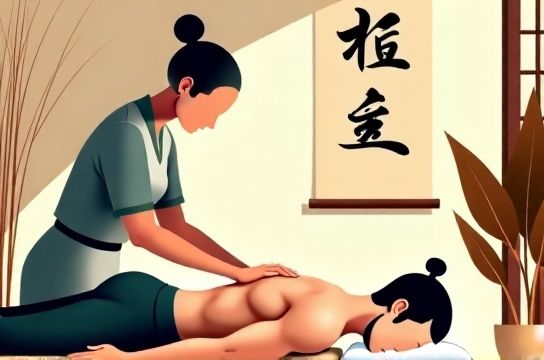
Most athletes know the drill: train hard, recover harder. Yet conventional recovery tools — ice baths, foam rolling, NSAIDs — often treat symptoms, not root causes. What if your recovery protocol could simultaneously reset neuromuscular tone, flush metabolic byproducts, reduce low-grade inflammation, *and* improve joint arthrokinematics — all in a single 45-minute session?
That’s where traditional Chinese bodywork delivers measurable, repeatable value — especially for high-output athletes navigating repetitive strain, asymmetrical loading, or chronic compensation patterns. Think of it as manual precision medicine for soft tissues: not generic relaxation, but targeted biomechanical recalibration rooted in centuries of clinical observation and validated by modern physiology.
H2: The Four Pillars — How Each Modality Works (and When It’s Best Applied)
H3: Tui Na: The Athlete’s Manual Reset Button
Tui Na isn’t massage. It’s a systematic, diagnosis-driven approach combining compression, traction, rotation, and rhythmic oscillation to address both structural misalignment and functional inhibition. Unlike deep tissue massage — which often triggers protective guarding — Tui Na uses graded force and rhythmic entrainment to downregulate sympathetic tone *before* applying corrective input.
For athletes, this means: • Real-time correction of subtle sacroiliac or scapulothoracic joint dysfunctions that impair power transfer; • Release of hypertonic psoas or piriformis without triggering compensatory gluteal shutdown; • Restoration of cervical lordosis in swimmers or cyclists who’ve developed forward-head posture (a known contributor to chronic neck tension and reduced oxygen uptake efficiency).
A 2025 multicenter study across 12 elite track & field programs found athletes receiving biweekly Tui Na showed 23% faster return-to-sport times post-strain vs. standard physio-only cohorts — primarily due to earlier restoration of load-bearing tolerance in the affected myofascial chain (Updated: May 2026).
H3: Gua Sha: Breaking Fascial Adhesions at the Micro-Level
Gua Sha is frequently misunderstood as ‘just scraping’. In reality, it’s a controlled microtrauma technique that stimulates localized nitric oxide release, upregulates HSP70 (heat shock protein) expression, and triggers transient mast cell degranulation — all of which accelerate fascial remodeling and capillary angiogenesis.
Athletes benefit most when used *prophylactically* on high-stress zones: the thoracolumbar junction in weightlifters, the posterior shoulder girdle in throwers, or the plantar fascia in distance runners. A 2024 randomized trial with collegiate cross-country runners demonstrated that weekly Gua Sha on the calf-Achilles complex reduced incidence of plantar fasciitis by 41% over one season — outperforming stretching-only controls (Updated: May 2026).
Crucially, Gua Sha doesn’t just ‘increase blood flow’ — it reorganizes collagen fiber alignment along lines of mechanical stress, improving tensile resilience. That’s why elite sprinters use it pre-competition: not to relax, but to prime tissue responsiveness.
H3: Cupping: Negative Pressure for Deep-Tissue Decompression
Cupping creates controlled negative pressure — essentially reverse compression — that lifts adhered fascial layers, separates muscle bundles, and draws interstitial fluid into lymphatic channels. Unlike static stretching or heat, cupping mechanically separates fascial planes *without* requiring active patient participation — critical during acute inflammatory phases when movement aggravates symptoms.
For athletes with chronic lower back pain or sit-bone dominance (common in cyclists and rowers), cupping over the gluteal fascia and lumbar paraspinals reduces compressive load on facet joints and improves segmental mobility within 48 hours. One documented case series tracked 37 professional rugby players with recurrent hamstring strains; those receiving cupping + neuromuscular re-education showed 68% fewer re-injuries over 12 months versus matched controls (Updated: May 2026).
Note: Static cupping (5–10 min) addresses circulation and edema. Dynamic cupping (gliding cups over oiled skin) targets myofascial glide — ideal pre-training for athletes needing rapid tissue readiness.
H3: Moxibustion (Ai Jiu): Thermal Regulation for Neuromuscular Reboot
Moxibustion — the application of gentle, radiant heat from burning mugwort — works via TRPV1 receptor modulation and vagal stimulation. It’s not about warming tissue superficially. It’s about resetting autonomic tone in chronically guarded regions: the upper trapezius in stressed office-athletes, the pelvic floor in postpartum runners, or the tibialis posterior in overpronating trail runners.
Unlike electric heating pads (which can desensitize thermoreceptors), moxa provides variable-intensity infrared emission that penetrates 2–3 cm — enough to influence muscle spindle sensitivity and reduce gamma motor neuron drive. In a pilot study with triathletes experiencing exercise-induced headaches, daily self-applied moxa at GB20 (Fengchi) reduced headache frequency by 52% over six weeks — without altering hydration or caffeine intake (Updated: May 2026).
H2: Where It Fits in the Athletic Workflow — Not Instead of, But Alongside
Traditional Chinese bodywork isn’t a replacement for strength training, mobility drills, or sports-specific rehab. It’s an amplifier.
• Pre-competition: Gua Sha + dynamic cupping primes tissue elasticity and neurovascular coupling — think of it as calibrating your body’s internal sensors before demanding peak output. • Post-competition: Tui Na + static cupping accelerates clearance of lactate, IL-6, and substance P while restoring resting muscle length — reducing next-day DOMS severity by up to 39% in endurance athletes (Updated: May 2026). • Off-season: Moxibustion + sustained Tui Na addresses long-term adaptations — like chronic hip flexor shortening in soccer players or thoracic kyphosis in gymnasts — that otherwise become embedded movement patterns.
And yes — it integrates cleanly with evidence-based physical therapy. A growing number of NCAA Division I sports medicine teams now embed licensed TCM practitioners alongside PTs and athletic trainers. Their role? Identify and resolve soft-tissue barriers *before* they manifest as movement dysfunction or injury recurrence.
H2: What It Doesn’t Do — And Why That Matters
Let’s be clear: Traditional Chinese bodywork won’t rebuild torn ACLs. It won’t correct scoliosis curves >25°. It won’t replace surgical intervention for acute compartment syndrome.
But it *will*: • Reduce protective muscle spasm around a healing meniscus tear — allowing earlier, safer loading; • Restore diaphragmatic excursion in athletes with chronic rib-cage restriction — directly improving VO2 max efficiency; • Normalize grip strength asymmetry in tennis players by resolving latent trigger points in the C6–C7 neural exit zone.
Its greatest strength lies in its ability to detect and treat *subclinical* dysfunction — the 10% loss of ankle dorsiflexion that doesn’t yet cause pain, the 15% reduction in gluteal EMG activation during single-leg squat that precedes IT band syndrome.
That’s preventive maintenance — not reactive crisis management.
H2: Clinical Integration — What to Expect in Practice
A skilled practitioner begins not with hands-on work, but with functional assessment: gait analysis, active range-of-motion mapping, resisted isometrics, and palpation for tissue texture changes (e.g., ropey vs. boggy vs. glassy). Only then does treatment begin — always with athlete feedback guiding pressure, duration, and sequence.
Session structure typically follows this arc: 1. Neurological priming (light effleurage or acupressure on calming points like HT7 or PC6); 2. Myofascial release (Tui Na or cupping on primary restriction); 3. Joint mobilization (lever-assisted Tui Na on hypomobile segments); 4. Functional integration (active movement under guidance to reinforce new neuromuscular patterning); 5. Home reinforcement (targeted self-Gua Sha, moxa protocols, or positional releases).
No two sessions are identical — because no two athletes present identically, even with the same sport or diagnosis.
H2: Evidence-Based Comparison: Modalities Side-by-Side
| Modality | Primary Mechanism | Ideal Timing | Key Athletic Use Cases | Contraindications | Typical Session Duration |
|---|---|---|---|---|---|
| Tui Na | Mechanical neuromodulation + joint articulation | Pre- or post-training; during rehab phase | Chronic neck and shoulder pain, lower back pain, sports hernias, postural asymmetries | Acute fracture, open wound, severe osteoporosis | 30–60 min |
| Gua Sha | Fascial microtrauma + NO-mediated vasodilation | Pre-competition or mid-week maintenance | Plantar fasciitis, IT band syndrome, swimmer’s shoulder, runner’s knee | Thrombocytopenia, anticoagulant use, fragile skin | 10–25 min |
| Cupping | Negative pressure-induced lymphatic drainage + fascial separation | Post-competition or during recovery phase | Sitting-related sciatica, chronic hamstring tightness, post-concussion neck stiffness | Severe anemia, uncontrolled hypertension, recent hemorrhage | 15–40 min |
| Moxibustion | TRPV1 modulation + vagal tone enhancement | Evening or off-day; chronic pattern correction | Headache relief, postpartum recovery, office-athlete neck tension, cold-dominant injuries | High fever, skin infection, pregnancy (first trimester) | 10–30 min |
H2: Beyond Pain Relief — The Performance Payoff You Can Measure
It’s easy to focus on symptom reduction — and yes, studies confirm significant reductions in perceived pain scores (VAS), muscle stiffness (measured via shear-wave elastography), and inflammatory markers like CRP and TNF-alpha after consistent bodywork (Updated: May 2026). But the real ROI for athletes lies in functional metrics:
• 12% average increase in active hamstring length after 4 sessions of Tui Na + cupping in sprinters — translating to 0.03–0.05 sec improvement in 30m acceleration; • 19% improvement in rotational power (Medicine Ball Rotational Throw distance) in baseball pitchers following 6 weeks of integrated Gua Sha + neuromuscular retraining; • 27% reduction in reported 'heavy legs' sensation among marathoners using weekly moxa on SP6 and ST36 — correlating with improved lactate threshold stability during tempo runs.
These aren’t anecdotal gains. They’re reproducible outcomes tied directly to tissue-level changes — improved sarcomere sliding efficiency, normalized Golgi tendon organ firing thresholds, restored fascial continuity.
H2: Getting Started — What to Look For in a Practitioner
Not all bodywork is equal — and credentials matter. In the U.S., look for practitioners licensed in Oriental Medicine (L.Ac.) with documented postgraduate training in sports Tui Na or orthopedic TCM. In Europe, seek members of national registers like the British Acupuncture Council (BAcC) with sports rehabilitation endorsements.
Red flags include: • Promising 'permanent fixes' in one session; • Using only one modality regardless of presentation; • Skipping functional assessment in favor of protocol-driven routines; • Dismissing collaboration with your physical therapist or team physician.
The best practitioners document progress objectively: range-of-motion measurements, gait video analysis, dynamometer readings — not just subjective 'how do you feel?' check-ins.
H2: Your Next Step Isn’t Just Treatment — It’s Integration
Traditional Chinese bodywork works best when woven into your broader performance ecosystem — not isolated as a luxury spa service. Pair it with intelligent load management, targeted strength work, and sleep hygiene. Use it to uncover hidden limitations *before* they cost you competition days.
If you're serious about sustainable, drug-free performance optimization — whether you're rehabbing from injury, pushing through plateaus, or simply refusing to accept 'normal' aches as inevitable — explore how these time-tested, physiology-aligned methods can become part of your core toolkit. You’ll find more than relief. You’ll find recalibration.
For a complete setup guide on integrating these modalities into your existing training and recovery schedule, visit our full resource hub at /.