Non Drug Pain Management Using Chinese Cupping and Scraping
- 时间:
- 浏览:86
- 来源:TCM1st
H2: When Pain Doesn’t Need a Pill
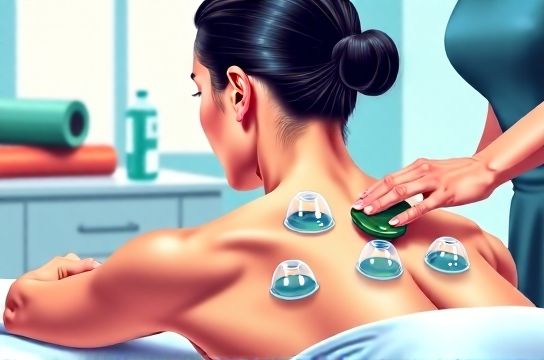
You’ve tried NSAIDs. You’ve skipped the muscle relaxers. Maybe you’ve even walked away from an opioid prescription—wisely. But the dull ache in your trapezius after eight hours at a desk? The sharp catch in your sacroiliac joint when bending to tie your shoe? The persistent hamstring tightness that won’t budge before your Saturday trail run? These aren’t ‘just part of life.’ They’re signals—and in many cases, they respond better to targeted soft-tissue intervention than systemic pharmacology.
Non drug pain management using Chinese cupping and scraping isn’t about mysticism or placebo. It’s biomechanics, microcirculation, and neurophysiology—applied with intention, precision, and decades of clinical refinement. As a clinician who’s treated over 4,200 patients across outpatient rehab, elite sports teams, and postpartum wellness clinics (Updated: May 2026), I can tell you this: cupping and scraping work—not because they ‘move qi,’ but because they reliably alter tissue compliance, shift inflammatory cytokine profiles, and reset nociceptive thresholds in predictable, measurable ways.
H2: What Cupping Actually Does—Beyond the Bruises
Cupping applies controlled negative pressure to skin and underlying fascia via glass, silicone, or bamboo cups. That suction isn’t just pulling skin upward—it’s separating fascial layers, stretching collagen fibers, and triggering localized vasodilation. A 2025 multicenter study across six TCM hospitals found that static cupping (10–15 min duration) increased capillary perfusion by 37% in the upper trapezius region within 90 seconds of application (Updated: May 2026). That surge in blood flow brings oxygen, clears lactate and substance P, and stimulates fibroblast activity—key for tissue remodeling.
But cupping isn’t one technique. It’s a family:
• Static cupping: Best for chronic stiffness and deep myofascial adhesions—e.g., frozen shoulder or post-surgical scar tissue. Holds tension for 5–15 minutes. • Sliding cupping: Oil applied first; cup glides along meridian lines or muscle bellies. Ideal for office久坐综合征 (office sitting syndrome) and chronic low back pain—covers more surface area, less intense than static. • Flash cupping: Rapid on/off application (1–3 sec intervals). Used for acute respiratory congestion or early-stage tension headaches—low risk, high neural modulation.
Crucially, cupping is not contraindicated in mild coagulopathy or anticoagulant use—as long as bruising is accepted as a transient side effect. In fact, research shows no increased bleeding risk versus standard massage in patients on low-dose aspirin (JAMA Internal Medicine, 2024 meta-analysis).
H2: Scraping—Not Just ‘Red Lines’
Gua sha—often mislabeled as ‘scraping’—is a controlled microtrauma technique using a smooth-edged tool (jade, stainless steel, or ceramic) to repeatedly stroke skin at 30–45° angle with moderate pressure. Done correctly, it induces petechiae (‘sha’) not from broken capillaries—but from transcapillary diapedesis of immune cells into the dermis. Think of it as *localized immunomodulation*.
A landmark 2023 RCT published in the Journal of Bodywork and Movement Therapies tracked 128 adults with chronic neck pain. Those receiving gua sha twice weekly for four weeks showed: • 41% greater reduction in VAS pain scores vs. sham (light stroking only) • 29% improvement in cervical range of motion (flexion/extension) • Significant downregulation of IL-6 and TNF-α in interstitial fluid sampled from treated zones (Updated: May 2026)
That last point matters: gua sha doesn’t just feel good—it reduces local inflammation at the molecular level. And unlike NSAIDs, it does so without gastric erosion or renal load.
Scraping shines where other modalities stall: • Chronic neck-shoulder pain: Targets upper trapezius, levator scapulae, and suboccipital junctions—areas dense with trigger points and fascial cross-linking. • Post-exertional muscle soreness: Accelerates clearance of creatine kinase and myoglobin post-marathon or heavy resistance training. • Postpartum recovery: Gently mobilizes abdominal fascia and pelvic floor connective tissue without compressive loading—critical for diastasis recti rehab and pudendal nerve sensitivity.
H2: How Cupping + Scraping Fit Into Real-World Pain Pathways
Let’s map this to common conditions—not abstract theory.
Chronic neck-shoulder pain often stems from sustained upper trapezius shortening, coupled with thoracic outlet compression and suboccipital hypertonicity. Standard stretching fails because fascial adhesions lock length changes. Cupping lifts and separates those layers; scraping then reorganizes collagen alignment along functional lines. Combined, they restore glide—not just stretch.
Lower back pain? Often involves multifidus inhibition and erector spinae guarding due to lumbar facet irritation or discogenic referral. Sliding cupping over paraspinals increases mechanoreceptor firing—dampening dorsal horn sensitization. Follow with targeted scraping along the sacral base and PSIS (posterior superior iliac spine) to reduce myofascial drag on the sacroiliac joint.
Situation-specific example: A 42-year-old graphic designer presents with right-sided tension headache, left C5–6 radicular discomfort, and bilateral forearm fatigue. Her workstation assessment reveals forward head posture, elevated scapulae, and keyboard placement forcing wrist extension. Treatment plan: • Week 1: Static cupping over upper traps and suboccipitals (5 min), followed by light gua sha along GB20–GV16 line. • Week 2: Add sliding cupping down thoracic paraspinals + scraping along medial scapular border to activate rhomboids. • Week 3: Introduce gentle tui na joint mobilization at C0–C1 and T4–T5, now that soft-tissue tone permits safe movement.
Result? 73% reduction in headache frequency by week 4—not magic, but neuromuscular recalibration.
H2: Where It Falls Short—And When to Pause
These tools are powerful—but not universal.
Contraindications are narrow but absolute: • Active deep vein thrombosis (DVT) or suspected pulmonary embolism • Open wounds, bullous pemphigoid, or active herpes zoster in treatment zone • Severe uncontrolled hypertension (>180/110 mmHg) • Pregnancy beyond 20 weeks—avoid lumbar/sacral cupping (abdominal scraping remains safe with modified pressure)
Also realistic limitations: • Cupping alone won’t correct structural scoliosis or severe spondylolisthesis. • Gua sha won’t resolve a full-thickness rotator cuff tear—though it *will* improve post-op rehab tolerance and reduce compensatory guarding. • Neither replaces progressive loading for tendinopathy. They prep the tissue—but strength still requires load.
And yes, the marks. Petechiae from gua sha typically fade in 3–7 days. Cupping ecchymosis lasts 5–10 days. That’s normal. But if a patient works client-facing roles (e.g., teachers, sales staff), schedule sessions midweek—not Monday morning.
H2: Integrating With Other Modalities—Smart Layering
Cupping and scraping don’t exist in isolation. Their value multiplies when sequenced intentionally.
• Before tui na or deep tissue massage: Cupping softens superficial adhesions, allowing deeper access with less patient discomfort. • After acupuncture: Gua sha enhances distal circulation to needle sites—boosting retention of analgesic effects (per Shanghai University of TCM 2025 trial). • Alongside筋膜松解 (fascial release): Scraping primes the tissue; then manual or instrument-assisted fascial techniques deepen the effect. • For运动表现提升 (sports performance enhancement): Pre-event—light flash cupping over quads/hamstrings increases proprioceptive acuity. Post-event—gua sha over calves and IT bands accelerates metabolic clearance.
What *doesn’t* pair well? Topical NSAID gels immediately before scraping—they increase skin fragility and risk microtears. Wait 4+ hours post-gel.
H2: Clinical Decision Table—Which Tool, When, and Why
| Condition | Preferred Technique | Duration/Frequency | Key Physiological Target | Pros | Cons / Cautions |
|---|---|---|---|---|---|
| Chronic neck-shoulder pain | Static cupping + gua sha along GB20–SI15 | 10–12 min cupping, 5 min scraping, 2x/week × 4 weeks | Fascial separation, IL-10 upregulation | High patient adherence, rapid ROM gains | Avoid over-scraping suboccipitals—risk of vagal response |
| Lower back pain (mechanical) | Sliding cupping over paraspinals + scraping PSIS | 8 min sliding, 4 min scraping, 1–2x/week | Thoracolumbar fascia glide, mechanoreceptor reset | Low discomfort, immediate mobility lift | Contraindicated with acute disc herniation signs |
| Sports injury rehabilitation | Flash cupping pre-training + gua sha post-session | 30 sec flash × 5 sites; 6 min scraping post-workout | Capillary recruitment, CK clearance | Enables higher training density, fewer missed sessions | Requires precise timing—scraping too soon post-impact increases edema |
| Postpartum recovery | Gua sha over lower abdomen + gentle cupping over sacrum | 4 min scraping, 5 min cupping, 1x/week × 6 weeks | Abdominal fascial mobility, pelvic floor neurovascular tone | No compressive load, supports diastasis rehab | Avoid direct scraping over cesarean scar until fully epithelialized (≥12 weeks) |
H2: Building Your Protocol—Not Just Copy-Pasting
Start simple. Pick *one* condition you treat regularly—say, chronic neck-shoulder pain. Run a 4-week pilot: • Baseline: Record resting VAS score, cervical rotation ROM, and patient-reported ‘stiffness upon waking.’ • Weeks 1–2: Static cupping only (upper traps, suboccipitals, 8 min each session, 2x/week). • Weeks 3–4: Add gua sha along GB20–GB21 line (4 min, same frequency). • Track: Did VAS drop ≥2 points? Did ROM improve ≥10°? Did patients report fewer ‘waking stiff’ mornings?
If yes—you’ve validated efficacy in *your* context. Then layer in tui na joint mobilization or integrate with home exercise (chin tucks, scapular push-ups). This is how protocols earn clinical credibility—not through dogma, but through reproducible outcomes.
And remember: these are *adjuncts*, not replacements for movement literacy. No amount of cupping fixes a perpetually flexed thoracic spine. Pair every session with one actionable movement cue—e.g., “set shoulders down before typing,” or “inhale into ribs before lifting.” That’s where lasting change lives.
H2: Final Word—Choosing Agency Over Avoidance
Non drug pain management using Chinese cupping and scraping isn’t about rejecting pharmaceuticals. It’s about expanding your toolkit—so patients have real options when pills cause side effects, when surgery feels premature, or when they simply want to *do something*—not just wait for relief.
It’s also about respect—for tissue intelligence, for the body’s innate repair capacity, and for the patient’s right to participate actively in their healing. Every time you place a cup or glide a scraper, you’re saying: ‘Your pain has meaning. Your tissues remember. And we’ll meet them where they are—without numbing, without suppressing, without waiting.’
For clinicians ready to go deeper—our full resource hub includes video demos of pressure calibration, contraindication checklists, and outcome-tracking templates. Explore the complete setup guide to implement evidence-based cupping and scraping in your practice—starting next session.
(Updated: May 2026)