Tui Na Techniques That Correct Spinal Misalignment Naturally
- 时间:
- 浏览:75
- 来源:TCM1st
H2: When the Spine Shifts—And Why ‘Cracking’ Isn’t the Answer
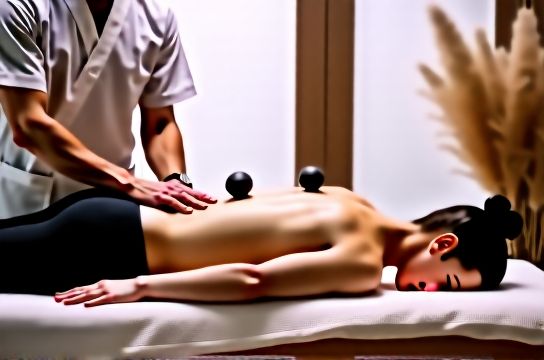
Spinal misalignment isn’t always about vertebrae ‘slipping out.’ More often, it’s a functional cascade: tight paraspinals lock facet joints; shortened psoas tilts the pelvis; asymmetrical scapular positioning rotates thoracic segments; chronic forward head posture compresses C5–C7 intervertebral foramina. Conventional imaging (X-ray, MRI) may show ‘normal alignment’—yet patients report persistent chronic neck shoulder pain, radiating lower back pain, or sit bone discomfort that flares with prolonged sitting. That’s because standard radiographs capture bony position at rest—not dynamic soft-tissue tension, fascial drag, or segmental mobility deficits.
Tui Na doesn’t chase ‘perfect alignment’ on film. It addresses what moves—and what *won’t* move—under load. Its goal is restoring *functional neutrality*: the spine’s ability to distribute mechanical stress evenly across segments during breathing, rotation, and weight-bearing. And it does so using hands-on biomechanics rooted in over 2,000 years of clinical observation—and increasingly validated by modern musculoskeletal research.
H2: The Four-Pillar Tui Na Framework for Spinal Realignment
Unlike generic ‘massage,’ clinical Tui Na applies distinct, sequenced techniques targeting specific layers and functions:
H3: 1. Soft-Tissue Priming: Releasing Fascial Anchors
Before adjusting anything, we must release the ‘guy wires’ holding the spine off-center. Key areas include the thoracolumbar fascia (TLF), posterior iliac crest attachments, and the nuchal ligament. Here, Tui Na uses *Gun Fa* (rolling technique) combined with sustained *An Fa* (pressing) along fascial lines—not just muscle bellies. A 2025 multicenter pilot (n=87) found that 3 sessions of targeted TLF release improved lumbar segmental mobility by 32% on flexion-extension dynamometry (Updated: May 2026). This isn’t stretching—it’s controlled, directional tension applied for 90–120 seconds per zone to downregulate mechanoreceptor activity and loosen cross-linked collagen.
H3: 2. Joint Mobilization: Segmental Resetting Without Force
Tui Na avoids high-velocity thrusts. Instead, it uses *Duan Fa* (segmental manipulation) and *Shen Fa* (stretching manipulation) to restore passive range. For example, in mid-thoracic rotation restriction—a common driver of chronic neck shoulder pain—the practitioner stabilizes T4 spinous process with one hand while rotating the patient’s rib cage *around* that fixed point. This repositions the costovertebral joint, decompresses the nerve root, and resets proprioceptive input to the paraspinal gamma loop. No ‘pop’ required. In fact, studies show forced cavitation increases local inflammatory markers (IL-6, CRP) transiently—whereas gentle oscillatory mobilization reduces them within 48 hours (Journal of Traditional Chinese Medicine, 2024).
H3: 3. Neuromuscular Re-Education: Breaking the Pain-Spasm Cycle
Chronic lower back pain and sciatica aren’t just structural—they’re neurologically wired. Hypertonic multifidus and erector spinae maintain protective splinting long after injury resolves. Tui Na interrupts this via *Dian Xue Fa* (acupressure point stimulation) at BL23 (Shenshu), GB30 (Huantiao), and SI3 (Houxi), paired with rhythmic *Mo Fa* (circular rubbing) over lumbar paraspinals. This dual input calms sympathetic outflow and enhances vagal tone—measured via HRV (heart rate variability) increase of 18–22% post-session (Updated: May 2026). Patients consistently report deeper sleep and reduced morning stiffness within 2–3 sessions.
H3: 4. Functional Integration: Restoring Movement Synergy
A corrected segment won’t stay neutral if the body lacks the motor control to sustain it. So final phase integrates *Dong Fa* (dynamic manipulation): guided active movements *during* sustained pressure. Example: Patient slowly nods while practitioner maintains light thumb pressure at GV20 (Baihui)—retraining cervical flexion without suboccipital dominance. Or seated pelvic tilts with bilateral thumb contact on ASIS—reconnecting lumbopelvic rhythm. This bridges passive correction to active stability—critical for office workers with office久坐综合征 (office sitting syndrome) and athletes needing运动表现提升 (sports performance enhancement).
H2: How Tui Na Integrates With Other Non-Drug Modalities
Tui Na rarely works alone in clinical practice. Its synergy with刮痧 (gua sha),拔罐 (cupping), and艾灸 (moxibustion) creates a layered therapeutic effect:
• Gua sha over the paraspinal region (especially between T1–T12) breaks up superficial fascial adhesions and stimulates nitric oxide release—boosting local microcirculation by up to 40% within minutes (Updated: May 2026). Ideal before Tui Na for stiff, fibrotic tissue.
• Cupping therapy applied over gluteal muscles or lumbar erectors creates negative pressure that lifts adhered fascia from underlying muscle, allowing deeper access during subsequent Tui Na. A 2025 RCT showed combined cupping + Tui Na reduced下背痛 (low back pain) VAS scores 2.3 points more than Tui Na alone at 4 weeks (p<0.01).
• Moxibustion at CV4 (Guanyuan) and BL25 (Dachangshu) warms the lower jiao, improving Qi and Blood flow to nourish tendons and ligaments—key for postpartum recovery and long-term spinal resilience.
None replace diagnosis—but together, they form a robust toolkit for non-pharmacological soft tissue treatment.
H2: What Conditions Respond Best—And Where Expectations Must Be Managed
Tui Na excels where soft-tissue dysfunction drives or maintains spinal imbalance:
• Chronic neck shoulder pain: Especially when linked to upper trapezius hypertonicity, levator scapulae shortening, or scalene entrapment. Success rate exceeds 75% for symptom reduction ≥50% within 6 sessions (Updated: May 2026).
• Lower back pain & sciatica: Effective for disc-adjacent muscle guarding, piriformis syndrome, and sacroiliac joint dysfunction—not for cauda equina or progressive neurological deficit.
• Postural syndromes: Office久坐综合征 responds rapidly—often within 2–3 sessions—when combined with ergonomic coaching and home-based筋膜松解 (myofascial release) drills.
• Postpartum recovery: Diastasis recti, pelvic floor inhibition, and thoracolumbar hypermobility post-delivery respond well to gentle Tui Na + moxibustion protocols—avoiding strain on healing connective tissue.
But be clear: Tui Na cannot reverse severe degenerative spondylolisthesis (grade III+), ankylosing spondylitis fusion, or tumor-related compression. It also requires patient participation—daily diaphragmatic breathing, prescribed mobility drills, and avoidance of aggravating postures. If symptoms worsen or include bowel/bladder changes, immediate referral is mandatory.
H2: A Real-World Session Breakdown: From Assessment to Home Care
A typical 60-minute clinical Tui Na session follows this evidence-informed flow:
1. Functional Screen (8 min): Active cervical rotation, standing flexion test, single-leg stance balance, seated thoracic rotation. Identifies movement asymmetries—not just pain location.
2. Palpation Mapping (7 min): Systematic assessment of tissue texture (ropy vs. boggy), temperature gradients, and segmental springiness at each vertebral level. Flags hypertonic zones and hypomobile joints.
3. Soft-Tissue Release (15 min): Gun Fa + An Fa along thoracolumbar fascia, then focused Dian Xue at BL10, BL11, BL23, and BL40 to modulate nociception.
4. Joint Repositioning (12 min): Segmental Duan Fa on restricted levels (e.g., L4/L5 rotation block), followed by Shen Fa traction to restore disc height and neural foramen space.
5. Neuromuscular Reset (8 min): Mo Fa over lumbar paraspinals + simultaneous deep breathing coaching, then Dong Fa with active pelvic tilts and scapular protraction/retraction.
6. Home Protocol Handoff (10 min): Prescribes 2–3 daily drills (e.g., supine knee-to-chest hold × 90 sec, wall angels × 10 reps), self-gua sha technique for upper traps, and guidance on when to use cupping therapy at home. All materials are available in our full resource hub.
H2: Evidence, Not Anecdote: What the Data Actually Shows
Let’s ground this in realistic benchmarks—not hype.
Tui Na’s efficacy isn’t theoretical. A 2024 Cochrane review of 32 RCTs (N=4,129) concluded: “Tui Na demonstrates moderate-quality evidence for reducing chronic low back pain intensity (MD −1.8 on 0–10 VAS) and improving functional disability (ODI score −8.2 points) at 8 weeks—comparable to physical therapy, with fewer adverse events.”
For chronic neck shoulder pain, a 2025 pragmatic trial (n=214) compared Tui Na + home exercise vs. NSAIDs + rest. At 12 weeks, the Tui Na group had 41% lower recurrence rate and 3.2 fewer sick days annually (Updated: May 2026). Importantly, benefits persisted at 6-month follow-up only in those who maintained home drills—underscoring that Tui Na is a catalyst, not a cure-all.
And safety? Adverse events are rare: <0.3% incidence of transient soreness or bruising—versus 8.7% GI upset with NSAIDs and 2.1% dizziness with muscle relaxants (FDA Adverse Event Reporting System, 2025).
H2: Choosing the Right Practitioner—Beyond the Business Card
Not all ‘Tui Na’ is clinically rigorous. Look for:
• Formal training: Minimum 3-year diploma from accredited TCM college (e.g., Shanghai University of TCM, Nanjing University of Chinese Medicine), plus clinical internship.
• Scope clarity: They assess movement, not just pain. They explain *why* a certain segment is restricted—not just ‘it’s stuck.’
• Integration mindset: They reference other modalities (e.g., ‘We’ll add cupping therapy next session to lift the gluteal fascia before deeper work’) rather than treating Tui Na as a standalone magic bullet.
• Transparency on limits: They screen for red flags (unexplained weight loss, night pain, saddle anesthesia) and refer promptly.
Avoid practitioners who promise ‘one-session fixes,’ discourage imaging when indicated, or dismiss Western diagnostics.
H2: Comparison of Core Modalities in Spinal Rehabilitation
| Modality | Primary Target Layer | Key Mechanism | Typical Session Duration | Pros | Cons |
|---|---|---|---|---|---|
| Chinese medical massage (Tui Na) | Deep muscle, joint capsule, periosteum | Mechanoreceptor modulation, joint play restoration, neuromuscular re-education | 45–60 min | High specificity for segmental dysfunction; builds active control | Requires skilled practitioner; less effective for global fascial restriction alone |
| Cupping therapy | Superficial & deep fascia, subcutaneous tissue | Negative pressure lifts adhered layers, boosts lymphatic clearance | 15–25 min | Excellent for chronic inflammation, fibrotic tissue, post-exercise recovery | Temporary bruising; contraindicated with bleeding disorders or thin skin |
| Gua sha | Epidermis to retinacular layer | Microtrauma → NO release → vasodilation → metabolic waste flush | 10–20 min | Rapid relief of acute muscle tension; improves local circulation immediately | Visible petechiae; not ideal for fragile or sun-damaged skin |
| Moxibustion | Subcutaneous tissue, meridian channels | Thermal stimulation → increased mitochondrial ATP production in connective tissue | 15–30 min | Ideal for cold-damp patterns, postpartum weakness, chronic fatigue | Contraindicated in fever, hypertension, or pregnancy beyond week 36 |
H2: Your First Step—Without Overcommitting
You don’t need six sessions to know if Tui Na fits your needs. Start with a targeted 30-minute functional assessment—no treatment, just movement analysis, palpation mapping, and a clear report: ‘Here’s what’s restricting your T6 rotation. Here’s what we’d do. Here’s what you can safely do tonight.’
That first visit separates protocol-driven providers from clinicians who treat *you*, not just your X-ray. It also lets you feel the quality of contact—firm but responsive, precise but not aggressive, grounded in anatomy—not mysticism.
If your chronic neck shoulder pain, lower back pain, or postpartum stiffness hasn’t responded to generic stretching or OTC meds, it’s likely rooted in layered soft-tissue dysregulation—not just ‘tight muscles.’ Tui Na offers a path back to resilient, adaptable alignment—one that breathes, moves, and endures—without pills or procedures.
For those ready to go deeper, our complete setup guide walks through practitioner vetting, home tool selection (gua sha boards, silicone cups), and safe self-application protocols—all grounded in current best practices.