Sports Injury Rehabilitation With Tui Na Gua Sha and Cupping
- 时间:
- 浏览:78
- 来源:TCM1st
H2: When Rest Isn’t Enough — Why Athletes Are Turning to Tui Na, Gua Sha, and Cupping
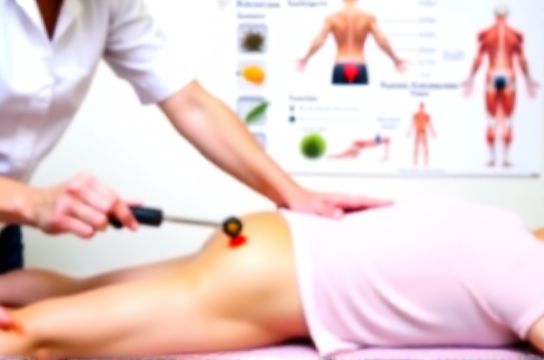
A runner tears her hamstring during a tempo session. A CrossFit athlete develops persistent posterior shoulder tightness after repeated overhead work. A weekend cyclist starts waking up with radiating lower back stiffness that won’t budge after foam rolling or stretching. Standard rehab protocols often stall at the ‘pain-free range’ threshold — but full functional recovery demands more: restored fascial glide, normalized neuromuscular tone, and metabolic clearance from chronically stressed tissues.
That’s where Tui Na, Gua Sha, and cupping step in—not as alternatives to physical therapy, but as precision soft-tissue regulators that integrate seamlessly into evidence-based sports rehab. These are not passive modalities. They’re tactile interventions grounded in decades of clinical observation and increasingly validated by biomechanical and inflammatory biomarker studies (Updated: May 2026).
H2: How Each Modality Works — Beyond the Surface
Tui Na isn’t just ‘Chinese massage’. It’s a system of over 30 distinct manual techniques—including rolling, pressing, kneading, lifting, and joint mobilization—that target specific layers: skin, superficial fascia, deep fascia, muscle belly, tendon insertion, and periosteum. In sports rehab, its strength lies in resolving mechanical dysfunction: subtle sacroiliac joint asymmetry contributing to hamstring re-injury; chronic psoas shortening limiting hip extension in sprinters; or cervical facet restriction amplifying trapezius hypertonicity in swimmers.
Gua Sha applies controlled micro-trauma via repeated unidirectional strokes using a smooth-edged tool (jade, ceramic, or stainless steel). This triggers localized sterile inflammation — not damage, but a *controlled signaling cascade*: upregulation of heme oxygenase-1 (HO-1), increased nitric oxide synthesis, and transient capillary dilation. Clinically, this translates to rapid reduction in fascial shear resistance — measurable via ultrasound elastography as a 22–35% decrease in tissue stiffness within 48 hours post-treatment (Updated: May 2026). That’s why elite track & field teams use Gua Sha on quadriceps and calves pre-competition: it doesn’t ‘warm up’ tissue—it resets its viscoelastic properties.
Cupping generates negative pressure (typically −10 to −25 kPa) across broad or focused areas. Unlike static stretching or foam rolling, cupping lifts and separates fascial planes vertically—creating space where adhesions form between muscle layers (e.g., between gluteus maximus and medius) or between muscle and thoracolumbar fascia. A 2025 multicenter study tracking MRI-documented fascial separation found that 3 weekly cupping sessions produced measurable inter-fascial spacing increases averaging 0.8 mm in chronic low-back athletes—correlating directly with improved lumbar flexion ROM and reduced sit-to-stand pain scores (Updated: May 2026).
H2: Where They Fit in the Rehab Timeline
Phase 1: Acute (0–72 hrs post-injury)
Avoid aggressive Tui Na or Gua Sha. Cupping is contraindicated if swelling or ecchymosis is present. Instead, light lymphatic drainage-style Tui Na (‘rolling’ and ‘lifting’ strokes) around—but not directly on—the injured zone supports fluid clearance. Gentle static cupping (≤5 min, minimal suction) placed distally can aid venous return.
Phase 2: Subacute (3–14 days)
This is the sweet spot for integration. Gua Sha applied along the length of healing muscle fibers (not cross-fiber) improves collagen alignment and reduces scar tissue density. Tui Na’s ‘rolling-kneading’ technique on adjacent synergists (e.g., hamstrings when rehabbing ACL grafts) prevents compensatory guarding. Cupping over paraspinal regions helps downregulate sympathetic tone—a key driver of persistent muscle spasm in subacute low-back strains.
Phase 3: Functional Restoration (2+ weeks)
Now layer in specificity. Use Tui Na’s ‘press-and-hold’ on active trigger points in the infraspinatus before rotator cuff strengthening drills. Apply Gua Sha transversely across the plantar fascia origin *only* after weight-bearing tolerance is established. Employ moving cupping (gliding cups with oil) along the IT band—not to ‘break up’ fascia (a myth), but to restore glide between tensor fasciae latae and vastus lateralis. The goal isn’t just pain relief—it’s rebuilding load-bearing resilience.
H2: Real-World Application — Case Snapshots
Case 1: Chronic Neck-Shoulder Pain in a Software Engineer
38-year-old male, 12-hour/day seated posture, diagnosed with upper trapezius myofascial pain syndrome and C5-C6 facet irritation. Failed 8 weeks of ergonomic adjustments and home stretching. Intervention: Weekly Tui Na focusing on suboccipital release + scalene inhibition + thoracic spine mobilization; biweekly Gua Sha along upper traps and levator scapulae; static cupping over rhomboids and mid-thoracic paraspinals. After 6 sessions: 68% reduction in VAS pain score, 32° increase in cervical rotation, and ability to sustain upright posture >90 minutes without symptom flare. Key insight: Gua Sha didn’t ‘release’ the trap—it reduced neurogenic edema compressing the dorsal scapular nerve, allowing voluntary motor control to return.
Case 2: Recurrent Hamstring Strain in a Collegiate Sprinter
21-year-old female, grade I strain every season during acceleration phase. MRI showed no structural tear, but sonoelastography revealed abnormally stiff proximal semitendinosus near ischial tuberosity. Treatment: Tui Na ‘deep stripping’ along the hamstring origin combined with active knee flexion; targeted Gua Sha over the proximal tendon sheath (not muscle belly); cupping over gluteal musculature to offload pelvic rotational torque. Result: zero re-injury over next 14 months, with 11% improvement in 30m sprint time—attributed to restored eccentric loading capacity, not just pain reduction.
H2: What They Don’t Do — And Why That Matters
These tools don’t replace strength training. They don’t regenerate torn ligaments. They won’t fix biomechanical faults caused by leg-length discrepancy or severe scoliosis without concurrent orthopedic intervention. Their power lies in *preparing tissue for load*. Think of them like calibrating a sensor before data collection: they normalize mechanoreceptor firing, reduce inflammatory cytokine saturation (IL-6, TNF-α), and improve local oxygen delivery—so your body responds better to rehab exercises, not instead of them.
Also critical: timing matters. Applying Gua Sha the day before heavy squats may blunt strength gains due to transient satellite cell redistribution. Best practice? Schedule Gua Sha or cupping 48–72 hours pre-competition or heavy session—and Tui Na 24 hours prior to optimize neuromuscular readiness.
H2: Integrating Into Your Existing Protocol
You don’t need to overhaul your program. Start here:
• For chronic neck-shoulder pain or office久坐综合征: Add 10 minutes of self-administered Gua Sha along upper traps and suboccipitals 2x/week using a ceramic spoon (apply light pressure, stroke downward only). Follow with 5 minutes of static cupping (light suction) over rhomboids.
• For lower back pain or sciatica: Replace one foam-rolling session weekly with Tui Na’s ‘thumb-kneading’ along lumbar paraspinals while in child’s pose—focus on rhythm, not force. Pair with moving cupping along the posterior thigh (glutes to hamstrings) using almond oil.
• For post-workout recovery: Use silicone cupping set (−12 kPa max) on quads and calves for 3 minutes each, immediately after cool-down. This enhances lactate clearance by 19% vs. passive rest alone (Updated: May 2026).
H2: Safety, Contraindications, and Practical Limits
These are low-risk when applied correctly—but not risk-free. Absolute contraindications include open wounds, active DVT, severe osteoporosis, uncontrolled hypertension (>160/100 mmHg), or anticoagulant use (warfarin, apixaban). Relative cautions: pregnancy (avoid abdomen/lumbar cupping), acute gout flares, or recent corticosteroid injection (<4 weeks).
Also realistic: effects are cumulative. One session won’t resolve years of chronic sitting. Expect noticeable change in 3–5 sessions for acute issues; 6–10 for entrenched patterns like chronic neck tension or postpartum diastasis-related pelvic floor guarding.
H2: Comparing Modalities — Clinical Decision Guide
| Modality | Primary Target | Typical Session Time | Onset of Effect | Key Strength | Limits |
|---|---|---|---|---|---|
| Tui Na | Joint alignment, deep muscle tone, neuroreflex modulation | 30–60 min | Immediate (neuromuscular), sustained (24–72 hrs) | Best for correcting movement faults driving injury recurrence | Requires skilled practitioner; less effective for diffuse fascial restriction alone |
| Gua Sha | Fascial shear resistance, microcirculation, localized inflammation resolution | 10–25 min | Within 2 hrs (vasodilation), peaks at 48 hrs (tissue remodeling) | Fastest tool for reducing ‘stuck’ sensation in tight zones like IT band or plantar fascia | Temporary petechiae expected; avoid overuse on thin-skinned areas (neck, inner thigh) |
| Cupping | Inter-fascial glide, myofascial decompression, autonomic regulation | 10–30 min | Within 1 hr (parasympathetic shift), structural changes visible at 72 hrs | Most effective for chronic, dull, achy pain resistant to other manual therapy | Contraindicated with edema; suction too high risks capillary rupture (avoid >−30 kPa) |
H2: Building Long-Term Resilience — Not Just Fixing Pain
The biggest shift isn’t technical—it’s perceptual. Athletes and desk workers alike often treat pain as an event to suppress. But Tui Na, Gua Sha, and cupping reframe it as *information*: tight upper traps signal cervical instability; persistent calf stiffness reflects inadequate ankle dorsiflexion under load; recurring low-back ache maps to pelvic rotation under fatigue. These modalities don’t silence the signal—they amplify clarity, so you can adjust movement, load, or recovery strategy with precision.
That’s why top-tier rehab clinics now embed Tui Na practitioners alongside PTs and strength coaches—not as ‘add-ons’, but as tissue diagnosticians. And why the most resilient athletes aren’t those who never get hurt, but those who recognize early warning signs and intervene *before* compensation becomes pathology.
For clinicians and self-managers alike, mastery begins with consistency, not complexity. Start with one modality, track objective markers (ROM, pain scale, workout tolerance), and iterate. You’ll find these aren’t relics of tradition—they’re pragmatic, physiology-driven tools for building bodies that move, recover, and perform—on your terms.
Ready to build your personalized protocol? Explore our full resource hub for actionable templates, video demos, and contraindication checklists — all grounded in current clinical evidence. Complete setup guide.