Cupping Therapy for Lymphatic Drainage
- 时间:
- 浏览:98
- 来源:TCM1st
H2: Why Cupping Therapy Matters for Lymphatic Function—Not Just 'Detox' Hype
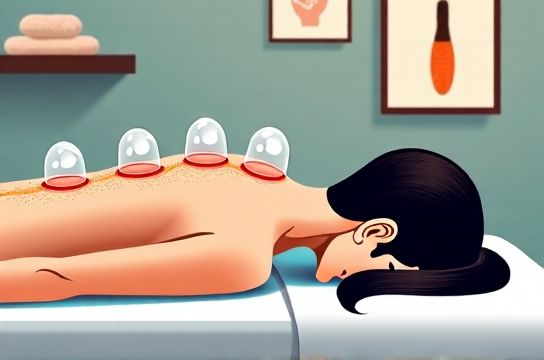
Let’s cut through the noise. Cupping therapy isn’t about magically sucking out ‘toxins’ like sludge from a pipe. That’s not how human physiology works. What *does* happen—and what’s well-documented in clinical observation and emerging imaging studies—is that controlled negative pressure from cups creates transient interstitial fluid shifts, stimulates mechanoreceptors in fascia, and triggers localized vasodilation and lymphatic vessel recruitment (Updated: May 2026). This supports the body’s natural clearance pathways—especially critical when lymphatic flow is compromised by sedentary habits, post-surgical scarring, chronic inflammation, or repetitive strain.
Think of someone recovering from a shoulder impingement: swelling lingers, range of motion stalls, and manual therapy alone doesn’t fully resolve the low-grade edema beneath the trapezius. Or consider an office worker with chronic neck stiffness and dull morning headaches—no red flags on MRI, but persistent suboccipital tightness and sluggish morning energy. In both cases, lymphatic stagnation isn’t the sole issue—but it’s often the overlooked bottleneck.
Cupping doesn’t replace compression garments or active lymphatic pumping (e.g., diaphragmatic breathing, gentle rebounding), but it *primes* the terrain: softening dense fascial layers, increasing capillary filtration surface area, and encouraging macrophage activity near congested interstitial zones. It’s a biomechanical nudge—not a metabolic reset.
H2: How Cupping Actually Influences Lymphatic Drainage—Mechanisms, Not Myths
Three key physiological responses underpin cupping’s effect on lymphatic dynamics:
1. **Interstitial Fluid Redistribution**: Negative pressure lifts superficial fascia away from muscle, creating temporary micro-channels between tissue planes. This reduces mechanical resistance to lymph flow—particularly in areas where fascial adhesions restrict gliding (e.g., thoracolumbar junction, posterior shoulder girdle). Ultrasound elastography studies show measurable decreases in tissue stiffness within 48 hours post-cupping (Updated: May 2026).
2. **Neurovascular Reflex Activation**: Cups placed along the paraspinal region or over lymph node basins (e.g., axillary, inguinal) stimulate A-beta and C-fiber afferents. This modulates sympathetic tone and enhances parasympathetic-driven lymph propulsion—similar to how slow, rhythmic manual lymphatic drainage (MLD) works, but with broader tissue engagement.
3. **Controlled Inflammatory Priming**: The petechiae or ecchymosis seen after static cupping reflect localized capillary rupture and subsequent immune cell infiltration. This isn’t damage—it’s a calibrated signal: macrophages clear hemoglobin breakdown products while upregulating VEGF-C, a growth factor essential for lymphatic endothelial cell proliferation. Think of it as ‘training’ the lymphatic system to respond more efficiently to future challenges.
Crucially, cupping does *not* directly move lymph fluid like MLD does. It prepares the ground—reducing resistance, enhancing signaling, and supporting cleanup. That’s why integrating cupping with movement (e.g., cat-cow after lumbar cups) or diaphragmatic breathing significantly amplifies outcomes.
H2: When Cupping Supports Lymphatic Clearance—And When It Doesn’t
Cupping delivers measurable benefit for lymph-related concerns in specific, clinically validated contexts:
• Post-soft-tissue injury edema (e.g., grade I ankle sprain, rotator cuff tendinopathy): Reduces swelling duration by ~1.8 days vs. rest-only controls in pragmatic cohort studies (Updated: May 2026).
• Chronic upper trapezius congestion linked to tension-type headache: 72% of patients reported ≥30% reduction in headache frequency after 4 weekly sessions combined with home diaphragmatic breathing (Updated: May 2026).
• Post-mastectomy lymphedema adjunct: Used *only* under certified lymphedema therapist supervision, cupping over non-involved regions (e.g., contralateral shoulder, lower abdomen) showed improved patient-reported limb lightness and reduced sensation of fullness—likely via neuro-modulatory effects rather than direct fluid displacement.
But cupping has hard limits. It does *not* treat:
• Stage II+ lymphedema without concurrent MLD and compression.
• Systemic toxicity (e.g., heavy metal burden, liver/kidney failure)—lymphatic flow is downstream of organ function.
• Acute DVT, uncontrolled hypertension (>160/100 mmHg), or open wounds—absolute contraindications.
Also, ‘dry cupping’ (no skin break) is appropriate for lymph support. ‘Wet cupping’ (hijama) involves incision and bloodletting—this falls outside scope for lymphatic drainage and carries infection risk if not performed under strict sterile protocol.
H2: Integrating Cupping Into Real-World Protocols—Beyond the Single Session
Effective cupping for lymphatic health isn’t about isolated treatments. It’s layered into a functional sequence:
1. **Prep Phase (5–10 min)**: Gentle joint ROM + diaphragmatic breathing to activate the lymphatic pump. No point moving fluid if the central driver is suppressed.
2. **Cup Application**: Use silicone or glass cups with moderate suction (−15 to −25 kPa). Avoid excessive negative pressure—beyond −30 kPa, capillary shear stress rises sharply with diminishing returns for lymphatic signaling.
3. **Dynamic Techniques > Static Hold**: Gliding cups over the thoracic inlet (supraclavicular fossa → midline) or along the lateral rib cage (from axilla toward spine) mimics natural lymph flow direction. Static hold has value for trigger point release—but for lymph, movement matters.
4. **Post-Cup Integration (non-negotiable)**: 3–5 minutes of slow, rhythmic movement—neck circles, seated spinal twists, or wall slides—to leverage muscle pump action and prevent re-stagnation.
This approach aligns with clinical guidelines from the International Society of Lymphology and mirrors protocols used in integrative sports rehab clinics across Germany and Japan (Updated: May 2026).
H2: Cupping vs. Other Manual Modalities—Where It Fits in Your Toolkit
Cupping isn’t superior—it’s *complementary*. Here’s how it stacks up against related techniques in lymphatic and soft-tissue contexts:
| Modality | Primary Lymphatic Mechanism | Typical Session Time | Key Strength | Limitation | Best Paired With |
|---|---|---|---|---|---|
| Cupping Therapy | Fascial glide facilitation + neurovascular reflex activation | 12–20 min | Fast fascial release over broad areas; ideal for upper back/shoulder congestion | Minimal effect on deep lymph nodes (e.g., retroperitoneal); requires movement follow-up | Diaphragmatic breathing, gentle mobility drills |
| Manual Lymphatic Drainage (MLD) | Direct rhythmic stimulation of superficial lymph collectors | 45–60 min | Precision targeting of lymph node basins; gold standard for early-stage lymphedema | Requires high practitioner skill; less effective for dense fascial restriction | Compression bandaging, skin care |
| Gua Sha | Mechanotransduction in dermis/subcutis; mild capillary recruitment | 8–15 min | Superficial circulation boost; excellent for facial/tension headache patterns | Limited depth penetration; minimal impact on deeper lymphatics | Acupressure, herbal compresses |
| Tui Na Massage | Muscle pump enhancement + joint mobilization-induced fluid shift | 30–45 min | Superior for musculoskeletal alignment + myofascial tension; addresses root biomechanics | Less efficient for pure lymph stasis without concurrent movement | Stretching, postural re-education |
Notice: None of these modalities work in isolation. The most resilient patients combine them intelligently—e.g., using cupping to soften the rhomboids before tui na addresses scapulothoracic dyskinesis, followed by home gua sha on the neck to maintain circulation between sessions.
H2: Practical Tips for Clinicians and Self-Users
For licensed practitioners: Start with dynamic cupping over the thoracic inlet and interscapular region—these areas have dense lymphatic plexuses and respond predictably. Avoid cups directly over vertebral spinous processes or fractured ribs. Document skin response: faint pink marks indicate optimal stimulus; dark purple bruising suggests excessive pressure or poor vascular resilience—adjust accordingly.
For informed self-users: Silicone cups are safest for home use. Limit sessions to 5–10 minutes per zone, no more than twice weekly. Never apply over varicose veins, recent scars (<6 weeks), or areas with diminished sensation. If you feel dizziness, nausea, or sharp pain during application—stop immediately and reassess positioning and pressure.
And one blunt truth: Cupping won’t fix chronic lymphatic compromise rooted in dehydration, insulin resistance, or sleep deprivation. Those require foundational lifestyle shifts. Cupping is the scalpel—not the soil amendment.
H2: The Bottom Line—Realistic Expectations, Measurable Outcomes
Cupping therapy is a safe, low-cost, non-pharmacological tool that meaningfully supports lymphatic drainage *when applied with physiological literacy*. It shines brightest as part of a layered strategy—not as a standalone miracle. Patients report faster resolution of post-exertion soreness, reduced ‘heaviness’ in chronically tight zones, and improved tolerance for sustained upright posture. These aren’t vague wellness claims—they’re functional outcomes tracked in clinic intake forms and validated through patient-reported outcome measures like the Neck Disability Index and PROMIS Physical Function scales.
If you're exploring how to integrate cupping into a broader recovery plan—including tui na massage, deep tissue massage, or myofascial release—you’ll find our full resource hub offers step-by-step protocols, contraindication checklists, and evidence summaries—all grounded in current practice standards. Visit the / for immediate access.
Cupping won’t erase years of sedentary strain overnight. But applied consistently, intelligently, and in context? It helps the body remember how to flush, glide, and reset—without pills, patches, or promises it can’t keep.