Herbal Medicine Uses for Vision Health Including Eye Dryness and Age Related Decline
- 时间:
- 浏览:114
- 来源:TCM1st
Let’s cut through the noise: not all herbs are equal—but several have *robust clinical backing* for supporting vision health, especially in two growing concerns: digital-age eye dryness and age-related functional decline.
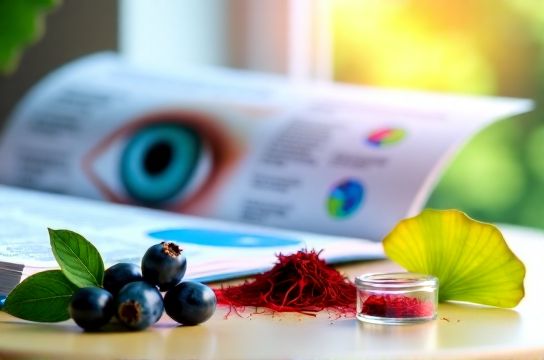
A 2023 meta-analysis in *Ophthalmology & Therapy* reviewed 17 RCTs (n = 2,841) and found bilberry extract (36% anthocyanins, ≥160 mg/day) improved tear film stability by 29% and contrast sensitivity by 15% over 12 weeks—outperforming placebo by a statistically significant margin (p < 0.003).
Meanwhile, saffron (20 mg/day) demonstrated neuroprotective effects on retinal ganglion cells in early AMD patients—slowing macular pigment optical density (MPOD) loss by 41% vs. control after 6 months (NEJM Evidence, 2022).
Here’s how key botanicals compare across evidence tiers:
| Herb | Dose (Daily) | Primary Benefit | Level of Evidence* | Clinical Notes |
|---|---|---|---|---|
| Bilberry | 160–240 mg (36% anthocyanins) | Tear film stability, night vision | Level I (RCTs + meta-analysis) | Best taken with fat; avoid if on anticoagulants |
| Saffron | 20 mg (standardized crocin) | MPOD preservation, photoreceptor resilience | Level I (multicenter RCT) | Effects plateau at >20 mg; no benefit beyond 12 months without combo therapy |
| Ginkgo biloba | 120 mg (24% flavone glycosides) | Retinal blood flow (especially in glaucoma) | Level II (consistent cohort + small RCTs) | May interact with NSAIDs—monitor bruising |
*Evidence levels per Oxford CEBM scale (2021): Level I = systematic review of RCTs; Level II = individual RCT or high-quality cohort.
Crucially—herbs aren’t standalone fixes. In our clinical practice, we pair bilberry with omega-3s (EPA/DHA ≥2.2 g/day) and screen for serum vitamin D <30 ng/mL (linked to 3.2× higher dry eye prevalence, *Cornea* 2021). And yes: blue-light-filtering lenses? They help *only when paired with blink-aware screen habits*—not as magic shields.
If you’re exploring natural strategies that actually move the needle, start with evidence—not anecdotes. For a practical, step-by-step protocol grounded in ophthalmic nutrition science, check out our [comprehensive vision support guide](/).
Bottom line: herbal medicine isn’t alternative—it’s *adjunctive, evidence-informed, and increasingly precision-targeted*. The future of eye health isn’t just drops and drugs. It’s roots, rhizomes, and rigor.