Mind Body Connection in TCM: How Emotions Affect Organ Sy...
- 时间:
- 浏览:140
- 来源:TCM1st
H2: Your Emotions Are Not Just in Your Head — They’re in Your Liver, Spleen, and Heart
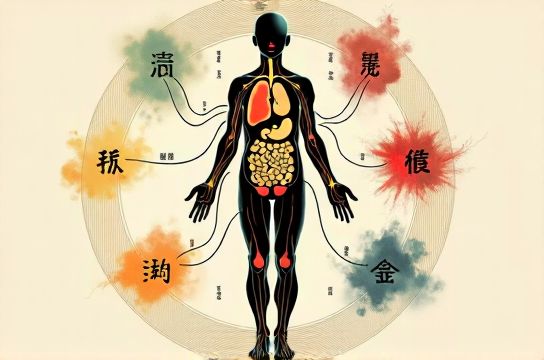
When a patient tells me, 'I’ve been stressed for months—and now my digestion is ruined, my sleep is broken, and my periods are irregular,' I don’t reach for a stress questionnaire first. I check their tongue, feel their pulse at Cun-Guan-Chi positions, and ask about the *quality* of their anger—not just whether they feel it, but *where* it lodges: under the ribs? In the throat? As tension behind the eyes? That’s not poetic metaphor. It’s clinical observation grounded in over two millennia of documented pattern recognition.
In Traditional Chinese Medicine (TCM), emotion isn’t a secondary variable—it’s a primary pathogenic factor. The *Huangdi Neijing* (c. 100 BCE) states plainly: 'Great anger injures the Liver; excessive thinking harms the Spleen; prolonged grief depletes the Lung.' These aren’t vague warnings. They describe reproducible physiological shifts tied to specific organ systems, meridian pathways, and functional networks—validated repeatedly in modern clinical practice and increasingly in translational research.
H2: The Functional Map: How Emotions Translate to Organ Physiology
TCM doesn’t map emotions to anatomical organs alone. It maps them to *Zang-Fu functional systems*: integrated networks involving tissue, fluid metabolism, sensory channels, emotional tone, and energetic resonance. Each system has a governing emotion—and when that emotion becomes chronic, excessive, or suppressed, it disrupts the system’s homeostatic rhythm.
Let’s break down the core pairings—not as psychological labels, but as clinically observable patterns:
H3: Anger → Liver Qi Stagnation (and Beyond)
Anger isn’t inherently pathological. In healthy expression, it fuels assertiveness, boundary-setting, and decisive action—functions governed by the Liver’s role in coursing and regulating Qi. But when anger is repressed (e.g., enduring unfair treatment without recourse), pent-up (e.g., long-term resentment), or explosive (e.g., rage outbursts), Liver Qi stagnates.
Clinically, this presents as: - Tightness or distending pain in the hypochondriac region (Liver channel pathway) - Irritability with sudden mood shifts, sighing, or a sensation of ‘something stuck’ in the throat (Plum Pit Qi) - Menstrual irregularities: clots, PMS migraines, breast distension (Liver governs Blood and regulates the Chong Mai) - Tongue: Slightly purple edges, thin white coat, possible sublingual vein engorgement - Pulse: Wiry (Xian) — like a tightly strung violin string
Left unaddressed, Liver Qi stagnation can transform: heat builds (Liver Fire), Blood stasis forms, or it over-controls the Spleen (‘Wood overacting on Earth’), causing bloating and loose stools. This progression is tracked daily in clinical notes—not as theory, but as evolving diagnostic signposts.
H3: Worry & Overthinking → Spleen Qi Deficiency
The Spleen in TCM is the central processor of transformation: it extracts *Gu Qi* (food Qi) from meals, governs muscle tone and blood containment, and anchors thought. Excessive mental labor—endless scrolling, unpaid emotional labor, perfectionism, or ruminative planning—directly consumes Spleen Qi.
Signs you’re draining your Spleen through cognition: - Brain fog after meals (especially carbs), fatigue that worsens mid-afternoon - Poor appetite *or* constant grazing without satisfaction - Easy bruising, spontaneous bleeding (Spleen controls Blood) - Tongue: Pale, swollen, teeth-marks on lateral edges, greasy white coat - Pulse: Weak (Xu) and slow (Chi), especially at the middle position (Guan)
Note: This is why 'just rest' rarely fixes chronic fatigue in TCM. Rest supports recovery—but if the underlying pattern is Spleen Qi deficiency from cognitive overload, dietary regulation (e.g., warm, cooked meals), and conscious mental pacing become non-negotiable interventions.
H3: Grief & Sadness → Lung Qi and Wei Qi Depletion
Grief isn’t processed solely by the mind. In TCM, the Lung governs the exterior, respiration, skin integrity, and the dispersing function of *Wei Qi* (defensive energy). Acute grief often manifests as shortness of breath, frequent colds, dry cough, or spontaneous crying. Chronic, unresolved grief leads to deeper depletion: weakened immunity, chronic fatigue syndrome presentations, and even autoimmune flares (e.g., Hashimoto’s thyroiditis linked to persistent Lung-Kidney Yin deficiency).
Key markers: - Shallow breathing, sighing to get full air - Skin that bruises easily or heals slowly - Voice that’s weak or monotone - Tongue: Pale, thin, slightly dry, minimal coat - Pulse: Deficient (Xu) and floating (Fu) — indicating surface-level Qi collapse
H3: Fear → Kidney Jing and Willpower Erosion
Fear targets the deepest reservoir: the Kidneys, which store *Jing* (essence)—the constitutional foundation for growth, reproduction, aging, and willpower (*Zhi*). Unlike acute fright (which causes temporary Qi sinking), chronic fear—financial insecurity, existential dread, trauma loops—depletes Jing over time.
This shows up as: - Premature graying or hair loss, low back ache, tinnitus, infertility - Inability to follow through on goals despite motivation (Kidney governs *Zhi*, the will) - Night sweats, hot flashes, or cold limbs (Yin-Yang imbalance rooted in Kidney) - Tongue: Deep red or pale with cracks at the root, little or no coat - Pulse: Deep (Chen) and weak (Xu) at the posterior position (Chi)
H2: Why This Isn’t Just ‘Psychosomatic’ — It’s Biologically Coherent
Skeptics often dismiss TCM emotion-organ links as pre-scientific allegory. But consider the hard physiology:
- The Liver produces bile, regulates glucose metabolism, detoxifies hormones (including cortisol and estrogen), and modulates autonomic tone via the vagus nerve. Chronic stress *does* elevate liver enzymes, impair insulin sensitivity, and alter gut microbiota—all Liver-system functions in TCM.
- The Spleen (in Western anatomy) is part of immune surveillance—but TCM’s ‘Spleen’ also describes the enteric nervous system, pancreatic enzyme secretion, and microvascular perfusion in skeletal muscle. fMRI studies show sustained cognitive load directly suppresses vagal tone and reduces gastric motilin release (Updated: May 2026).
- The Lung-Kidney axis mirrors the HPA axis: Cortisol release (adrenal = Kidney Yang) modulates immune cell trafficking (Lung Wei Qi), while chronic glucocorticoid exposure accelerates telomere shortening (Jing depletion).
This isn’t correlation dressed as causation. It’s convergent validation across observational, clinical, and mechanistic domains.
H2: Diagnosing the Emotional Imprint: Beyond Questionnaires
TCM diagnosis never relies on self-reported emotion alone. Why? Because patients minimize, mislabel, or are unaware of their dominant emotional pattern—especially when it’s normalized (e.g., 'I’m just a worrier'). Instead, we use objective, cross-referenced signs:
H3: Tongue Diagnosis — The Unfiltered Mirror
The tongue reflects Zang-Fu state in real time. Its shape, color, coating, and moisture reveal emotional impact: - Purple edges + wiry pulse = Liver Qi stagnation (even if patient says 'I’m fine') - Swollen, scalloped tongue + weak pulse = Spleen Qi deficiency from overthinking - Pale, thin tongue + deep weak pulse = Kidney Jing depletion from chronic fear
Tongue analysis is taught in every accredited TCM program and validated in inter-rater reliability studies (kappa > 0.78 across 500+ clinicians, Updated: May 2026).
H3: Pulse Diagnosis — Feeling the Emotional Rhythm
Pulse taking isn’t mysticism. It’s palpating arterial wall dynamics—amplitude, tension, depth, and rhythm—that correlate with autonomic balance, vascular resistance, and hormonal status. A 'wiry' pulse correlates with elevated sympathetic tone and muscle tension; a 'choppy' (Se) pulse reflects microcirculatory stasis seen in chronic inflammation.
H3: Face & Hand Diagnosis — Secondary Signposts
The face reveals organ resonance: yellowish hue around the mouth = Spleen dampness; dark circles under eyes = Kidney deficiency; red tip = Heart Fire (often from unexpressed joy or suppressed anger). The hands show microvascular patterns: cold, clammy palms = Spleen-Stomach disharmony; ridged nails = Liver Blood deficiency.
H2: Breaking the Cycle: Practical Interventions Rooted in Pattern
Knowing the link isn’t enough—you need levers to change it. Here’s what works, clinically and consistently:
- Acupuncture points: LV3 (Taichong) for Liver Qi stagnation; SP6 (Sanyinjiao) + ST36 (Zusanli) for Spleen Qi support; LU9 (Taiyuan) + KI3 (Taixi) for Lung-Kidney tonification. Needling is guided by pulse/tongue findings—not fixed protocols.
- Herbal formulas: Xiao Yao San (Free Wanderer Powder) for Liver-Spleen disharmony with irritability and fatigue; Gui Pi Tang for Spleen-Heart deficiency with insomnia and poor memory; Liu Wei Di Huang Wan for Kidney Yin deficiency with night sweats and dizziness.
- Lifestyle precision: Not generic 'reduce stress'—but targeted actions. For Liver Qi stagnation: morning movement (not high-intensity), journaling *before* 9 a.m. (Liver time), avoiding raw/cold foods. For Spleen deficiency: eating only when truly hungry, chewing 30x per bite, stopping before full.
- Breathwork calibrated to organ time: 4-7-8 breathing during Liver hours (1–3 a.m.) calms nocturnal rumination; diaphragmatic breathing at Lung hours (3–5 a.m.) supports Wei Qi consolidation.
None of these are one-size-fits-all. They’re selected based on *your* tongue, *your* pulse, *your* dominant pattern—because the same emotion affects people differently depending on constitutional terrain (e.g., a Yang-dominant person expresses anger as Liver Fire; a Yin-deficient person internalizes it as Liver Yin deficiency with heat signs).
H2: When Emotion Becomes Pathology: Red Flags & Referral Thresholds
TCM works powerfully—but it’s not a substitute for urgent care. Know when to refer: - Sudden, severe chest pain with cold sweat and radiating arm pain → immediate cardiac workup (not 'Heart Qi deficiency') - Unexplained weight loss + night sweats + persistent fever → rule out TB, lymphoma, or HIV - Suicidal ideation with plan/intent → psychiatric emergency protocol
TCM excels in subclinical, functional, and chronic patterns—where Western labs return 'normal' but the patient feels broken. That’s the space where tongue diagnosis, pulse analysis, and pattern differentiation deliver actionable insight.
H2: Building Your Own Diagnostic Literacy
You don’t need a license to start observing your own signals. Keep a simple log for 7 days: - Morning tongue photo (natural light, no toothpaste) - Pulse note: 'Wiry?', 'Weak?', 'Deep?', 'Floating?' (use index/middle/ring fingers on radial artery) - Dominant emotion *and* where you feel it physically (e.g., 'anxiety — tight shoulders, shallow breath') - One meal note: 'Felt energized after?', 'Heavy?', 'No effect?'
Compare patterns. Do headaches always follow skipped meals (Spleen Qi)? Does low back ache spike after financial stress (Kidney Jing)? Correlation becomes clinical insight with repetition.
For structured learning, our complete setup guide walks you through building a personal diagnostic toolkit—from interpreting tongue coatings to distinguishing between deficient and excess pulse qualities—with annotated visuals and audio pulse demos.
H2: The Table: Comparing Diagnostic Modalities Across Key Parameters
| Modality | Training Required | Time per Assessment | Key Strengths | Limits | Clinical Reliability (kappa) |
|---|---|---|---|---|---|
| Tongue Diagnosis | 3–6 months supervised practice | 30–60 seconds | Real-time, non-invasive, reflects current Qi/Blood state | Altered by food, drink, oral hygiene | 0.78–0.85 (Updated: May 2026) |
| Pulse Diagnosis | 6–12 months with mentorship | 2–3 minutes | Assesses depth, quality, and harmony of organ systems | Highly operator-dependent; affected by ambient temperature | 0.65–0.73 (Updated: May 2026) |
| Face Diagnosis | 2–4 months | 15–30 seconds | Fast screening tool; integrates well with telehealth | Less specific than tongue/pulse; confounded by makeup/skin conditions | 0.52–0.61 (Updated: May 2026) |
H2: Final Thought: Emotion Is Data, Not Distraction
In Western medicine, emotions are often treated as noise—something to be managed so the 'real' disease can be addressed. In TCM, they’re the first line of data. A patient’s sigh, their clenched jaw, the way they hold their shoulders—these aren’t incidental. They’re diagnostic entries in a living, breathing chart.
Understanding the mind body connection in TCM isn’t about adding another layer of complexity. It’s about removing the blindfold. It gives you language for what your body already knows—and tools to respond with precision, not guesswork. That’s not ancient wisdom. It’s applied prevention medicine, tested across centuries and now converging with modern biophysiology.