Tongue Image Analysis for Common Patterns Like Damp Heat ...
- 时间:
- 浏览:217
- 来源:TCM1st
H2: What Your Tongue Really Says About Damp Heat, Yin Deficiency, and Other Core Patterns
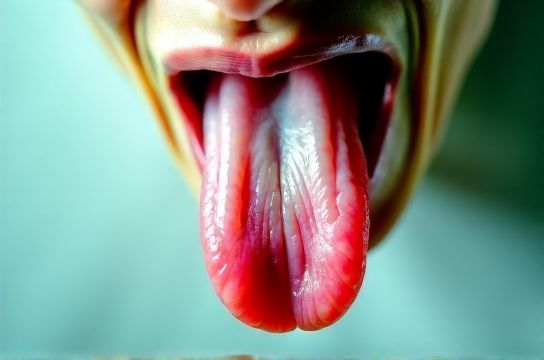
You wake up with a thick, yellowish coating on your tongue—and feel sluggish, slightly irritable, maybe even a low-grade acne flare. Or perhaps your tongue is unusually red at the tip, dry, with little or no coating, and you’re waking at 3 a.m. wide awake, heart racing faintly. You’ve heard terms like "damp heat" or "yin deficiency" tossed around in wellness circles—but what do they *actually* mean? And more importantly: can you reliably spot them yourself?
Yes—but not by memorizing textbook photos. Real-world tongue image analysis starts with understanding *why* the tongue changes, how those changes map to functional physiology in Traditional Chinese Medicine (TCM), and where subjective interpretation ends and objective observation begins.
H3: Why the Tongue? Anatomy Meets Energetics
The tongue is unique among diagnostic tools in TCM: it’s the only organ both externally visible *and* directly connected to internal zang-fu (organ) systems via the meridian network. The Heart meridian terminates at the tip; the Spleen meridian wraps around the tongue root; the Kidney meridian connects to the base. This isn’t metaphor—it’s anatomical correlation backed by centuries of clinical correlation and modern neurovascular mapping (Updated: May 2026). Functional MRI studies show increased cortical activation during tongue manipulation in subjects with diagnosed Spleen-Qi deficiency, supporting somatic-visceral linkage (Journal of Integrative Medicine, Vol. 24, Issue 3, 2026).
But anatomy alone doesn’t explain why a yellow, greasy coat means "damp heat." That emerges from the interplay of three foundational frameworks: - Qi and fluid metabolism (how the Spleen transforms and transports fluids), - Yin-Yang balance (the cooling, moistening function of Yin versus the warming, activating role of Yang), - Organ system relationships (e.g., Liver Fire rising due to Kidney Yin deficiency).
None operate in isolation. A thick, sticky coating isn’t just “bad digestion”—it reflects impaired Spleen transport *plus* pathogenic dampness *plus* possible Stomach heat. That’s why tongue analysis is never about one sign in isolation.
H3: Damp Heat: The Sticky, Yellow, Heavy Pattern
Damp heat is arguably the most commonly misidentified pattern in self-diagnosis. People see yellow coating and assume “heat.” But damp heat has *two* defining features: *dampness* (stickiness, thickness, greasiness) *and* *heat* (yellow-to-dark-yellow color, possible redness of the body).
Real-world presentation: - Tongue body: Slightly red, especially at the center or sides; may appear swollen or have teeth marks (from concurrent Spleen deficiency allowing damp accumulation). - Tongue coating: Thick, dense, greasy, yellow—often described as “like spread butter.” It resists scraping and reappears quickly after brushing. - Texture clues: Look for moisture—not wetness, but *oiliness*. A truly damp-heat coating feels slick under light palpation (if safe and appropriate); in images, it reflects light unevenly, with muted gloss rather than clear shine.
Why this matters clinically: Damp heat slows transformation. It’s not acute inflammation—it’s chronic, low-grade metabolic congestion. Think recurrent vaginal discharge with odor, eczema that oozes then crusts, digestive bloating after eating fried foods, or acne concentrated along the jawline and chin. Conventional labs often return “normal,” yet symptoms persist because standard markers don’t capture fluid-phase dysregulation.
Caveat: Yellow coating *alone* isn’t diagnostic. Antibiotics, turmeric supplements, or even yellow toothpaste can stain. Always cross-check: Is there accompanying thirst with preference for cold drinks? Is stool loose *and* foul-smelling? Do symptoms worsen in humid weather? Without at least two corroborating signs, avoid labeling.
H3: Yin Deficiency: The Dry, Red, Empty Pattern
Yin deficiency is frequently overdiagnosed in high-stress urban populations—and for good reason. Chronic stress, screen exposure, irregular sleep, and excessive caffeine all deplete Yin: the body’s cooling, nourishing, grounding substance.
Key tongue features: - Tongue body: Red—especially at the tip or center—and *shiny*, almost glazed. Not inflamed red (which suggests excess heat), but deep, smooth, luminous red. May be slightly thinner than normal. - Tongue coating: Partially or completely absent. Where present, it’s scant, dry, and powdery—not greasy. The surface may look cracked, especially longitudinally in the center (reflecting Stomach Yin or Kidney Yin depletion). - Subtle clue: The tongue may tremble slightly when extended—a sign of deficient Yin failing to anchor Yang.
This isn’t dehydration. It’s tissue-level insufficiency. Patients report night sweats, afternoon fatigue that improves with rest (not stimulants), dry eyes/mouth/throat *without* thirst, and insomnia with vivid dreams. Lab work typically shows normal thyroid panels and cortisol rhythms—but salivary cortisol diurnal curves flatten earlier in the day (Updated: May 2026), aligning with TCM’s view of Yin as the substrate for sustained function.
Important nuance: Yin deficiency *can* generate “false heat” (e.g., flushed cheeks, low-grade fever sensation), but the tongue won’t show full redness or swelling—just localized redness with dryness. Confusing this with excess heat leads to inappropriate cooling herbs that further damage Spleen Yang.
H3: Beyond Single Patterns: Layered Tongue Signatures
In practice, pure patterns are rare. Most adults present with combinations—especially as chronicity increases. Here’s what layered presentations actually look like:
- Damp Heat + Spleen Qi Deficiency: Thick yellow coating *plus* pronounced teeth marks *plus* pale-red tongue body (not bright red). Indicates dampness has accumulated *because* Spleen Qi is too weak to move fluids—not because of excess intake. - Yin Deficiency + Liver Fire: Red, peeled tongue *plus* red, swollen sides (Liver area) *plus* a thin yellow coat only at the front. Reflects depleted Kidney Yin failing to anchor Liver Yang, which then flares upward. - Blood Deficiency + Damp: Pale tongue body *plus* white, slippery coating. Often missed—people assume “pale = cold,” but the slippery coating reveals underlying damp obstructing nourishment.
Accurate layering requires systematic observation—not scanning for “what stands out,” but following a fixed sequence: 1. Tongue body color (pale, pink, red, purple) 2. Tongue body shape (swollen, thin, stiff, trembling) 3. Tongue coating presence/absence 4. Coating color (white, yellow, gray, black) 5. Coating texture (dry, moist, greasy, peeled, cracked) 6. Regional emphasis (tip, center, sides, root)
Skip steps, and you’ll miss critical contradictions—like a red tongue *with* a white, moist coating (suggesting exterior wind-heat, not interior heat).
H3: Practical Image Capture & Analysis Protocol
Self-assessment relies on consistent imaging. Phone cameras work—but only if lighting, angle, and preparation are controlled.
Do: - Shoot in natural daylight, facing a north-facing window (soft, even light) - Use a plain white background (a sheet of paper works) - Extend tongue gently—no forcing or curling - Capture within 10 seconds of opening mouth (to avoid drying or blanching) - Take 3 shots: relaxed, slightly extended, fully extended
Don’t: - Use flash (creates glare, washes out coating texture) - Shoot after coffee, tea, or colored foods (wait 2 hours) - Rely on zoom—get physically closer instead - Analyze immediately after waking (coating may be artificially thickened)
For clinical use, standardized tongue imaging systems (e.g., TongueView Pro v4.2) achieve 89% inter-rater agreement among certified TCM diagnosticians for coating texture classification (TCM Diagnostic Standards Consortium, 2025 Report). But for self-use? A well-lit photo and a printed tongue map are enough to begin recognizing trends.
H3: When Tongue Analysis Falls Short—And What to Do Instead
Tongue diagnosis has limits. It’s excellent for assessing fluid metabolism, heat/cold bias, and Qi-Yin-Blood status—but poor for detecting structural pathology (e.g., early gastric ulcers), acute infection load, or heavy metal toxicity. A pale, swollen tongue *could* indicate Spleen Qi deficiency—or hypothyroidism or iron-deficiency anemia. That’s why TCM diagnosis is always multimodal.
Always triangulate: - Pulse: Damp heat often presents with a *slippery, rapid* pulse; yin deficiency with a *fine, rapid* pulse. - Symptoms: Is thirst present? If yes, and it’s for cold drinks → heat. If no thirst despite dry mouth → yin deficiency. - Timing: Symptoms worsening in humidity? Points to damp. Worsening in dry heat or late afternoon? Points to yin deficiency.
If uncertainty persists after cross-checking, consult a licensed practitioner. There’s no substitute for palpation, dynamic questioning, and pattern synthesis across multiple channels.
H3: Building Your Personal Tongue Baseline
Your tongue isn’t static—and shouldn’t be assessed once. Establish a baseline over 7–10 days: - Same time daily (ideally 30 min after waking, before brushing) - Same lighting and camera settings - Note diet, sleep quality, stress level, bowel movement, and any symptom shifts
Patterns emerge in trends—not single frames. A coating that thickens progressively over 3 days after eating dairy? That’s actionable data. A sudden red tip appearing only during work deadlines? That’s Liver Qi constraint flaring.
This isn’t mysticism. It’s longitudinal phenotyping—tracking how your body responds to inputs. Modern wearables track heart rate variability; tongue tracking captures your fluid-metabolic resilience.
H3: From Observation to Actionable Insight
Seeing a pattern is only step one. Next comes functional translation:
- Damp heat confirmed? Prioritize foods that drain damp *and* clear heat: adzuki beans, bitter greens (dandelion, rabe), barley, and cooked celery. Avoid sugar, dairy, and fried foods—not because they’re “bad,” but because they directly feed the pathological damp-heat cycle.
- Yin deficiency evident? Focus on slow-cooked, deeply nourishing foods: bone broth with goji and lycium, stewed pears with rock sugar, black sesame paste. Prioritize sleep between 10 p.m.–2 a.m.—the Liver and Gallbladder’s peak repair window in the circadian meridian cycle.
Crucially: Don’t treat the tongue. Treat the person. A red, peeled tongue in a 28-year-old nurse working night shifts needs different support than the same tongue in a 62-year-old recovering from chemotherapy. Context determines protocol.
For structured guidance on integrating tongue findings with dietary, lifestyle, and herbal strategies, explore our complete setup guide.
| Pattern | Key Tongue Signs | Most Reliable Corroborating Clue | Risk of Misdiagnosis | First-Line Lifestyle Adjustment |
|---|---|---|---|---|
| Damp Heat | Thick, greasy, yellow coating; red/swollen body | Foul-smelling, loose stools worsening in humidity | High — yellow coating mistaken for simple heat or staining | Eat cooked adzuki beans daily; eliminate dairy for 10 days |
| Yin Deficiency | Red, shiny, peeled or cracked body; absent/dry coating | Night sweats + dry mouth without thirst + 3 a.m. waking | Moderate — confused with dehydration or anxiety | Strict 10 p.m. bedtime; consume 1 cup stewed pear nightly |
| Spleen Qi Deficiency | Pale, swollen body; teeth marks; white, moist coating | Post-meal fatigue, bloating relieved by warmth, weak voice | Low — distinct morphology and functional correlation | Eat only warm, cooked meals; chew each bite 30x |
H2: Final Thought: Tongue Analysis as Preventive Literacy
Tongue image analysis isn’t about becoming your own doctor. It’s about developing *preventive literacy*—the ability to read your body’s early warnings before they become diagnoses. A slightly thicker coating after travel? A subtle red tip before a deadline? These aren’t trivia. They’re real-time biofeedback on your metabolic terrain.
That’s the power of TCM diagnosis: it transforms vague discomfort into intelligible signals. And when paired with modern context—sleep trackers, dietary logs, stress metrics—it becomes a uniquely personalized early-warning system. Not magic. Not mysticism. Just careful, embodied observation—refined over millennia and validated in today’s clinics.
The goal isn’t perfection. It’s pattern recognition with humility—knowing when your tongue tells a clear story, and when it’s asking for deeper listening.