Herbal Medicine Uses in Traditional Chinese Healing Practices
- 时间:
- 浏览:110
- 来源:TCM1st
If you've ever scratched your head wondering how herbal medicine uses have stood the test of time—especially in Traditional Chinese Healing—you're not alone. As someone who’s spent over a decade diving deep into holistic wellness, I’ve seen firsthand how these ancient practices aren’t just folklore—they’re backed by centuries of observation and, increasingly, modern science.
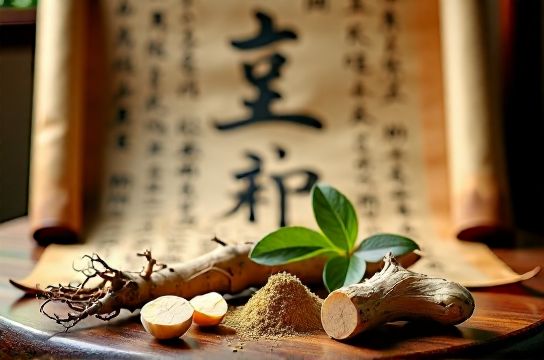
Let’s cut through the noise: Traditional Chinese Medicine (TCM) doesn’t see herbs as quick fixes. Instead, they’re part of a bigger puzzle focused on balance—yin and yang, qi flow, organ systems. And while Western medicine often targets symptoms, TCM aims to treat root causes using combinations of natural ingredients.
Take Gan Cao (licorice root), for example. It shows up in nearly 70% of TCM formulas—not because it’s flashy, but because it harmonizes other herbs and soothes digestion. Or consider Huang Qi (astragalus), widely studied for its immune-boosting effects. A 2021 meta-analysis in the Journal of Ethnopharmacology found that astragalus significantly improved immune response in patients undergoing chemotherapy.
But here’s the real tea: not all herbal blends are created equal. Quality, sourcing, and preparation matter—a lot. That’s why I always recommend checking for third-party tested products and consulting licensed practitioners before diving in. You wouldn’t self-prescribe antibiotics, right? Same logic.
Top 5 Commonly Used TCM Herbs & Their Benefits
| Herb (Pinyin) | Common Name | Primary Use | Scientific Support |
|---|---|---|---|
| Ren Shen | Ginseng | Energy, mental clarity | High – multiple RCTs |
| Dang Gui | Chinese Angelica | Women's health, blood circulation | Moderate – animal & small human trials |
| Bai Zhu | White Atractylodes | Digestive support, reduces dampness | Moderate – clinical observations |
| Chai Hu | Bupleurum | Liver regulation, mood balance | Emerging – liver enzyme studies |
| Jin Yin Hua | Honeysuckle Flower | Antiviral, clears heat | High – lab & flu season data |
Now, let’s talk safety. Some folks assume “natural = safe,” but that’s a myth. Ephedra (Ma Huang), once common in weight-loss supplements, was banned by the FDA due to heart risks—even though it’s used cautiously in TCM under supervision. This is why understanding proper dosage and combinations is crucial. That’s also where a qualified practitioner comes in—don’t wing it.
Curious where to start? Begin with trusted sources and look for certifications like GMP (Good Manufacturing Practice). And if you're exploring herbal medicine uses for chronic fatigue or immune support, consider starting with adaptogens like Reishi mushroom or Schisandra—both well-tolerated and researched.
Ultimately, the power of TCM lies in its personalized approach. Two people with the same symptom might get completely different herb prescriptions based on their body type and lifestyle. That’s something Big Pharma still struggles to match.
So whether you're new to this world or looking to deepen your knowledge, remember: wisdom grows when tradition meets evidence. Want to dive deeper into safe, effective options? Check out our guide on natural healing with herbs to get started the right way.