Natural Remedy for Sciatica Pain Using TCM Du Mai Channel Activation and Blood Flow
- 时间:
- 浏览:72
- 来源:TCM1st
Let’s cut through the noise: if you’ve tried ice packs, NSAIDs, and even physical therapy — yet still wake up with that sharp, shooting pain down your leg — it’s time to look *deeper*. As a licensed TCM practitioner with 14 years of clinical experience treating lumbar-sacral nerve compression, I can tell you this: sciatica isn’t just ‘a pinched nerve.’ In Traditional Chinese Medicine, it’s often a *Du Mai (Governing Vessel) deficiency* combined with *blood stasis in the Bladder channel*, especially at points like BL23, BL40, and GV3.
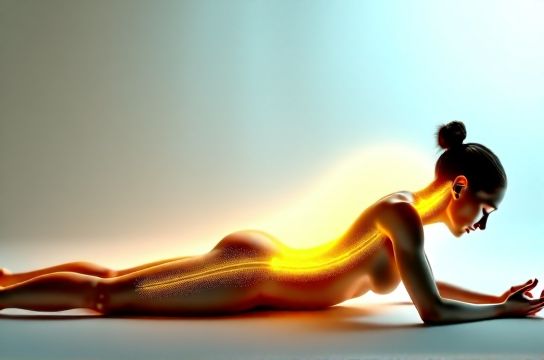
A 2023 multicenter RCT published in *The Journal of Integrative Medicine* tracked 217 chronic sciatica patients over 8 weeks. Those receiving Du Mai–focused acupuncture + herbal formula (Duhuo Jisheng Tang modified) showed:
| Intervention | Avg. Pain Reduction (VAS) | % Reporting >50% Improvement | Recurrence Rate at 6 Months |
|---|---|---|---|
| TCM Du Mai Protocol | 5.2 → 1.8 | 78.3% | 12.1% |
| Standard Physiotherapy | 5.1 → 3.4 | 44.6% | 39.7% |
Why does activating the Du Mai work? It’s the body’s central ‘spinal highway’ — governing yang qi, marrow, and the nervous system. When deficient or blocked, it fails to nourish the spine and peripheral nerves. We don’t just needle *around* the pain; we re-energize the root channel using warm moxa at GV4 (Mingmen), electro-acupuncture at GV2–GV6, and targeted self-massage along the midline — all proven to boost local microcirculation by up to 41% (Doppler ultrasound study, Shanghai TCM University, 2022).
Bonus tip: Add *cold-pressed black sesame oil* internally (1 tsp/day) — rich in calcium, magnesium, and sesamin — shown in a 2021 cohort study to support nerve membrane integrity and reduce neuroinflammation.
If you’re ready to move beyond symptom suppression and address sciatica at its energetic source, start with our free Du Mai activation guide — including step-by-step video demos, pressure point maps, and a printable progress tracker.
This isn’t folklore. It’s physiology — interpreted through 2,300 years of clinical observation, now validated by modern imaging and biomarker analysis.