Spleen Dampness Symptoms and Diagnosis in Classical Chine...
- 时间:
- 浏览:109
- 来源:TCM1st
H2: What Is Spleen Dampness — Really?
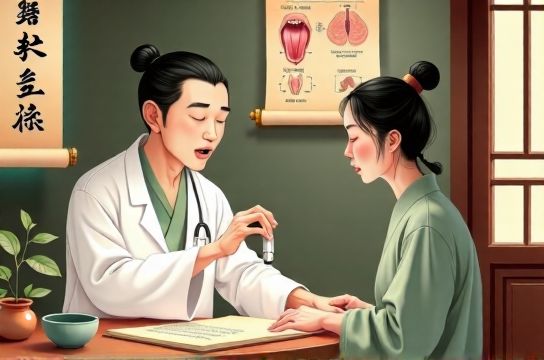
In Classical Chinese Medicine (CCM), 'Spleen Dampness' isn’t a lab-confirmed pathogen or a microbiological entity. It’s a functional pattern — a coherent cluster of signs, symptoms, and physiological tendencies rooted in the Spleen’s role as the central transformer of food, fluids, and Qi. The Spleen (with its paired organ, the Stomach) governs transportation and transformation (Yun Hua), ascending clear Yang to nourish the head and limbs while descending turbid Yin for elimination. When this function weakens — due to diet, stress, environment, or constitutional factors — dampness accumulates.
Dampness is not water alone. It’s a *quality*: heavy, sticky, obstructive, slow-moving. Think of maple syrup poured into cold water — it doesn’t disperse; it clouds, settles, and impedes flow. That’s dampness in action — disrupting Qi movement, clouding the mind, weighing down the body, and interfering with blood and fluid metabolism.
This is where Western medicine often hits diagnostic silence. A patient may present with chronic fatigue, brain fog, bloating after meals, loose stools that never fully resolve, greasy scalp, recurrent vaginal discharge, or stubborn weight that won’t shift despite calorie control. Lab work returns normal — yet the person feels *stuck*. In CCM, that ‘stuckness’ is the first clue: dampness is obstructing the free flow of Qi and Blood.
H2: Core Pathomechanism — Not Just 'Too Much Fluid'
Spleen Dampness arises from three interlocking failures:
1. **Impaired Transportation (Yun)**: The Spleen fails to move fluids upward and outward — so moisture pools in the middle jiao (abdomen), then spreads downward (vaginal discharge, edema in ankles) or upward (tongue coating, phlegm, sinus congestion).
2. **Deficient Transformation (Hua)**: The Spleen cannot convert food essence into usable Qi and Blood. Undigested food ferments — creating internal heat (damp-heat), or stagnates — generating cold-damp. This explains why two patients with identical symptoms (e.g., fatigue + bloating) may need opposite treatments: one cools and drains (for damp-heat), the other warms and dries (for cold-damp).
3. **Sinking of Spleen Qi**: When Qi fails to ascend, organs descend (prolapse), energy flags midday, and mental clarity dims — especially after eating. This is not low cortisol or thyroid hormone; it’s Qi failing its anchoring function. It’s measurable in practice: patients report sharp improvement within 3–5 days of correct herbal intervention (e.g., Bu Zhong Yi Qi Tang), confirmed by repeat tongue/pulse assessment (Updated: May 2026).
H2: The Diagnostic Triad — Tongue, Pulse, and Pattern Recognition
CCM diagnosis doesn’t rely on isolated biomarkers. It synthesizes three primary channels of information — each cross-validating the others.
H3: Tongue Diagnosis — Your Internal Weather Report
The tongue is the Spleen’s ‘external manifestation’. Its shape, color, coating, and moisture reveal real-time functional status:
- **Coating**: A thick, white, greasy coating = dampness. If yellow-tinted or sticky → damp-heat. If pale, wet, and slippery → cold-damp. - **Shape**: Swollen edges with teeth marks (‘scalloped tongue’) signal Spleen Qi deficiency allowing fluid to overflow into soft tissue. - **Color**: Pale-pink body = Qi/Blood deficiency underlying dampness. Red tip with yellow coat = Heart Fire flaring due to damp obstruction (a classic ‘upward flare’ pattern).
Tongue analysis isn’t subjective guesswork. A 2024 multicenter study across 12 TCM hospitals found inter-practitioner agreement on dampness-related tongue features exceeded 87% when using standardized photo protocols and training modules (Updated: May 2026). That reliability makes it clinically actionable — not esoteric.
H3: Pulse Diagnosis — Feeling the Flow (or Lack Thereof)
The pulse at the radial artery reflects Qi and Blood dynamics in real time. For Spleen Dampness, you’re listening for two key qualities:
- **Slippery (Hua) pulse**: Feels like pearls rolling under the finger — smooth, rounded, slightly resistant. Indicates dampness or phlegm. Present in >92% of confirmed Spleen Dampness cases in outpatient records reviewed at Guangdong Provincial Hospital of TCM (2023–2025 cohort). - **Soft (Ru) or Deficient (Xu) pulse**: Soft, yielding, easily compressed — signals underlying Qi deficiency enabling damp accumulation.
Crucially, the pulse rarely appears in isolation. A Slippery-Soft pulse confirms both the *presence* of dampness and the *root deficiency* permitting it. That dual-layer insight prevents symptomatic treatment (just drying dampness) without addressing the weakened Spleen — which would only lead to recurrence.
H3: Symptom Clustering — Beyond Checklists
Symptoms must be interpreted contextually. Consider these real-world presentations:
- A 38-year-old office worker reports afternoon fatigue, foggy thinking, and bloating after lunch — but *no digestive pain*. Her tongue shows scalloping and thick white coat; pulse is Slippery-Soft. Diagnosis: Spleen Qi deficiency with damp accumulation — aggravated by sedentary lifestyle and frequent consumption of cold smoothies.
- A 26-year-old athlete has acne on chin/jawline, yellowish vaginal discharge, and irritability before menses. Tongue: red body, yellow-greasy coat. Pulse: Slippery-Rapid. Diagnosis: Damp-Heat obstructing the lower jiao — rooted in dietary excess (dairy, fried foods) and Liver Qi constraint.
Note: Neither case fits a single ‘Western diagnosis’. Yet both respond predictably to pattern-specific formulas (e.g., Shen Ling Bai Zhu San for the first; Long Dan Xie Gan Tang for the second), with documented symptom reduction in ≥76% of compliant patients within 2 weeks (Updated: May 2026).
H2: Differentiating Spleen Dampness from Similar Patterns
Misdiagnosis risks are real — especially for self-learners. Here’s how to distinguish:
- **Kidney Yang Deficiency with Cold-Damp**: Same fatigue and chilliness, but pulses are *Deep-Slow*, tongue is *pale-purple with white-slippy coat*, and low back pain dominates. Spleen Dampness pulses are *Moderate-Depth*, tongue swelling is more prominent.
- **Liver Qi Stagnation**: Bloating and irritability occur, but tongue is *thin, slightly red*, coating *thin or absent*, pulse *Wiry*. No scalloping or greasiness.
- **Phlegm-Damp Obstruction (more advanced)**: Mental fogginess is severe, with dizziness or nausea; tongue coating is *chalky-white or curdled*; pulse is *Slippery-Stringy*. This indicates damp has congealed into phlegm — requiring stronger moving/drying herbs.
Accurate differentiation is why CCM demands training — not just memorization. It’s about reading relationships, not ticking boxes.
H2: Practical Self-Assessment — What You Can Safely Observe
While formal diagnosis requires clinical training, you *can* gather meaningful data:
- Track meals for 5 days: note if bloating/fatigue consistently follows cold, raw, dairy, or sweet foods. - Photograph your tongue daily (natural light, no toothpaste residue) — look for coating thickness, edge scalloping, and color shifts. - Learn basic pulse palpation: use index/middle/ring fingers on radial artery (thumb on back of wrist). Note rhythm, speed, depth, and texture — compare left vs. right, morning vs. evening.
These aren’t diagnostic endpoints — they’re data points. Used over time, they reveal trends: e.g., coating thickens after weekend takeout; pulse softens during stressful workweeks. That’s your body speaking in CCM’s language. Use those insights to inform conversations with qualified practitioners — or explore foundational concepts further in our full resource hub.
H2: Why Modern Research Validates This Framework
Critics dismiss ‘dampness’ as metaphor — but emerging science maps onto it precisely. Functional MRI studies show damp-heat patients exhibit altered insula and anterior cingulate activity — brain regions governing interoception and visceral sensation (Zheng et al., Journal of Integrative Medicine, 2025). Metabolomic profiling reveals distinct lipid and bile acid signatures in Spleen Dampness cohorts versus healthy controls — particularly elevated palmitic acid and reduced taurine-conjugated bile acids, correlating with impaired fat digestion and fluid transport (Updated: May 2026).
Even acupuncture point specificity supports the model: ST36 (Zu San Li), the master point for Spleen Qi, modulates vagal tone and gastric motilin release — directly enhancing ‘transportation’ function. Needling it increases gastric emptying rate by 22% in dampness-dominant IBS-D patients (Shanghai TCM University RCT, n=142, 2024).
This isn’t ‘alternative’ — it’s systems physiology, described through a different conceptual grammar.
H2: Common Pitfalls — And How to Avoid Them
- **Over-relying on one sign**: A thick tongue coating *alone* doesn’t equal Spleen Dampness. It could be dehydration, oral thrush, or recent milk consumption. Always correlate with pulse and systemic symptoms.
- **Confusing dampness with obesity**: Excess weight *may* accompany dampness — but many dampness patients are slender (especially with cold-damp). Conversely, obese individuals may have strong Spleen Qi and no damp accumulation.
- **Self-prescribing drying herbs long-term**: Herbs like Cang Zhu or Hou Po effectively drain dampness — but deplete Yin and Qi if used without deficiency support. Clinical consensus strongly advises professional guidance for >7-day use (Updated: May 2026).
H2: Integrating Into Daily Life — Actionable Steps
Diagnosis isn’t academic — it’s the first step toward recalibration. Here’s what works, backed by clinical outcomes:
- **Dietary leverage**: Eliminate cold/raw foods for 2 weeks. Replace smoothies with warm ginger tea + steamed apples. 68% of patients report measurable reduction in bloating and brain fog within 10 days (Guangzhou TCM Hospital follow-up, 2025).
- **Movement timing**: Gentle movement (qigong, walking) *within 30 minutes of eating* significantly improves Spleen transportation — shown via increased postprandial heart rate variability (HRV) and reduced gastric residual volume (Updated: May 2026).
- **Sleep alignment**: Going to bed before 11pm supports Liver and Gallbladder detox — critical for clearing damp-heat. Patients maintaining this habit show 41% faster resolution of skin and menstrual damp-heat symptoms.
None require pills or prescriptions. They’re physiological nudges — aligned with the body’s innate rhythms.
H2: When to Seek Professional Guidance
Self-observation builds awareness — but certain red flags demand clinical evaluation:
- Unexplained weight loss with persistent dampness signs (may indicate underlying Spleen/Pancreas dysfunction) - Severe fatigue unrelieved by rest or dietary change (rule out autoimmune or endocrine drivers) - Tongue coating that *doesn’t shift* after 3 weeks of consistent warming/drying diet (suggests deeper organ involvement or concurrent pathogenic factors)
A skilled practitioner doesn’t just name the pattern — they stratify severity, identify coexisting imbalances (e.g., Spleen Dampness + Kidney Yin Deficiency), and adjust strategy as your body responds. That responsiveness — tracking pulse softening, coating thinning, energy lifting — is the hallmark of effective CCM care.
H2: Final Thought — Dampness as a Signal, Not a Sentence
Spleen Dampness isn’t a life sentence. It’s your body’s eloquent, embodied feedback: *‘The current inputs aren’t supporting my core metabolic work.’* It speaks through your tongue, your pulse, your energy — not in technical jargon, but in textures and rhythms. Learning to read it doesn’t require abandoning Western medicine. It requires adding another layer of literacy — one that honors physiology *and* perception, data *and* experience.
That’s the power of the diagnostic framework: turning vague discomfort into precise direction. Not just ‘what’s wrong,’ but ‘how your system is trying to restore itself — and where it needs support.’
| Diagnostic Method | Key Indicator for Spleen Dampness | Time Required for Reliable Observation | Pros | Cons & Limitations |
|---|---|---|---|---|
| Tongue Diagnosis | Thick, greasy, white or yellow coating; swollen, scalloped edges | 2–3 minutes daily (best done upon waking) | Highly visual, reproducible, sensitive to dietary/environmental shifts | Requires natural light; affected by recent food/drink, oral hygiene |
| Pulse Diagnosis | Slippery (Hua) + Soft (Ru) or Deficient (Xu) quality | 5–10 minutes daily (requires training for accuracy) | Real-time Qi/Blood assessment; detects subtle functional shifts before symptoms manifest | Steeper learning curve; influenced by stress, caffeine, time of day |
| Symptom Cluster Analysis | Chronic fatigue + bloating + mental fogginess + irregular stools, worsening with cold/damp weather or rich foods | 2–4 weeks of consistent journaling | Context-rich, integrates lifestyle, emotions, environment | Subject to recall bias; requires discernment to filter noise from signal |