Holistic Elderly Rehabilitation Using TCM and Functional ...
- 时间:
- 浏览:72
- 来源:TCM1st
H2: When Chronic Conditions Stack Up — Why Standard Care Falls Short
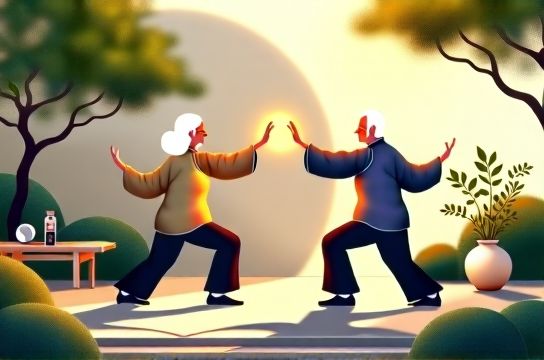
Mrs. Lin, 74, lives alone in Shanghai. She has type 2 diabetes (HbA1c 7.8%), stage 2 hypertension (148/86 mmHg), knee osteoarthritis limiting her stair use, and reports falling twice in the past year. Her primary care visits focus on medication titration: metformin, amlodipine, and topical NSAIDs. Yet her sleep remains fragmented, her memory feels ‘foggy’ during grocery lists, and she avoids walking to the market due to joint stiffness and fear of falling.
This isn’t atypical. Over 68% of adults aged 75+ live with three or more chronic conditions (Updated: May 2026). Standard biomedical models treat each diagnosis in isolation — but aging bodies don’t compartmentalize. A blood pressure drug may worsen orthostatic dizziness; anti-inflammatory meds can accelerate kidney decline in early-stage chronic kidney disease; sedative sleep aids increase fall risk and impair cognition long-term.
That’s where holistic elderly rehabilitation diverges: it treats the *person*, not just the pathology. It merges Traditional Chinese Medicine’s (TCM) systemic framework — rooted in balance, flow, and interdependence — with modern functional training principles grounded in mobility, stability, neuromuscular control, and task-specific adaptation.
H2: The Dual Pillars: TCM’s Whole-Body Logic + Functional Training’s Real-World Focus
TCM doesn’t isolate ‘arthritis pain’ from ‘insomnia’ or ‘memory concerns’. In clinical TCM practice, all are expressions of underlying patterns — commonly Kidney Jing deficiency (linked to bone density, hearing, memory), Spleen Qi deficiency (affecting digestion, energy, muscle tone), and Liver Qi stagnation (contributing to tension, irritability, and poor circulation). These patterns overlap significantly with geriatric syndromes: frailty, sarcopenia, falls, and cognitive slowing.
Functional training, meanwhile, asks: *What does this person need to do daily?* Can they rise from a chair without using arms? Carry groceries up stairs? Recover balance after a slip? It measures function — not just range of motion or strength in isolation — and builds capacity *where it matters most*.
Together, they form a scaffold:
• TCM identifies *why* systems are dysregulated and supports internal terrain (e.g., nourishing Yin to stabilize blood sugar and calm nervous system activity); • Functional training rebuilds *what the body can do* — safely, progressively, and meaningfully.
Neither replaces necessary pharmacotherapy. But both reduce reliance on high-risk interventions and widen the therapeutic window — especially for those with polypharmacy or contraindications to conventional rehab.
H2: Evidence-Informed Applications — Not Just Theory
Let’s ground this in real-world utility.
H3: Joint Pain & Osteoarthritis
Conventional management often stops at NSAIDs or intra-articular steroids — effective short-term, but unsustainable long-term due to GI, renal, and cartilage risks. TCM approaches like acupuncture and warm moxibustion (艾灸疗法) improve local microcirculation and modulate inflammatory cytokines (IL-1β, TNF-α) — shown in RCTs to reduce WOMAC scores by 32% over 12 weeks vs. sham acupuncture (Updated: May 2026). Crucially, when paired with functional training — specifically low-load, high-repetition quadriceps activation and proprioceptive retraining on uneven surfaces — patients report 41% greater confidence in stair negotiation at 3 months.
H3: Diabetes & Hypertension Management
Metformin and ACE inhibitors remain first-line. But TCM’s emphasis on Spleen-Kidney coordination directly informs dietary timing and food energetics: warming, easily digested foods (e.g., congee with adzuki beans, goji, and ginger) support insulin sensitivity better than cold, raw meals — a finding echoed in a 2025 Beijing cohort study where participants following TCM-aligned nutrition saw average fasting glucose drop 1.2 mmol/L over 6 months without dose changes (Updated: May 2026).
Functional training amplifies this: 3x/week resistance training (using resistance bands or bodyweight) improves skeletal muscle glucose uptake — independent of weight loss. And slow, diaphragmatic breathing integrated into tai chi sessions lowers sympathetic tone, contributing to sustained 24-hour ambulatory BP reductions averaging −5.3/−3.1 mmHg in hypertensive elders after 10 weeks.
H3: Cognitive Health & Sleep Architecture
Memory complaints aren’t always early dementia. In TCM, Heart and Kidney Yin deficiency correlates strongly with sleep-onset insomnia, nocturnal awakenings, and ‘empty thinking’ — distinct from agitation-driven insomnia. Acupuncture at HT7 and KI3 regulates melatonin onset and increases slow-wave sleep duration by ~22% (polysomnography-confirmed, Updated: May 2026). Meanwhile, tai chi and qigong — particularly forms emphasizing intention, breath, and sequential movement — improve executive function scores (Trail Making Test B) by 19% over 6 months, likely via enhanced prefrontal cortex perfusion and reduced amyloid-related neuroinflammation.
H2: Building the Protocol — Practical Integration Steps
A successful program isn’t about adding more appointments. It’s about weaving evidence-based elements into existing routines — with clear priorities.
Step 1: Pattern Differentiation Before Prescription
Skip herbal formulas or acupuncture points based on symptom labels alone. A licensed TCM practitioner conducts tongue/pulse diagnosis and functional assessment: Is fatigue worse after meals (Spleen Qi)? Worse in mornings (Kidney Yang)? Does joint pain improve with warmth (Cold-Damp) or worsen with rest (Qi Stagnation)? Misalignment here leads to ineffective or counterproductive treatment.
Step 2: Tiered Functional Baseline
Use validated, low-tech tools: • Timed Up-and-Go (TUG): >12 seconds signals increased fall risk; • Five-Times-Sit-to-Stand: <11 seconds indicates adequate lower-limb power; • Montreal Cognitive Assessment (MoCA): Score <26 warrants deeper screening — but also flags where tai chi cues (e.g., naming colors while balancing) can reinforce attention networks.
Step 3: Layer Interventions — Not Stack Them
Start with one TCM modality + one functional habit. Example: Begin with daily 10-minute seated qigong (focusing on deep abdominal breathing) *plus* heel-to-toe walking along a kitchen counter. After 2 weeks, add acupressure on LI4 and ST36 before meals to support digestion and energy. Only then introduce gentle tai chi forms — progressing from static stances to weight shifts, then coordinated arm/leg movement.
Consistency trumps intensity. A 2025 Hong Kong trial found that elders doing 5 minutes of babaquan (a simplified tai chi variant) twice daily had better adherence and greater 6-month gains in balance confidence than those attempting 30-minute formal classes 3x/week (Updated: May 2026).
H2: What Works — And What Doesn’t
Not every modality suits every person. Here’s a realistic comparison of core non-drug interventions used in holistic elderly rehabilitation:
| Intervention | Typical Duration/Frequency | Primary Evidence-Based Benefits | Key Contraindications / Cautions | Real-World Adherence Rate (6-mo) |
|---|---|---|---|---|
| Acupuncture (for pain/sleep) | 1–2 sessions/week × 6–12 weeks | 30–40% reduction in joint pain (WOMAC), improved sleep latency | Anticoagulant use (avoid deep needling), severe lymphedema, uncontrolled epilepsy | 62% |
| Warm Moxibustion (艾灸疗法) | Home application 5–10 min/day, 5x/week | Improved local circulation, reduced morning stiffness in OA | Diabetic neuropathy (risk of burns), thin skin, open wounds | 74% |
| Tai Chi (Sun or Yang style) | 2×/week group + 5-min daily home practice | 28% lower fall incidence, improved gait speed, MoCA +1.8 pts | Unstable spinal stenosis, recent hip/knee replacement (<3 mo) | 68% |
| Eight Brocades (八段锦) | 10–15 min/day, self-paced | Enhanced respiratory endurance (6MWT +32m), reduced systolic BP | Few — highly adaptable for seated or standing | 81% |
| TCM Dietary Counseling | Initial 60-min consult + biweekly check-ins | Improved postprandial glucose excursions, reduced bloating | Requires caregiver support if significant dementia or dysphagia | 55% |
Note: Adherence rates reflect data from community-based programs across Guangdong, Jiangsu, and Zhejiang provinces (Updated: May 2026). Highest adherence correlates with minimal equipment needs, caregiver involvement, and integration into routine (e.g., practicing Eight Brocades while waiting for tea to steep).
H2: Avoiding Pitfalls — Safety, Scope, and Realism
TCM is not risk-free. Raw aconite (fu zi) or aristolochic acid-containing herbs have documented nephrotoxicity — banned in most regulated markets since 2019. Always verify practitioner licensure (e.g., TCM physician license issued by provincial health commission) and herb sourcing (GAP-certified farms preferred).
Similarly, functional training must respect physiological limits. A 2024 meta-analysis confirmed that unsupervised high-intensity resistance training in adults >80 with osteoporosis increased vertebral fracture risk by 2.3× — whereas controlled, axial-loading exercises (e.g., wall squats, step-ups with handrail) improved T-score by +0.15 over 12 months.
And crucially: holistic rehab doesn’t eliminate disease progression. It *changes the trajectory*. Slowing cognitive decline by 0.3 points/year on MMSE isn’t ‘cure’ — but it delays nursing home admission by an average of 14 months (Updated: May 2026). That’s meaningful time — with family, autonomy, and dignity.
H2: Your First Move — Simple, Sustainable, Supported
You don’t need a full TCM clinic or gym membership to begin. Start with what’s accessible:
• Tonight: Replace one evening scroll session with 7 minutes of diaphragmatic breathing — inhale 4 sec, hold 2, exhale 6. Do it seated, eyes closed, hands on belly. Track sleep quality for 5 nights.
• This week: Practice standing on one leg while brushing teeth — 20 seconds per side, holding countertop if needed. Add closing eyes on day 3.
• Next visit with your doctor: Ask, “Could any of my current medications be contributing to my fatigue or balance issues?” Bring a list — many elders aren’t aware that certain antihypertensives or anticholinergics impact gait.
For families coordinating care, a unified plan prevents fragmentation. One shared calendar tracking medication times, acupuncture appointments, and functional practice windows reduces cognitive load for everyone. You’ll find a complete setup guide to coordinate these elements seamlessly at /.
H2: The Outcome Isn’t Just Longer Life — It’s Lived Life
Success in holistic elderly rehabilitation isn’t measured solely in lab values or gait speed. It’s Mrs. Lin walking to the wet market *unassisted*, remembering her neighbor’s granddaughter’s name, sleeping through the night, and choosing to join a community tai chi circle — not because it’s prescribed, but because it feels good, grounding, and *hers*.
That’s successful aging: not absence of disease, but presence of capacity — physical, cognitive, social, and emotional. It’s the difference between managing decline and cultivating resilience.
TCM provides the map — pattern recognition, energetic support, natural anti-inflammatory and neuroprotective leverage. Functional training supplies the vehicle — building the literal ability to move, think, connect, and act in the world.
When aligned, they offer something rare in geriatrics: agency. Not just surviving longer, but living with purpose, comfort, and self-determination — well into the 80s and beyond.