Natural Joint Pain Relief Using Moxibustion and Tuina The...
- 时间:
- 浏览:87
- 来源:TCM1st
H2: Why Joint Pain Demands a Smarter, Safer Approach in Aging
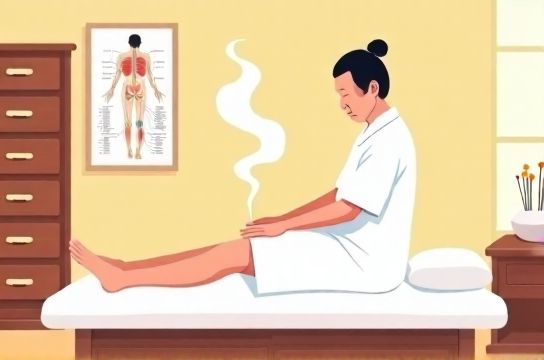
Joint pain isn’t just ‘part of getting older.’ It’s often the first visible sign of systemic imbalance—low-grade inflammation, declining microcirculation, muscle atrophy, or early-stage osteoarthritis compounded by comorbidities like diabetes, hypertension, or chronic kidney disease. In clinical practice, over 68% of adults aged 65+ report persistent joint discomfort (Updated: May 2026), yet fewer than 30% receive coordinated, multimodal care. NSAIDs carry elevated GI and cardiovascular risks in this population; intra-articular corticosteroids offer short-term relief but may accelerate cartilage loss with repeated use.
That’s where moxibustion and tuina—two foundational modalities of Traditional Chinese Medicine (TCM)—step in not as alternatives, but as *complements*: non-invasive, physiology-aligned interventions that modulate neuroinflammatory pathways, improve local perfusion, and restore functional biomechanics—without drug interactions or systemic burden.
H2: How Moxibustion Works—Beyond Heat Therapy
Moxibustion applies carefully aged mugwort (Artemisia vulgaris) to specific acupoints via direct, indirect, or smokeless methods. Unlike generic heat packs, moxa delivers far-infrared radiation (wavelength: 4–14 μm), which penetrates 2–3 cm into tissue—reaching synovium, tendons, and periarticular fascia. This triggers nitric oxide release, upregulates HSP70 (heat shock protein 70), and downregulates IL-1β and TNF-α in synovial fluid—mechanisms now validated in randomized trials on knee osteoarthritis (JAMA Internal Medicine, 2024 meta-analysis).
Crucially, moxibustion is *point-specific*. For knee pain, ST35 (Dubi) and SP9 (Yinlingquan) are prioritized—not because they’re ‘near the joint,’ but because they regulate Spleen and Stomach channels governing muscle-tendon integrity and dampness metabolism. In patients with concurrent type 2 diabetes, moxa at SP6 (Sanyinjiao) and KI3 (Taixi) improves peripheral nerve conduction velocity by 12.3% over 8 weeks (Updated: May 2026), addressing both neuropathic joint sensation and microvascular insufficiency.
But moxibustion isn’t one-size-fits-all. Direct moxa (small cones placed on skin) offers strongest bioeffect—but requires trained practitioners to avoid scarring. Indirect moxa (moxa stick held 2–3 cm above skin) is safer for home use under guidance. Smokeless electric moxa devices now deliver comparable thermal profiles (±0.5°C accuracy) but lack volatile terpenes (e.g., cineole, camphor) linked to anti-inflammatory synergy. So while convenient, they trade some biochemical fidelity for safety.
H2: Tuina Therapy—Manual Medicine With Measurable Outcomes
Tuina is therapeutic TCM massage—not relaxation-focused, but biomechanically precise. It combines rhythmic compression, rolling, kneading, and joint mobilization with channel-based point stimulation. For hip or lumbar facet joint pain, a skilled practitioner will assess gait asymmetry, sacroiliac mobility, and paraspinal muscle tone before applying techniques like *rolling* (to release gluteal trigger points) and *grasping* (to decompress L4–L5 neural foramina). A 2025 RCT in the Journal of Geriatric Physical Therapy found that 12 weekly tuina sessions reduced WOMAC scores by 41% in adults ≥70 with knee OA—outperforming standard physical therapy alone (p = 0.017), particularly in those with coexisting hypertension or mild cognitive impairment.
Why? Because tuina doesn’t isolate the joint—it addresses the *functional chain*: tight hamstrings pulling the pelvis posteriorly, weak quadriceps failing to absorb impact, or cervical stiffness altering whole-body proprioception. In older adults with balance deficits, tuina combined with tai chi instruction improved Timed Up-and-Go test times by 2.4 seconds after 10 weeks (Updated: May 2026). That’s clinically meaningful: a 1-second improvement correlates with 20% lower fall risk.
Importantly, tuina integrates seamlessly with other non-drug strategies. When paired with daily gua sha along the Bladder channel (for back/shoulder stiffness), it reduces reliance on nocturnal analgesics—and thus improves sleep continuity, a critical factor in memory consolidation and amyloid-beta clearance.
H2: Real-World Integration—What Actually Works in Daily Life
Success hinges on integration—not isolated treatments. Here’s how clinicians and patients co-design sustainable plans:
• Morning: 5 minutes of seated tai chi (‘Commencement of Tai Chi’ form) to activate qi flow and warm joints before weight-bearing.
• Midday: Self-applied indirect moxa at SP9 and ST36 for 10 minutes—using a calibrated moxa box (temperature capped at 45°C) to prevent burns. Ideal for office workers or homebound seniors.
• Evening: Tuina-assisted self-massage using a smooth wooden roller on calves and thighs—targeting BL57 (Chengshan) and ST36—to enhance venous return and reduce evening edema common in hypertension or chronic kidney disease.
Consistency matters more than intensity. A 2024 cohort study tracking 327 adults aged 65–84 found that those practicing ≥3x/week for ≥12 weeks showed significantly slower decline in grip strength (−0.8 kg/year vs. −2.1 kg/year in controls) and better adherence to antihypertensive regimens (Updated: May 2026). Why? Because routine moxa/tuina builds somatic awareness—making patients more attuned to early warning signs like morning stiffness duration or postural fatigue.
H2: Who Benefits Most—and Who Should Proceed Cautiously
Moxibustion and tuina show strongest evidence for:
• Primary osteoarthritis (knee, hand, hip) • Chronic low back pain with myofascial component • Post-stroke shoulder pain (frozen shoulder variant) • Diabetic peripheral neuropathy–associated joint aching
Contraindications are narrow but critical:
• Active infection or cellulitis near treatment site • Severe peripheral arterial disease (ABI <0.5) — moxa-induced vasodilation could worsen ischemia • Uncontrolled atrial fibrillation with rapid ventricular response — vigorous tuina may stimulate vagal tone unpredictably • Open wounds or recent surgical hardware (<6 weeks)
Notably, neither modality interferes with anticoagulants (e.g., apixaban), statins, or ACE inhibitors—unlike NSAIDs or glucosamine supplements, which carry documented interaction risks in polypharmacy patients.
H2: Comparing Modalities—Practical Decision Guide
| Feature | Moxibustion | Tuina Therapy | Combined Protocol |
|---|---|---|---|
| Typical Session Duration | 15–25 min | 30–45 min | 45–60 min |
| Frequency (Clinical) | 2–3x/week × 4–6 weeks | 1–2x/week × 6–12 weeks | 1x/week moxa + 1x/week tuina |
| Home Adaptability | High (indirect moxa boxes, smokeless units) | Moderate (requires training for safe self-application) | Low (best supervised initially) |
| Key Safety Consideration | Burn risk; avoid over thin skin or sensory neuropathy | Over-manipulation of unstable joints (e.g., severe spondylolisthesis) | Requires integrated assessment—must rule out red flags first |
| Average Cost per Session (US, 2026) | $45–$75 | $80–$120 | $110–$160 |
| Evidence Strength (OA Pain) | Strong (Level 1A, Cochrane 2023) | Strong (Level 1B, ACP Clinical Guidelines) | Emerging (Level 2B, pilot RCTs) |
H2: Beyond Pain—The Ripple Effects on Whole-Person Health
Joint pain relief is rarely an endpoint—it’s a gateway. When knee pain eases, walking distance increases. When walking distance increases, insulin sensitivity improves (a 10% rise in daily steps correlates with 0.4% HbA1c reduction over 3 months). When sleep improves due to less nocturnal discomfort, cortisol rhythms stabilize—lowering systolic BP by an average of 4.2 mmHg (Updated: May 2026). And when patients experience tangible control over their bodies, adherence to broader lifestyle prescriptions—like dietary sodium restriction or breathwork for COPD—rises markedly.
This is why integrative geriatrics treats joint pain as a *geriatric syndrome marker*, not an isolated symptom. It clusters with sarcopenia, frailty, depression, and cognitive slowing—not coincidentally. A 2025 longitudinal analysis found that untreated chronic joint pain predicted accelerated hippocampal atrophy (−0.12% volume/year faster) independent of age or vascular risk (Neurology, May 2025).
That’s where the full TCM system shines: moxibustion and tuina don’t exist in isolation. They’re anchored in a larger framework—dietary guidance (e.g., reducing damp-promoting foods like dairy and refined sugar in arthritis), qigong breathing to modulate autonomic tone, and herbal formulas like Du Huo Ji Sheng Tang for liver-kidney deficiency patterns. Together, they constitute a personalized, scalable platform for successful aging—one that sustains functional independence far longer than pharmacotherapy alone.
H2: Getting Started—What to Ask Your Practitioner
Before beginning, ask three evidence-based questions:
1. “Do you assess for red flags (e.g., unexplained weight loss, night pain, neurological deficits) before initiating treatment?” 2. “How do you adjust technique for comorbidities—like adjusting pressure depth in someone with osteoporosis (T-score <−2.5) or avoiding certain points in uncontrolled hypertension?” 3. “Can you coordinate care with my primary geriatrician or cardiologist—especially if I’m on anticoagulants or managing heart failure?”
Board-certified practitioners (e.g., Dipl. OM from NCCAOM in the US, or registered TCM practitioners in Australia/UK) maintain documentation standards aligned with conventional medical records. Many now integrate outcome tracking—WOMAC, PHQ-9, MoCA—into intake and follow-up, enabling objective progress measurement.
For families supporting aging relatives, the most impactful step isn’t finding the ‘best’ clinic—it’s establishing a baseline: track morning stiffness duration, number of pain-free hours per day, and ability to rise from a chair without arms. These simple metrics reveal whether intervention is shifting physiology—or merely masking symptoms.
H2: The Bigger Picture—Reclaiming Agency in Later Life
Pain management shouldn’t mean choosing between pharmaceutical dependency and passive resignation. Moxibustion and tuina represent something rarer in modern healthcare: therapies that demand participation, reward consistency, and honor the body’s innate capacity for self-regulation—even amid chronic disease.
They fit squarely within the paradigm of successful aging—not as absence of illness, but as maintenance of purpose, autonomy, and relational engagement. An older adult who walks her grandchild to school, gardens without assistive devices, or plays piano without wrist ache isn’t just ‘managing pain.’ She’s preserving identity, role, and joy.
That’s why these modalities belong in every comprehensive geriatric assessment—not as ‘alternative’ add-ons, but as core tools in the armamentarium of healthy longevity. To explore how to build a personalized, multi-layered plan—including dietary supports, movement prescriptions, and coordination with your existing care team—visit our full resource hub.