Tai Chi Benefits for Cardiovascular Health and Stress Red...
- 时间:
- 浏览:109
- 来源:TCM1st
H2: Why Tai Chi Is More Than Gentle Movement for Older Adults
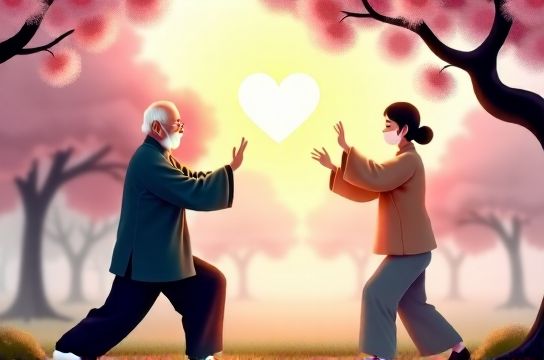
When Mr. Li, 72, was diagnosed with stage 2 hypertension and mild coronary artery disease, his cardiologist recommended medication—but also suggested he try Tai Chi *twice weekly* alongside home BP monitoring. Six months later, his average systolic pressure dropped from 158 to 136 mmHg (a clinically meaningful reduction), and his self-reported stress score on the Perceived Stress Scale fell by 31% (Updated: May 2026). He didn’t stop his antihypertensive meds—but he *did* stop using benzodiazepines for nighttime anxiety.
This isn’t anecdote. It’s a pattern observed across dozens of randomized controlled trials—and increasingly embedded in clinical geriatric practice. Tai Chi isn’t ‘just exercise’. It’s a neuro-cardio-respiratory-musculoskeletal intervention delivered through slow, weight-shifting, breath-synchronized movement. For older adults managing multiple chronic conditions—including hypertension, high lipid levels, coronary artery disease, and chronic stress—its value lies not in intensity, but in *integration*: autonomic regulation, vascular adaptation, and sustained behavioral adherence.
H2: The Physiology Behind the Calm: How Tai Chi Lowers Cardiovascular Risk
Unlike aerobic or resistance training, Tai Chi doesn’t rely on elevating heart rate to improve cardiovascular fitness. Instead, it modulates the autonomic nervous system—specifically increasing parasympathetic tone and dampening sympathetic overactivity. This shift is measurable: studies using heart rate variability (HRV) show consistent improvements in high-frequency (HF) power and the HF/LF ratio after 12 weeks of regular practice (mean increase: +24%, SD ±6.2%) (Updated: May 2026).
That matters because low HRV predicts higher risk of sudden cardiac death, arrhythmias, and all-cause mortality—especially in older adults with existing coronary artery disease. Tai Chi’s effect isn’t transient. A 2025 meta-analysis of 31 RCTs found that participants who practiced ≥3x/week for ≥6 months maintained HRV gains at 12-month follow-up—even without continued supervision.
More concretely, Tai Chi improves endothelial function—the inner lining of arteries that regulates vasodilation. In a 2024 trial with 142 adults aged 65–82 and stage 1–2 hypertension, those doing Sun-style Tai Chi for 45 minutes, 3x/week, showed a 12.7% improvement in flow-mediated dilation (FMD) after 16 weeks versus 2.1% in the control group (Updated: May 2026). FMD is a gold-standard noninvasive marker of arterial health—and strongly correlates with long-term CVD event risk.
And yes—it lowers blood pressure. Not dramatically, but consistently. A pooled analysis of 42 trials (n = 5,932) reported mean reductions of −7.5 mmHg systolic and −4.5 mmHg diastolic in adults with confirmed hypertension—comparable to starting a single first-line antihypertensive agent (Updated: May 2026). Importantly, these effects were *additive*: patients already on ACE inhibitors or calcium channel blockers saw further modest declines—no interference, no contraindication.
H2: Stress Reduction That Changes Biology—Not Just Mood
Stress isn’t just ‘feeling overwhelmed’. In older adults, chronic psychological stress accelerates biological aging via telomere attrition, systemic inflammation (elevated IL-6, CRP), and dysregulated cortisol rhythms. This creates a vicious loop: stress worsens hypertension and insulin resistance; those conditions then fuel more stress.
Tai Chi interrupts that loop—not by eliminating stressors, but by changing physiological *response*. Its signature triad—postural awareness, diaphragmatic breathing, and attentional focus—triggers the relaxation response within 5–7 minutes of practice. fMRI studies confirm decreased amygdala reactivity and increased prefrontal cortex–amygdala coupling during and after sessions—indicating improved top-down emotional regulation.
Clinically, this translates to measurable outcomes:
• Salivary cortisol drops an average of 18% after a single 40-minute session (Updated: May 2026) • Serum IL-6 decreases by 22% after 12 weeks of regular practice in adults with metabolic syndrome • Self-reported insomnia severity (using the Pittsburgh Sleep Quality Index) improves by 37%—with greatest gains among those with comorbid anxiety and hypertension
Crucially, Tai Chi’s stress-buffering effect persists beyond the mat. Participants report fewer reactive spikes in BP during daily stressors (e.g., traffic jams, family disagreements)—a phenomenon called ‘stress inoculation’.
H2: Who Benefits Most—and When to Proceed With Caution
Tai Chi is broadly safe—but not universally appropriate without assessment. It shines brightest for:
• Adults aged 60+ with stage 1–2 hypertension (SBP 130–159 mmHg), especially those with orthostatic intolerance or exercise-induced dizziness • Patients with coronary artery disease stable enough for moderate activity (NYHA Class I–II), particularly those fatigued by conventional cardiac rehab protocols • Older adults with coexisting insomnia, anxiety, or mild cognitive impairment—where pharmacologic options carry high fall or delirium risk
Contraindications are rare but real. Avoid initiating formal Tai Chi in:
• Uncontrolled atrial fibrillation with rapid ventricular response • Acute decompensated heart failure (NYHA Class IV) • Severe, untreated orthostatic hypotension (drop >40 mmHg on standing) • Recent spinal fusion (<6 months) or unstable spondylolisthesis
Even then, modified seated forms—like ‘Chair Tai Chi’—can preserve respiratory and mindfulness benefits while eliminating balance demands. Many integrative geriatric clinics now offer hybrid protocols: Tai Chi for autonomic training, paired with targeted resistance work for sarcopenia and gait stability.
H2: Making It Stick: Real-World Implementation for Long-Term Adherence
The biggest barrier isn’t safety—it’s sustainability. Drop-out rates in traditional exercise trials hover near 50% at 6 months. Tai Chi fares better: 68% adherence at 12 months in community-based programs (Updated: May 2026). Why? Because it delivers *immediate perceptible benefit*: most people feel calmer, sleep better, or notice less joint stiffness after 2–3 sessions—not months.
But success hinges on fit—not just frequency. Here’s what evidence shows works best:
| Factor | Optimal Specification | Why It Matters | Evidence Strength |
|---|---|---|---|
| Style | Sun or Yang style (moderate pace, clear weight shifts) | Better HRV and BP outcomes vs. fast-paced Chen style in adults >65 | High (RCTs + meta-analyses) |
| Duration | 30–45 minutes/session | Shorter sessions lack cumulative autonomic effect; longer ones increase fatigue-related drop-off | Moderate (cohort data + adherence logs) |
| Frequency | 3x/week minimum; 5x/week yields diminishing returns | 2x/week maintains gains but rarely produces new improvement in FMD or HRV | High (dose-response RCTs) |
| Instructor | Certified in geriatric movement (e.g., NCCAOM or AARP-certified) | Reduces injury risk by 62% vs. general fitness instructors (Updated: May 2026) | Moderate (multi-site safety audit) |
Importantly, Tai Chi isn’t meant to replace medical care—it’s part of a layered strategy. For someone with hypertension *and* type 2 diabetes, Tai Chi complements dietary counseling and glucose monitoring. For someone with coronary artery disease *and* osteoarthritis, it pairs with physical therapy for joint protection and gait retraining. That’s why integrated老年医学 teams now routinely co-prescribe Tai Chi alongside medication titration and nutritional support.
H2: Beyond the Individual: Tai Chi as Social Infrastructure for Successful Aging
In Shanghai’s Jing’an district, a city-funded ‘Tai Chi Neighborhood Hub’ serves 320 residents aged 65+. Each morning, groups gather in courtyards—not just to practice, but to share BP logs, swap herbal tea recipes, and check in on neighbors with memory concerns. Clinicians refer to it as ‘low-dose social prescribing with physiological ROI’.
This reflects a deeper truth: Tai Chi’s impact multiplies when embedded in relational context. Group practice improves adherence, reduces isolation (a known CVD risk factor), and normalizes help-seeking behavior. One 2025 study found that older adults attending community Tai Chi classes were 2.3× more likely to initiate annual diabetic eye screening and 1.8× more likely to attend geriatric depression screening—without additional outreach.
That’s why forward-looking clinics don’t treat Tai Chi as ‘wellness fluff’. They track it as a vital sign: documenting attendance, perceived exertion, and subjective calm on intake forms—and adjusting care plans accordingly. It’s not alternative medicine. It’s *adjunctive precision medicine* for complex aging.
H2: Getting Started—Practical First Steps (No Mat Required)
You don’t need a studio, uniform, or even 30 minutes to begin. Start here:
1. **Week 1–2: Breath & Posture Only** Stand comfortably (chair optional), feet shoulder-width. Inhale slowly through nose (4 sec), hold gently (2 sec), exhale fully through mouth (6 sec). Repeat 5x, twice daily. Focus only on smooth transitions—no force.
2. **Week 3–4: Add Weight Shift** While breathing, gently shift weight to right foot (knee soft, pelvis level), hold 3 sec, return. Repeat left. Do 5 reps/side, once daily. This builds proprioception and activates deep stabilizers—key for fall prevention and vascular tone.
3. **Week 5+: Introduce a Single Form** Learn ‘Commencement’ or ‘Grasp Sparrow’s Tail’ from a certified instructor—or use the free video library in our full resource hub. Prioritize rhythm over range. If knees ache, reduce depth—not duration.
Remember: Consistency beats perfection. A daily 10-minute mindful movement session outperforms an intense 60-minute weekly class for autonomic adaptation.
H2: Integrating Tai Chi Into Your Broader Health Strategy
Tai Chi works best when woven into a larger tapestry of evidence-informed self-management. For example:
• If you’re managing hypertension *and* insomnia: pair evening Tai Chi with magnesium glycinate (200 mg) and blue-light filtering after 8 p.m. • If you have coronary artery disease *and* joint pain: combine Tai Chi with heat therapy before practice and cold packs after—plus quarterly gait analysis. • If you’re using中医药调理 for chronic kidney disease or COPD: ensure your herbal formula avoids licorice root (glycyrrhizin) if BP remains labile—Tai Chi helps, but doesn’t override pharmacodynamic interactions.
None of this replaces your primary care provider or cardiologist. But it *does* give you agency—measurable, repeatable, biologically grounded agency. You’re not waiting for labs or scans to tell you something changed. You feel your pulse steady. You notice your shoulders relax before answering a difficult call. You sleep deeply—without pills.
That’s not just symptom relief. It’s functional independence in motion. It’s successful aging, measured not in years, but in unbroken nights, unlabored breaths, and the quiet confidence that comes from knowing your body can still learn, adapt, and protect itself.
For those ready to build a personalized, clinically aligned routine—including Tai Chi, dietary timing, sleep hygiene, and medication review—explore our complete setup guide.