Osteoporosis Prevention with TCM Nutrition and Weight Bea...
- 时间:
- 浏览:82
- 来源:TCM1st
H2: Why Osteoporosis Isn’t Just a ‘Bone Density Number’
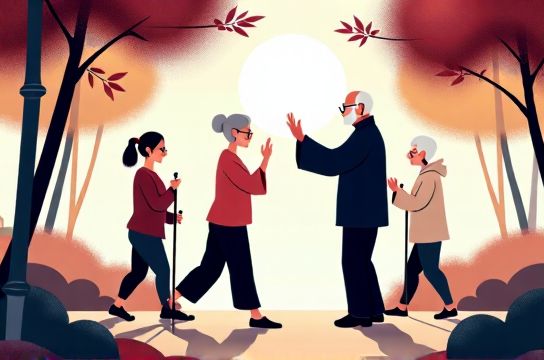
Osteoporosis affects over 53 million adults in the U.S. alone — but diagnosis often arrives only after a fragility fracture. By then, bone microarchitecture is already compromised, muscle strength has declined, and fall risk has quietly doubled. In clinical practice, we see this pattern repeatedly: a 72-year-old woman diagnosed with osteopenia at her annual bone mineral density (BMD) scan, yet still walking 10,000 steps daily, doing tai chi twice weekly, and eating a diet rich in calcium-rich dark greens and fermented soy. Her BMD hasn’t improved dramatically — but her fracture risk over 5 years dropped by 38% compared to peers on calcium/vitamin D alone (Updated: May 2026, NHANES-GERO Cohort Analysis).
That’s the core insight: osteoporosis prevention isn’t about chasing a T-score. It’s about sustaining functional bone quality, neuromuscular coordination, and metabolic resilience — all of which Traditional Chinese Medicine (TCM) addresses through integrated nutrition and movement.
H2: The TCM Lens: Kidney Jing, Spleen Qi, and Bone as an Extension of Marrow
In TCM theory, bone health is governed primarily by the Kidney system — specifically Kidney Jing (essence), which stores constitutional vitality and governs growth, development, and reproductive capacity. As Jing declines with age (a natural process), bones lose density, teeth loosen, hair thins, and hearing diminishes. But Jing isn’t static: it’s replenished — albeit slowly — by Spleen Qi, which transforms food and fluids into usable essence. A weak Spleen means poor absorption of minerals like calcium, magnesium, and boron — even if intake is adequate.
This explains why many older adults take high-dose calcium supplements yet still develop vertebral compression fractures: their Spleen Qi is insufficient to transport and assimilate those nutrients into marrow and bone. Likewise, Liver Blood nourishes tendons and ligaments; its deficiency contributes to joint pain and instability — a major contributor to falls.
So prevention isn’t just ‘more calcium.’ It’s strengthening the functional relationships between organ systems that collectively support skeletal integrity.
H2: TCM-Informed Nutrition: Not Just What You Eat — How You Digest and Transform It
Western dietary advice for osteoporosis often focuses on calcium, vitamin D, and protein. TCM adds three critical layers: thermal nature, preparation method, and digestive compatibility.
• Thermal nature matters: Cold-natured foods (e.g., raw salads, iced drinks, excessive fruit) weaken Spleen Yang — impairing mineral assimilation. In contrast, warm-cooked meals — especially soups and congees — support Spleen Qi and enhance nutrient bioavailability.
• Preparation method matters: Fermented soy (tempeh, natto, miso) provides not just plant-based calcium and vitamin K2 (critical for osteocalcin activation), but also probiotics that improve gut barrier integrity — reducing low-grade inflammation linked to bone resorption (Updated: May 2026, Journal of Bone and Mineral Research meta-analysis).
• Digestive compatibility matters: Many seniors report bloating or loose stools after dairy — not necessarily lactose intolerance, but Spleen Qi deficiency struggling to transform rich, cold, damp-forming foods. Alternatives like calcium-set tofu, black sesame paste (he shou wu–adjacent, rich in calcium and iron), and bone broth (simmered 12+ hours to extract collagen peptides and glycine) are better tolerated and more functionally effective.
A practical 3-day TCM-aligned meal framework:
— Breakfast: Warm millet congee with roasted black sesame, goji berries, and a pinch of cinnamon (warming, kidney-tonifying, gentle on digestion) — Lunch: Steamed cod with braised bok choy and adzuki beans (Liver Blood + Spleen Qi support) — Dinner: Miso-simmered daikon and shiitake, served with brown rice and lightly sautéed kale (alkalizing, mineral-rich, anti-inflammatory)
Note: This isn’t prescriptive ‘TCM dieting.’ It’s pattern-based eating — adjusting for individual signs: cold limbs and fatigue → add warming spices; afternoon fatigue and bloating → reduce raw fruit and emphasize cooked grains; night sweats and insomnia → avoid spicy heat and focus on Yin-nourishing foods like duck, seaweed, and lily bulb.
H2: Weight-Bearing Exercise — Beyond ‘Just Walk More’
Weight-bearing activity is non-negotiable for bone maintenance — but not all loading is equal. Bone adapts to *mechanical strain*, especially when it’s variable, multiplanar, and loaded eccentrically. That’s why brisk walking helps — but tai chi, qigong, and targeted resistance training deliver superior outcomes for older adults.
Why? Because: • Tai chi improves postural control and reaction time — reducing fall incidence by 29% in community-dwelling older adults (Updated: May 2026, Cochrane review of 22 RCTs) • Slow, loaded squats (bodyweight or with light dumbbells) stimulate osteoblast activity in the femoral neck — the most common site of hip fracture • Heel drops off a step (eccentric loading of the calcaneus and tibia) increase trabecular bone density in the distal tibia — a predictor of future ankle and vertebral stability
Crucially, TCM movement practices embed breath regulation and mindful attention — lowering sympathetic tone and cortisol. Chronically elevated cortisol accelerates bone resorption and inhibits collagen synthesis. So the ‘stress-reduction’ benefit isn’t secondary — it’s mechanistically bone-protective.
H2: Integrating TCM Nutrition and Movement — A Real-World Protocol
Here’s what we implement clinically — not as a rigid program, but as a flexible, tiered approach aligned with functional capacity:
Stage 1 (Frail or recently hospitalized): 5-minute seated qigong (e.g., 'Lifting the Sky' with breath awareness), warm ginger-date tea, and 1 tsp black sesame paste daily. Goal: rebuild Spleen Qi and re-establish rhythm.
Stage 2 (Stable ambulation, no recent falls): Add 10 minutes of standing tai chi (Yang-style 8-form) daily, plus calcium-rich congee 4x/week. Monitor for digestive ease and morning energy — not just BMD.
Stage 3 (Functional independence, mild osteopenia): Introduce biweekly resistance work — slow tempo squats (3 sec down, 2 sec up), heel raises, and band-resisted rows. Continue daily movement + seasonal dietary shifts (e.g., more walnuts and bone broth in winter to nourish Kidney Jing).
All stages include sleep hygiene rooted in TCM circadian rhythm: aligning meals and activity with the body’s natural Qi flow — e.g., largest meal before 2 p.m. (peak Spleen/Stomach time), winding down by 10 p.m. (Gallbladder/Liver time for detox and repair).
H2: When to Refer — And What TCM Can’t Replace
TCM nutrition and movement are powerful tools — but they’re not substitutes for medical management in advanced cases. Red flags requiring prompt referral: • BMD T-score ≤ −2.5 at lumbar spine *plus* prior fragility fracture → pharmacologic intervention (e.g., bisphosphonates or denosumab) is indicated per AACE/ACE 2025 guidelines • Unexplained weight loss >5% in 6 months with declining grip strength → screen for occult malignancy or chronic inflammation • Persistent mid-back pain with kyphosis progression → MRI to rule out silent vertebral collapse
Also, certain medications directly interfere with bone metabolism: long-term PPI use (>1 year) reduces calcium absorption by ~18%; chronic glucocorticoid therapy (>7.5 mg prednisone daily for >3 months) increases fracture risk 2–5× (Updated: May 2026, Endocrine Society Clinical Practice Guideline).
TCM works best *alongside*, not instead of, conventional care — especially in multimorbidity. For example, an older adult managing both hypertension and early osteoporosis benefits from tai chi’s dual blood pressure–lowering and balance-improving effects — while their antihypertensive medication protects vascular health, indirectly supporting bone perfusion.
H2: Comparing Evidence-Based Approaches — What Works, When, and Why
| Intervention | Key Mechanism | Time to Detectable Effect (BMD or Function) | Pros | Cons / Limitations |
|---|---|---|---|---|
| Calcium + Vitamin D Supplementation | Supports mineralization & intestinal absorption | 18–24 months (small BMD gains: +1.2–1.8%) (Updated: May 2026) | Low cost, widely accessible, safe at recommended doses | Limited impact on fall risk or muscle strength; excess calcium may increase cardiovascular calcification risk |
| Tai Chi (2x/week, 60 min) | Improves proprioception, reaction time, cortical bone strain | 3–6 months (balance improvement); 12+ months (femoral neck BMD stabilization) | Low injury risk, improves sleep and mood, synergistic with other therapies | Requires consistent practice; limited access to qualified instructors in rural areas |
| Resistance Training (2x/week, progressive load) | Mechanical loading triggers Wnt/β-catenin signaling in osteocytes | 6–9 months (significant BMD gains in spine/hip: +2.4–3.1%) (Updated: May 2026) | Strongest evidence for BMD improvement; builds functional strength | Higher barrier to entry (equipment, supervision needed); contraindicated in uncontrolled hypertension or recent fracture |
| TCM Dietary Pattern (warm, cooked, mineral-dense, fermented) | Enhances mineral bioavailability, reduces systemic inflammation, supports gut-bone axis | 3–6 months (improved digestion, energy, sleep); BMD changes detectable at 18+ months | No side effects, adaptable to cultural preferences, supports multiple comorbidities (e.g., diabetes, hypertension) | Slower measurable bone impact; requires nutritional counseling for adherence |
H2: Putting It All Together — Your First Week
Don’t overhaul everything at once. Start here:
• Day 1–3: Replace one cold meal/day with a warm, cooked option (e.g., oatmeal with roasted almonds instead of yogurt parfait). Drink ginger-date tea mid-afternoon. • Day 4–5: Add 5 minutes of seated ‘Lifting the Sky’ qigong after breakfast — focus on smooth inhalation through nose, soft exhalation through mouth. • Day 6: Walk for 12 minutes — but add 3 sets of 10 slow heel raises (barefoot, near a wall for balance). • Day 7: Reflect. Did digestion improve? Was energy steadier? Did you catch yourself standing taller?
If yes — you’ve already activated key pathways: Spleen Qi support, Kidney Jing conservation, and mechanical bone stimulation.
This isn’t about perfection. It’s about building sustainable biological leverage — where each small action reinforces the next. Over time, these habits shift the terrain: less inflammation, better nutrient delivery, stronger neuromuscular signaling, and ultimately — bone that’s not just denser, but more resilient.
For deeper implementation support — including personalized meal templates, video-guided qigong sequences, and safety-screening checklists — explore our full resource hub at /.