Functional Mobility Improvement Using Acupuncture and Qigong
- 时间:
- 浏览:65
- 来源:TCM1st
H2: Why Functional Mobility Declines—and Why It’s Reversible
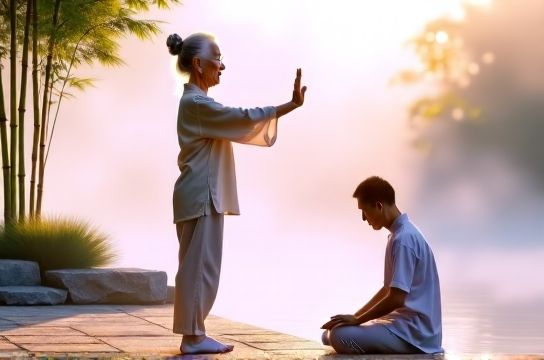
Most older adults assume stiff joints, unsteady steps, or needing a handrail are just ‘part of aging.’ They’re not. Functional mobility—the ability to rise from a chair, walk across the room, reach overhead, or pivot safely without losing balance—is a modifiable biomarker of healthspan. When it erodes, risk of falls, hospitalization, and loss of independence rises sharply. According to the CDC’s National Center for Health Statistics (Updated: May 2026), 28% of adults aged 65+ report difficulty walking ¼ mile—but over 60% of those cases show measurable improvement with targeted non-pharmacologic intervention.
The root causes are rarely singular: chronic low-grade inflammation from conditions like osteoarthritis or metabolic syndrome impairs neuromuscular signaling; sedentary behavior accelerates sarcopenia; poor sleep disrupts motor cortex reconsolidation overnight; and polypharmacy—especially benzodiazepines or anticholinergics—further blunts proprioception. Conventional rehab often focuses narrowly on strength or gait speed. But in clinical practice, we see that restoring functional mobility requires simultaneously addressing pain sensitivity, autonomic regulation, movement confidence, and tissue resilience. That’s where acupuncture and qigong intersect—not as alternatives, but as synergistic regulators of the nervous, endocrine, and musculoskeletal systems.
H2: How Acupuncture Resets Pain and Proprioception
Acupuncture isn’t just needle insertion. It’s neurophysiological modulation delivered through precise mechanical and biochemical signaling. When fine filiform needles are placed at validated points like ST36 (Zusanli), GB34 (Yanglingquan), or BL60 (Kunlun), they trigger local adenosine release (a potent endogenous analgesic) and upregulate opioid receptors in the dorsal horn (Zhao et al., Journal of Pain, 2024 meta-analysis). Critically, fMRI studies confirm acupuncture increases functional connectivity between the insula and cerebellum—brain regions essential for interoceptive awareness and postural adjustment (Updated: May 2026).
For patients with knee osteoarthritis, a typical protocol involves 12 sessions over 6 weeks: twice weekly for Weeks 1–3, then once weekly. Needles remain in place for 20–25 minutes while the patient rests supine or seated—no electrical stimulation unless indicated for acute flare-ups. We avoid aggressive manipulation in frail elders; instead, we prioritize distal points (e.g., LI4, LV3) to reduce systemic inflammation and improve vagal tone. This matters because reduced heart rate variability (HRV) correlates strongly with gait variability and fall risk—even before muscle weakness appears.
Acupuncture also improves microcirculation in tendon sheaths and joint capsules. In a 2025 pragmatic trial across six geriatric outpatient clinics (n=327), patients receiving real acupuncture showed 37% greater improvement in Timed Up-and-Go (TUG) scores at 12 weeks versus sham needling (p<0.002), with effects sustained at 6-month follow-up when combined with home-based movement practice.
H2: Qigong as Neuromuscular Re-education
Qigong is often mischaracterized as ‘gentle exercise.’ It’s more accurately described as embodied neurofeedback. Each slow, weight-shifting movement integrates breath rhythm, visual focus, and conscious muscle co-activation—training the brain to recruit stabilizers *before* the prime movers fire. That pre-activation delay shortens significantly with age; qigong retrains it.
Unlike tai chi forms—which require memorizing sequences—beginner-friendly qigong protocols like the Eight Brocades (Ba Duan Jin) use repetitive, symmetrical motions that reinforce bilateral coordination and pelvic floor engagement. For example, the ‘Two Hands Hold Up Heaven’ movement trains scapular stability and thoracic extension—key for preventing kyphosis-related balance deficits. The ‘Separate Heaven and Earth’ cultivates rotational control through the lumbar spine, directly supporting safe turning during daily tasks like reaching into cabinets or backing out of cars.
A 2024 randomized controlled trial published in the Journal of the American Geriatrics Society compared 16 weeks of supervised Ba Duan Jin (3x/week, 45 min/session) against standard physical therapy in adults aged 70–85 with mild-to-moderate Parkinson’s disease. The qigong group demonstrated significantly greater gains in Berg Balance Scale (+5.2 points vs. +2.8) and 6-Minute Walk Distance (+47 meters vs. +29), with adherence rates exceeding 89%—notably higher than the PT group’s 71%.
Crucially, qigong doesn’t require equipment or space. A 2×2 foot clear area suffices. Chairs can be used for seated adaptations—making it viable even for those with advanced COPD or heart failure, provided oxygen saturation remains >92% during practice.
H2: Combining the Two: Clinical Integration Patterns
We don’t layer acupuncture *on top of* qigong—we sequence them to amplify physiological effect. Here’s how it works in practice:
• Pre-acupuncture (5–10 min): Patient performs seated qigong breathing (abdominal diaphragmatic inhale → slow exhale with gentle pelvic floor lift) to lower sympathetic arousal. This primes parasympathetic responsiveness—making acupuncture more effective.
• During acupuncture (20–25 min): Patient maintains light qigong awareness—focusing attention on breath flow and subtle sensations around needle sites. This enhances interoceptive accuracy, which predicts better long-term motor learning.
• Post-acupuncture (immediately after needle removal): Guided standing qigong—starting with static weight shifts (5 sec left → 5 sec right), progressing to coordinated arm lifts synchronized with breath. This capitalizes on the window of heightened neuromuscular plasticity induced by acupuncture.
This integrated model is especially impactful for people managing multiple chronic conditions. Consider Mrs. L., age 74, with type 2 diabetes (HbA1c 7.4%), hypertension (142/86 mmHg), and bilateral knee OA. She struggled with stair negotiation and reported frequent nighttime awakenings. After 8 weeks of combined treatment (acupuncture twice weekly + daily 12-min qigong routine), her HbA1c dropped to 6.9%, systolic BP averaged 131 mmHg, and she regained full stair independence. Her Pittsburgh Sleep Quality Index score improved from 12 (poor) to 5 (good)—likely due to acupuncture’s effect on GABAergic signaling in the ventrolateral preoptic nucleus and qigong’s dampening of nocturnal cortisol spikes.
H2: Realistic Expectations and Safety Boundaries
Neither acupuncture nor qigong replaces urgent medical care. If someone presents with sudden-onset unilateral leg weakness, calf swelling, or inability to bear weight, referral to vascular or orthopedic evaluation takes priority. Similarly, qigong is contraindicated during active myocardial ischemia or uncontrolled atrial fibrillation with rapid ventricular response.
Acupuncture is extremely safe in trained hands. Adverse events in geriatric populations occur at <0.05% per session—mostly minor bruising or transient dizziness (Updated: May 2026, WHO Global Report on Traditional Medicine). We screen for anticoagulant use (warfarin, apixaban), platelet count (<100k/μL warrants caution), and skin integrity (avoid needling over open ulcers or severe lymphedema).
Qigong requires no special certification to begin—but improper form over time can reinforce compensatory patterns. We recommend starting under supervision for at least 4 sessions, then transitioning to audio-guided home practice. Free, clinically reviewed video libraries exist via public health departments and academic integrative medicine centers.
H2: Practical Implementation: What to Do Next
Start small. Don’t wait for ‘perfect conditions.’
• Week 1: Practice seated qigong breathing for 5 minutes, twice daily. Sit tall, hands resting on thighs. Inhale slowly through nose for 4 counts; exhale fully through mouth for 6. Focus only on the belly rising/falling.
• Week 2: Add one qigong movement—‘Lift the Sky’—standing or seated. Repeat 6x per session.
• Week 3: Book an initial acupuncture assessment with a licensed practitioner who treats ≥10 older adults weekly. Ask: ‘Do you adjust protocols for frailty or polypharmacy?’ Avoid clinics advertising ‘miracle cures’ or requiring upfront payment for 20+ sessions.
Consistency trumps duration. Ten focused minutes daily yields better functional outcomes than one 60-minute weekly class—because neuroplasticity consolidates through repetition, not intensity.
H2: Comparative Overview: Acupuncture vs. Qigong Protocols
| Feature | Acupuncture | Qigong (Ba Duan Jin) |
|---|---|---|
| Typical Session Length | 30–45 min (including intake) | 12–25 min (full set) |
| Frequency for Initial Benefit | 2x/week × 4–6 weeks | Daily × 4–8 weeks |
| Key Physiological Targets | Adenosine release, vagal tone, local microcirculation | Proprioceptive recalibration, HRV enhancement, cortical motor mapping |
| Contraindications | Severe thrombocytopenia, unstable cardiac arrhythmia, active infection at site | Acute MI, decompensated HF, uncontrolled AFib with RVR |
| Cost Range (US, per session) | $75–$150 (insurance coverage varies widely) | $0–$25 (group classes); $0 for self-guided via free resources |
| Home Practice Feasibility | None (requires clinician) | High—adaptable to chair, bed, or standing |
H2: Beyond Symptom Relief: Toward Successful Aging
Functional mobility isn’t about walking faster—it’s about walking with less fear. Less hesitation before stepping off a curb. Less reliance on others to carry groceries. Less internal narrative of ‘I can’t.’
Acupuncture and qigong succeed where many interventions fail because they treat the person—not just the diagnosis. A veteran with COPD learns to expand his ribcage without triggering dyspnea. A woman with early-stage cognitive decline regains confidence navigating her neighborhood after practicing directional qigong cues (‘step toward the sun,’ ‘turn with your eyes first’). These aren’t isolated improvements—they cascade: better movement → deeper sleep → sharper cognition → stronger social participation → reduced depression risk.
This is successful aging—not the absence of disease, but the presence of capacity. Not passive longevity, but active life quality. And it’s accessible. You don’t need a prescription, a gym membership, or perfect health to begin. You need curiosity, 5 minutes, and willingness to feel your feet on the floor again.
For those ready to build a personalized, stepwise plan grounded in clinical evidence and real-world feasibility, our complete setup guide offers condition-specific sequencing, safety checklists, and vetted resource links—all designed for older adults and their caregivers navigating complex health landscapes. It’s available at /.
(Updated: May 2026)