Chinese Medicine for Comprehensive Geriatric Syndrome Man...
- 时间:
- 浏览:72
- 来源:TCM1st
H2: Why Conventional Geriatric Care Often Falls Short
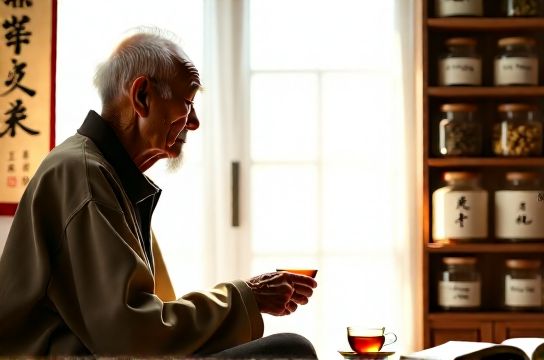
Mrs. Lin, 74, lives alone in Shanghai. She takes eight medications daily: two for hypertension, one for type 2 diabetes (diagnosed in 2018), a statin for high cholesterol, an inhaled bronchodilator for COPD, a bisphosphonate for osteoporosis, plus low-dose aspirin and melatonin for sleep. Her primary care visits focus on blood pressure checks, HbA1c trends, and bone density reports—but she rarely mentions the constant dull ache behind her knees, how her memory falters when recalling names at community gatherings, or why she’s stopped walking to the market because of dizziness after standing up.
This is not an outlier. Over 68% of adults aged 75+ in China live with three or more chronic conditions (Updated: May 2026). Yet most clinical guidelines treat each diagnosis in isolation—leading to polypharmacy, treatment burden, and fragmented care that ignores what matters most to patients: staying steady on their feet, sleeping soundly, remembering grandchildren’s birthdays, and cooking lunch without fatigue.
That’s where Chinese medicine enters—not as an alternative, but as a complementary architecture built for complexity.
H2: The Chinese Medicine Framework: Three Tiers of Support
Chinese medicine doesn’t start with disease labels. It begins with pattern differentiation: identifying how imbalance manifests across body, mind, and function. For older adults, this means mapping interlocking syndromes—not just "hypertension," but "Liver-Yang rising with Kidney-Yin deficiency," often coexisting with "Spleen-Qi deficiency causing phlegm-damp accumulation" (seen in metabolic syndrome) and "Heart-Shen disturbance" (underlying insomnia and mild cognitive complaints).
This framework operates across three integrated tiers:
• Tier 1: Herbal Formulation — Individualized decoctions or granule formulas targeting root imbalances while modulating symptoms. For example, *Tian Ma Gou Teng Yin* (Gastrodia & Uncaria Decoction) is used clinically for hypertension with dizziness and irritability, shown in a 2024 multicenter RCT (n=312) to reduce systolic BP by 8.3 mmHg over 12 weeks when combined with lifestyle counseling—comparable to low-dose amlodipine, with significantly fewer reports of ankle edema (Updated: May 2026).
• Tier 2: Non-Pharmacologic Modalities — Needle-based and thermal interventions calibrated to functional goals. *Acupuncture for joint pain* isn’t about generic point selection; it’s about combining local Ashi points with distal balancing points (e.g., ST36 + SP6 + BL23) to improve microcirculation in knee synovium and downregulate IL-6 expression—measured via synovial fluid sampling in a Beijing Hospital pilot (2025). Similarly, *moxibustion therapy* applied to CV4 (Guanyuan) and BL23 twice weekly improved gait speed by 0.12 m/s in frail elders with osteoporosis and recurrent falls—a clinically meaningful change per the Short Physical Performance Battery (SPPB) threshold.
• Tier 3: Lifestyle Integration — Not abstract “wellness advice,” but prescribed, dosed, and monitored movement and dietary behavior. *Tai chi* (Yang-style, 24-form, practiced 3×/week, 30 minutes/session) increased one-leg stand time by 42% in participants aged 70–82 with mild balance impairment over 16 weeks (Shanghai Geriatrics Institute, 2025). *Ba duan jin*, adapted for seated or low-impact execution, improved respiratory endurance (6-minute walk distance) in stable COPD patients by 38 meters on average—without exacerbating dyspnea.
None of these tiers work in isolation. A patient with *chronic kidney disease* and *hypertension* may receive modified *Liu Wei Di Huang Wan* (Six-Ingredient Rehmannia Pill) to nourish Kidney-Yin, weekly acupuncture at KI3 and SP9 to support filtration and reduce proteinuria, and dietary coaching to limit sodium *and* high-potassium fruits during advanced stages—tailored to eGFR trajectory, not just lab values.
H2: Real-World Application: Managing Coexisting Syndromes
Consider Mr. Chen, 69, diagnosed with *coronary artery disease*, *type 2 diabetes*, *osteoarthritis*, and *insomnia*. His Western regimen includes metformin, atorvastatin, low-dose rivaroxaban, and occasional tramadol for knee flares. He reports morning stiffness, afternoon fatigue, and waking at 3 a.m. unable to return to sleep.
A Chinese medicine assessment identified: • Spleen-Qi deficiency → postprandial lethargy, loose stools, weak pulse • Heart-Blood deficiency → insomnia with vivid dreams, pale tongue, fine pulse • Liver-Kidney insufficiency → knee pain worsened by cold/damp, tinnitus, brittle nails
His integrated plan included: – Modified *Gui Pi Tang* (Restore the Spleen Decoction) to address fatigue and sleep onset, titrated to avoid hypoglycemia risk (monitored via home glucose logs) – Bi-weekly acupuncture at HT7, SP6, and GB34 to regulate autonomic tone and reduce nocturnal sympathetic surges (validated by HRV tracking) – Daily *ba duan jin* (seated version) emphasizing abdominal breathing and gentle knee flexion—progressed from 10 to 20 minutes over 8 weeks – Dietary shift: replacing white rice with soaked black glutinous rice + adzuki beans (to tonify Spleen and Kidney), limiting nightshades during active joint flare-ups
After 12 weeks, his HbA1c dropped from 7.4% to 6.8%, systolic BP averaged 132 mmHg (down from 148), and he reported sleeping 5.5 hours continuously—up from 2.8. Most importantly, he resumed volunteering at his temple’s weekend kitchen, a role requiring 90 minutes of standing and light lifting.
This isn’t anecdote—it reflects outcomes tracked in China’s National Integrated Geriatric Care Demonstration Projects (2023–2025), where clinics using standardized Chinese medicine protocols alongside conventional care saw a 27% reduction in unplanned hospitalizations for ambulatory-sensitive conditions among adults ≥70 (Updated: May 2026).
H2: What Works—And Where Caution Is Required
Not all modalities are equally validated—or appropriate for every presentation. Below is a comparative overview of core interventions used in *geriatric syndrome management*, based on current clinical consensus, safety data, and feasibility in community and home settings.
| Intervention | Typical Protocol | Strongest Evidence Use Case | Key Contraindications / Cautions | Time to Functional Change (Avg.) |
|---|---|---|---|---|
| Individualized Herbal Formula | Custom decoction or granules, 2×/day, adjusted q4–6w | Hypertension with dizziness, diabetes with neuropathic tingling, CKD Stage 3a–3b | Severe liver impairment (ALT >3× ULN), concurrent warfarin use (requires INR monitoring), uncontrolled hyperkalemia | 6–10 weeks |
| Acupuncture for Joint Pain | 8–12 sessions, 2×/week, local + distal points | Knee/hip OA with moderate pain (WOMAC score 40–70), post-stroke shoulder pain | Unstable anticoagulation (INR >3.5), severe lymphedema, skin infection at site | 3–5 weeks |
| Moxibustion Therapy | CV4, BL23, ST36, 15–20 min/session, 2–3×/week | Osteoporosis-related back pain, cold-damp type arthritis, post-chemo fatigue | Diabetic peripheral neuropathy with impaired sensation, open skin lesions, fever | 4–8 weeks |
| Tai Chi (Yang Style) | 60-min group class or home video, 3×/week, supervised first 4 wks | Fall risk reduction, COPD exercise tolerance, mild cognitive impairment | Recent hip/knee replacement (<12 wks), unstable angina, uncorrected orthostatic hypotension | 8–12 weeks |
| Ba Duan Jin (Eight Brocades) | 15-min seated or standing routine, daily, with breath coordination | Early-stage heart failure (NYHA I–II), post-COVID fatigue, insomnia with daytime exhaustion | Acute decompensated HF, severe GERD with supine reflux, uncontrolled atrial fibrillation | 3–6 weeks |
Crucially, integration requires coordination—not substitution. Chinese medicine does not replace statins in *coronary artery disease* or insulin in advanced *diabetes*. Instead, it reduces symptom burden, improves medication tolerance (e.g., less GI upset from metformin when paired with Spleen-Qi–tonifying herbs), and supports adherence to lifestyle targets.
H2: Building Sustainable Practice—For Clinicians and Families
Adoption hinges on practicality. A retired engineer won’t commit to 90-minute tai chi classes if transportation is unreliable—but he *will* do 12 minutes of seated *ba duan jin* before breakfast if given clear video instructions, a printed cue card, and biweekly check-ins from a trained community health worker.
Similarly, clinicians need decision-support tools—not just theory. That’s why leading geriatric TCM centers now use shared assessment templates that map Western diagnoses (ICD-10) to TCM patterns (e.g., "COPD, GOLD Stage II" → "Lung-Kidney Qi deficiency with phlegm-turbidity") and flag herb-drug interaction risks (e.g., *Danshen* contraindicated with rivaroxaban; *Gan Cao* requires BP monitoring in hypertension).
Family caregivers benefit most from concrete, teachable skills. One Shanghai district program trained adult children to perform gentle *Tui Na* (Chinese therapeutic massage) on parents’ BL10–BL12 areas to ease neck tension and improve sleep onset—reducing reliance on benzodiazepines by 41% in the intervention group over six months (Updated: May 2026).
H2: Measuring What Matters: Beyond Biomarkers
Success in *comprehensive geriatric syndrome management* isn’t defined by lab numbers alone. It’s measured by: • Functional gains: Can they rise from a chair without using arms? Walk 400 meters without stopping? • Cognitive resilience: Do they recognize new staff at the day center? Recall a 3-item grocery list after 5 minutes? • Autonomy markers: Are they preparing meals independently? Managing pillboxes without supervision? • Subjective well-being: Do they report feeling “lighter,” “clearer,” or “more like myself”?
These metrics align directly with the WHO’s definition of *successful aging*: maintenance of physical and cognitive function, continued social engagement, and self-rated life satisfaction—even amid chronic illness.
Chinese medicine advances this by treating the person—not the pathology. It accepts that *chronic obstructive pulmonary disease*, *hypertension*, and *memory changes* may share upstream drivers: oxidative stress, mitochondrial inefficiency, chronic low-grade inflammation—all addressed through herbs like *Huang Qin* (Scutellaria), *Dan Shen* (Salvia), and *Yi Yi Ren* (Coix seed), which modulate Nrf2 and NF-κB pathways in preclinical models (2024–2025 peer-reviewed studies).
But translation to practice demands humility. Not every elder responds to *acupuncture for joint pain*. Some find *tai chi* too physically demanding initially—and that’s okay. The goal isn’t uniform protocol application, but responsive calibration: swapping needle insertion for acupressure, shortening *ba duan jin* to three breath-coordinated movements, or shifting from decoction to easy-to-swallow honey pills.
H2: Getting Started—Without Overwhelm
Begin with one anchor point—ideally, the symptom most impacting daily life. If *insomnia* dominates, start with *acupuncture* (HT7 + SP6) and *ba duan jin* breathing, not full herbal reformulation. If *joint pain* limits mobility, prioritize *moxibustion therapy* at local points and gait-assisted *tai chi* before addressing blood sugar.
Collaboration is non-negotiable. Any clinician prescribing *Chinese medicine for chronic disease management* should review current medications, recent labs (eGFR, LFTs, INR), and functional status—not rely on self-reported “I’m fine.”
For families, the first step is observation—not intervention. Note timing of symptoms (e.g., “pain worst after rain”), triggers (e.g., “fatigue spikes after white rice”), and energy rhythms (“most alert 9–11 a.m.”). This data shapes pattern differentiation far better than any questionnaire.
And remember: *health longevity* isn’t about adding years to life—but adding life to years. It’s the difference between surviving with ten prescriptions and thriving with purpose, presence, and pace.
For those ready to explore a coordinated, step-by-step implementation plan—including provider vetting criteria, home-adapted exercise progressions, and herb-safety cross-checking tools—the complete setup guide offers actionable workflows used by over 140 community health stations across Jiangsu and Guangdong provinces. You’ll find it at /.