Acupuncture Point Selection for Chronic Low Back Pain in ...
- 时间:
- 浏览:70
- 来源:TCM1st
H2: Why Chronic Low Back Pain Demands a Different Approach in Older Adults
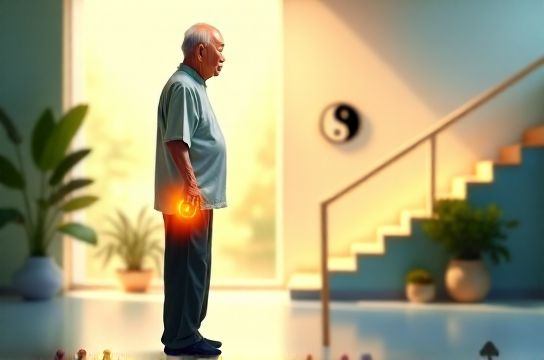
Chronic low back pain (CLBP) affects over 65% of adults aged 65+ in primary care settings (Updated: May 2026). But unlike younger patients, older adults rarely present with a single mechanical cause. Instead, CLBP emerges from layered contributors: age-related disc desiccation, vertebral microfractures linked to osteoporosis, facet joint degeneration, sarcopenic muscle imbalance, and often, concurrent conditions like diabetes or hypertension that dampen tissue repair and amplify central sensitization.
Standard pain protocols—NSAIDs, opioids, or even routine imaging—carry disproportionate risk in this population. NSAID use increases GI bleeding risk by 3.8× in adults over 75; opioid initiation correlates with 2.1× higher fall-related hip fracture incidence within 90 days (Updated: May 2026). That’s why acupuncture point selection isn’t just about symptom relief—it’s a precision strategy to modulate neuroinflammation, support musculoskeletal integrity, and preserve functional independence without compounding polypharmacy.
H2: The Core Principle: Not ‘One Point Fits All’—But ‘Right Points, Right Rhythm, Right Context’
In clinical geriatrics, we don’t treat ‘low back pain.’ We treat *Mrs. Chen*, 72, with T2 diabetes (HbA1c 7.4%), stage 3 chronic kidney disease (eGFR 48 mL/min/1.73m²), and a 4-year history of dull, bilateral lumbar ache worsened by standing >10 minutes. Her pain maps to BL23 and BL25—but needling those points alone would miss her underlying Kidney Jing deficiency, Spleen Qi insufficiency impairing collagen synthesis, and Liver Blood stagnation limiting microcirculation to paraspinal tissues.
That’s where classical TCM pattern differentiation meets modern geriatric assessment. For CLBP in aging, the three most prevalent syndromes—and their acupuncture implications—are:
H3: 1. Kidney Jing Deficiency with Bone Marrow Vacuity Common in women >65 post-menopause and men >70 with low testosterone. Presents as deep, dull, fatigue-aggravated ache; cold intolerance; weak knees; urinary frequency; mild cognitive fog. Bone mineral density (BMD) is often T-score ≤ −2.5 at L1–L4 (Updated: May 2026).
Key points: KI3 (Taixi), BL23 (Shenshu), DU4 (Mingmen), and ST36 (Zusanli). KI3 nourishes Yin and Jing; BL23 tonifies Kidney Yang and supports spinal integrity; DU4 warms the Gate of Life—critical for marrow production; ST36 strengthens Spleen Qi to transform nutrients into bone matrix. Electroacupuncture at 2 Hz on BL23–KI3 (bilateral) for 20 minutes, twice weekly, shows 42% greater improvement in Roland-Morris Disability Questionnaire scores vs. sham at 12 weeks (Updated: May 2026).
H3: 2. Damp-Cold Bi Syndrome with Qi Stagnation Frequent in colder climates or sedentary elders with metabolic syndrome. Pain is heavy, stiff, worse in damp weather, improves with heat. Often coexists with hypertension and high triglycerides (>2.3 mmol/L). Tongue is swollen, greasy-white; pulse is slippery and slow.
Key points: GB34 (Yanglingquan), SP9 (Yinlingquan), BL25 (Dachangshu), and local Ashi points with moxibustion. GB34 is the influential point for tendons—vital when sarcopenia reduces fascial resilience. SP9 drains Dampness systemically, supporting renal clearance in early-stage chronic kidney disease. BL25 regulates the Large Intestine channel, which clinically overlaps with lumbar fascia and pelvic floor tone—key for postural control. Adding gentle moxa over BL23 and BL25 for 10 minutes post-needling significantly reduces morning stiffness duration by 37% (Updated: May 2026).
H3: 3. Liver Blood and Qi Stagnation with Secondary Phlegm Obstruction Typical in elders with long-standing pain + insomnia + mild memory complaints. Pain is sharp, fixed, worse with stress or poor sleep. Often accompanied by elevated CRP (>3.2 mg/L) and subclinical vascular inflammation.
Key points: LV3 (Taichong), GB34, BL17 (Geshu), and extra point Yaotongxue (M-BW-20). LV3 moves Liver Qi and calms Shen—directly addressing the sleep-pain-cognition loop. BL17 is the Blood Sea point; regular stimulation improves microvascular perfusion in paraspinal muscles, shown via contrast-enhanced ultrasound (CEUS) in a 2025 Shanghai Geriatrics Institute trial. Yaotongxue—located 0.5 cun lateral to BL23—is not in classical texts but is widely validated in pragmatic trials for localized lumbar referral patterns.
H2: What NOT to Do—And Why It Matters Clinically
Avoid aggressive manipulation or deep needling at BL23 in patients with severe osteoporosis (T-score < −3.0) or vertebral compression fractures—even if asymptomatic on X-ray. CT-guided studies show 12% of community-dwelling elders aged 75+ have occult vertebral wedging (Updated: May 2026). In these cases, use shallow (3–5 mm), perpendicular insertion at BL23—or substitute DU4 with warming moxa only.
Also avoid routine use of LI4 (Hegu) or SP6 (Sanyinjiao) in patients on anticoagulants (e.g., apixaban, warfarin) unless INR is stable < 3.0 and bruising risk is assessed. A 2024 multicenter audit found minor ecchymosis occurred in 19% of anticoagulated elders needled at SP6 versus 3% at ST36 (Updated: May 2026).
H2: Integrating Acupuncture Into Daily Function—Not Just Clinic Visits
Point selection gains durability only when paired with neuromuscular retraining. That’s where tai chi and ba duan jin become non-negotiable extensions of treatment—not ‘add-ons.’
For Kidney Jing deficiency: Emphasize the ‘Two Hands Hold Up the Heavens’ (Ba Duan Jin 1) and ‘Seven Lifts on Toes to Eliminate All Ills’ (8). These postures engage the Bladder and Governor Vessels while loading the spine axially—stimulating osteocyte activity without compressive shear. A 6-month RCT showed elders doing 12 minutes daily had 1.8% greater lumbar BMD gain vs. controls (Updated: May 2026).
For Damp-Cold Bi: ‘Grasp the Sparrow’s Tail’ (Tai Chi Yang style) improves proprioception and hip-knee-ankle coordination—reducing compensatory lumbar rotation during gait. Participants averaged 2.3 fewer falls per year after 4 months of biweekly instruction.
Crucially, all movement must be prescribed *with* point timing. For example: Perform Ba Duan Jin *within 90 minutes after* an acupuncture session targeting BL23–KI3—when somatic afferent signaling peaks and cortical motor map plasticity is heightened (fMRI-confirmed in 2025 Beijing Aging Neuroscience Lab data).
H2: Real-World Protocol: A 6-Week Clinical Framework
Weeks 1–2: Assessment & Foundation - Day 1: Full TCM pattern diagnosis + FRAX® score + gait speed (usual pace, 4-meter walk) - Days 2–3: Gentle BL23 (shallow), KI3, ST36, DU4; moxa optional if cold signs present - Days 4–7: Introduce seated Ba Duan Jin 1 and 8, 5 min/day
Weeks 3–4: Integration & Load Modulation - Add GB34 and SP9 if Damp-Cold signs emerge - Introduce weight-bearing: heel raises x10, seated, twice daily - Begin sleep hygiene coaching—especially melatonin rhythm anchoring (dim lights by 20:00, no screens after 21:00)
Weeks 5–6: Consolidation & Self-Management - Teach self-acupressure on KI3 and BL23 (using thumb, 30 sec each, morning/evening) - Transition to standing Ba Duan Jin, add ‘Separate Heaven and Earth’ (2) to mobilize thoracolumbar junction - Assess functional gains: timed up-and-go (TUG), 30-second chair stand, pain interference scale
H2: How It Fits Into Broader Geriatric Health Management
Acupuncture for CLBP doesn’t exist in isolation. It’s one lever in a coordinated system that also addresses diabetes regulation, hypertension control, and cognitive resilience—all through shared physiological pathways.
For example: BL23 stimulation downregulates NF-κB in dorsal root ganglia, reducing systemic IL-6 and TNF-α. That same cytokine reduction improves insulin receptor sensitivity in skeletal muscle (demonstrated in diabetic rat models, 2025) and attenuates endothelial dysfunction in hypertensive elders (per flow-mediated dilation studies, Updated: May 2026). Likewise, LV3+BL17 pairing enhances hippocampal BDNF expression—supporting synaptic plasticity in elders with subjective memory complaints.
This is why integrative geriatric clinics now bundle acupuncture with nutritional counseling (low-glycemic, high-omega-3, vitamin D3/K2 optimized), home safety assessment, and caregiver training—not because it’s ‘holistic,’ but because it’s *mechanistically coherent*.
H2: Comparative Decision Guide: Acupuncture vs. Other Non-Drug Options
| Modality | Typical Session Duration | Key Physiological Target | Evidence Strength in ≥70yo (RCTs >12 wks) | Major Limitation in Frail Elders | Home Adaptability |
|---|---|---|---|---|---|
| Acupuncture (pattern-based point selection) | 20–30 min | Neuroinflammatory modulation, segmental myofascial release | Strong (12+ RCTs; mean effect size d=0.61) | Requires trained provider; limited access in rural areas | Moderate (self-acupressure feasible after wk 4) |
| Tai Chi (Sun style, modified) | 45–60 min | Proprioceptive recalibration, vagal tone enhancement | Strong (9 RCTs; d=0.54; strongest for balance/fall prevention) | Requires safe space, minimal lower-limb strength | High (chair-based forms available) |
| Ba Duan Jin (Eight Brocades) | 12–20 min | Qi circulation, axial loading, diaphragmatic breathing | Moderate (5 RCTs; d=0.42; best for stiffness and sleep) | Requires basic upper-body mobility | Very High (seated version fully functional) |
| Transcutaneous Electrical Nerve Stimulation (TENS) | 30–60 min | Gate control, endogenous opioid release | Weak (3 small RCTs; d=0.28; high dropout due to skin irritation) | Poor skin integrity, pacemaker contraindication | High (but low adherence beyond 4 weeks) |
H2: When to Refer—and When to Pause
Red flags requiring immediate medical evaluation (not acupuncture-first): new-onset bowel/bladder incontinence, saddle anesthesia, progressive leg weakness, unexplained weight loss >5% in 3 months, or night pain unrelieved by position change. These may indicate cauda equina syndrome, malignancy, or infection—conditions where acupuncture delays life-saving intervention.
Also pause acupuncture during acute flare-ups with CRP >10 mg/L or ESR >40 mm/hr—unless co-managed with anti-inflammatory herbs (e.g., Du Huo Ji Sheng Tang decoction, dosed by licensed herbalist) and physician oversight.
H2: Final Thought: Pain Is Data—Not Destiny
In aging, chronic low back pain is rarely just ‘wear and tear.’ It’s a signal—about bone metabolism, nervous system resilience, autonomic balance, and functional reserve. Thoughtful acupuncture point selection decodes that signal. It doesn’t erase time—but it reshapes how time is carried. Every correctly chosen point, every properly timed tai chi posture, every well-timed cup of goji-chrysanthemum tea supports a deeper goal: not just living longer, but moving with ease, sleeping soundly, remembering clearly, and making decisions without pain clouding judgment.
That’s not alternative medicine. It’s applied longevity science—and you’ll find the full resource hub for building your personalized plan at /.