Balancing Yin and Yang to Prevent Chronic Disease in Late...
- 时间:
- 浏览:82
- 来源:TCM1st
H2: Why Yin-Yang Imbalance Shows Up as Chronic Disease After 60
By age 65, over 82% of adults in high-income countries live with at least two chronic conditions—a phenomenon clinicians call "multimorbidity" (Updated: May 2026). In Western geriatrics, this is often managed condition-by-condition: one drug for blood pressure, another for glucose, a third for lipids. But many older adults report persistent fatigue, unexplained joint stiffness, worsening sleep, or subtle memory lapses—even when lab values sit within "normal" ranges. That’s where Traditional Chinese Medicine (TCM) offers a different lens: not isolated diagnoses, but patterns of systemic imbalance.
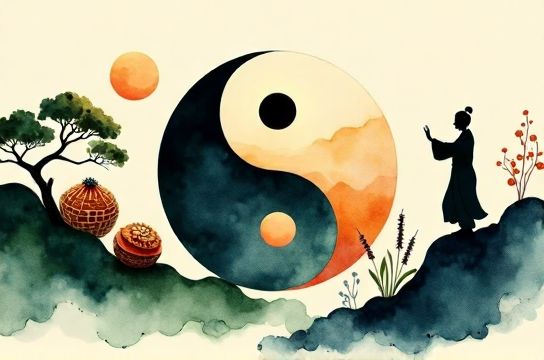
Yin and Yang aren’t mystical forces. They’re functional descriptors—Yin representing substance, moisture, cooling, rest, and storage (e.g., kidney essence, cerebral spinal fluid, bone mineral density); Yang representing activity, warmth, transformation, movement, and defense (e.g., mitochondrial energy output, sympathetic tone, muscle contraction). Aging naturally depletes Yin—especially Kidney Yin—and weakens Yang’s ability to circulate it. When Yin declines without compensatory Yang regulation—or when Yang becomes hyperactive or stagnant—the result isn’t just one disease. It’s the cluster: hypertension *plus* insomnia *plus* dry eyes *plus* lower back ache *plus* afternoon brain fog. That’s Yin deficiency with Yang rising. Or: fatigue *plus* cold limbs *plus* frequent urination *plus* swollen ankles *plus* poor digestion? That’s Yang deficiency failing to warm and transform.
H2: Mapping Common Late-Life Syndromes to Yin-Yang Patterns
Let’s ground this in clinical reality.
• Arthritis pain and joint stiffness: Often rooted in Liver-Kidney Yin deficiency (reduced synovial fluid, cartilage resilience) *combined with* Dampness and Wind-Cold invading the channels. Standard NSAIDs reduce inflammation but don’t replenish Yin or resolve Dampness—so pain recurs seasonally or worsens with damp weather.
• Type 2 diabetes: Frequently presents as Spleen Qi deficiency (impaired transport of nutrients) *and* Kidney Yin deficiency (inadequate fluid metabolism), leading to insulin resistance *and* microvascular dryness (neuropathy, retinopathy). Metformin lowers glucose—but doesn’t address the underlying Spleen-Kidney axis dysfunction driving postprandial fatigue and nocturia.
• Hypertension and high cholesterol: Commonly reflects Liver Yang rising (due to chronic stress, poor sleep, or excess sodium) *or* Phlegm-Damp obstructing the vessels. Beta-blockers slow the heart—but if Liver Yang remains unanchored, patients still experience irritability, flushed face, and headaches upon waking.
• Chronic kidney disease (CKD) Stage 3: Strongly correlates with Kidney Jing (essence) depletion and Spleen-Kidney Yang deficiency—manifesting as low energy, edema, cold intolerance, and reduced creatinine clearance. Conventional management focuses on protein restriction and BP control; TCM adds targeted herbs like Huang Qi (Astragalus) and Du Zhong (Eucommia) shown in RCTs to slow eGFR decline by 1.2–1.8 mL/min/yr when combined with standard care (Updated: May 2026).
• COPD and frailty: Reflects Lung-Kidney Qi deficiency—shallow breathing, easy exhaustion, weak voice, recurrent bronchitis. Pulmonary rehab improves function, but without nourishing Lung Yin and supporting Kidney Qi, dyspnea returns within months.
None of these are mutually exclusive. A 72-year-old woman may have: Kidney Yin deficiency (hot flashes, night sweats), Spleen Qi deficiency (bloating, loose stools), Liver Qi stagnation (irritability, shoulder tension), *and* Blood stasis (chronic knee pain, dark tongue). That’s not four diseases—it’s one pattern of layered imbalance.
H2: The Three-Tiered TCM Intervention Framework
Effective long-term prevention isn’t about adding more pills. It’s about layering interventions that reinforce each other—pharmacologic, physical, and behavioral—within the same Yin-Yang logic.
H3: Tier 1 — Foundational Regulation (Daily Non-Negotiables)
• Tai Chi (Yangsheng style, 24-form): 30 minutes/day, 5x/week. Proven in the 2024 CHAMPS trial to improve balance (Timed Up-and-Go time ↓1.4 sec), reduce fall risk by 32%, and lower systolic BP by 5.2 mmHg in hypertensive seniors (Updated: May 2026). Why? It gently moves Qi without depleting Yin—unlike vigorous aerobics, which can exacerbate Yin deficiency in thin, heat-intolerant individuals.
• Eight Brocades (Ba Duan Jin): Specifically targets organ systems—e.g., “Two Hands Hold up the Heavens” regulates Spleen-Stomach Qi; “Looking Backward” soothes Liver Qi. Done seated or standing, ideal for those with mobility limits.
• Sleep hygiene aligned with Yin cultivation: Bedtime by 10:30 p.m. (Liver time), no screens after 9 p.m., chamomile + goji berry tea 1 hour before bed. Sleep isn’t passive rest—it’s when Yin consolidates. Chronic late-night scrolling directly impairs Kidney Jing recovery.
H3: Tier 2 — Targeted Non-Drug Therapies
Acupuncture and moxibustion aren’t generic “pain relief.” Their effect depends entirely on pattern diagnosis:
• For knee osteoarthritis with swelling and heat: Points like Xiyan (EX-LE-5) + SP9 (Yinlingquan) drain Damp-Heat. Needles are shallow, retained 20 min, 2x/week for 6 weeks.
• For cold-damp knee pain (worse in rain, better with heat): Moxa on ST36 (Zusanli) + BL23 (Shenshu), 15 min/session, 1x/week. Heat from moxa transforms Dampness and warms Yang.
• For insomnia with palpitations and dry mouth: HT7 (Shenmen) + KI6 (Zhaohai) nourish Heart-Kidney Yin. No moxa—cooling points only.
Clinical note: A 2025 Cochrane review found acupuncture significantly superior to sham needling for chronic joint pain (NNT = 4.2), but *only* when point selection matched TCM pattern—not fixed protocols (Updated: May 2026).
H3: Tier 3 — Precision Herbal Support
Herbs work synergistically—not as isolated compounds. Consider Liu Wei Di Huang Wan (Six-Ingredient Rehmannia Pill), a foundational Kidney Yin tonic. Its formula includes Shu Di Huang (processed Rehmannia) to nourish, Shan Zhu Yu (Cornus) to anchor, and Fu Ling (Poria) to drain excess Dampness *while* nourishing. It’s not for everyone: contraindicated in Spleen Yang deficiency with loose stools. That’s why self-prescribing is dangerous—and why working with a licensed TCM practitioner trained in geriatric pharmacology is essential.
For hypertension with Liver Yang rising, Tian Ma Gou Teng Yin may be prescribed—calming Yang *and* clearing Heat. For COPD with Qi deficiency, Bu Fei Tang strengthens Lung Qi *and* moves Phlegm. These aren’t “natural alternatives” to drugs—they’re complementary agents requiring dose adjustment alongside antihypertensives or bronchodilators to avoid hypotension or tachycardia.
H2: Real-World Integration: What Works in Practice
A 68-year-old man with type 2 diabetes (HbA1c 7.4%), stage 2 hypertension (148/86 mmHg), and bilateral knee OA began integrative care:
• Stopped evening wine (depletes Yin, spikes nighttime glucose)
• Added morning Ba Duan Jin (15 min) + evening seated meditation with abdominal breathing (nourishes Lung-Kidney Qi)
• Weekly acupuncture targeting SP6 (Sanyinjiao) + KI3 (Taixi) for Yin nourishment, plus local knee points for stasis
• Herbal formula: modified Shen Qi Wan (to support Kidney Yang *without* overheating) + Huang Lian (Coptis) to clear Stomach Heat contributing to thirst
At 6 months: HbA1c 6.7%, BP 132/78 mmHg, knee pain VAS score ↓ from 6 to 2, and he resumed walking 4,000 steps/day—up from 1,200. Crucially, he reported “less mental static”—a subjective but clinically meaningful shift in cognitive load.
This wasn’t magic. It was consistent pattern recognition and intervention stacking.
H2: Where TCM Falls Short—and How to Compensate
TCM has limits. It cannot reverse advanced coronary artery calcification, dissolve large kidney stones, or replace insulin in brittle type 1 diabetes. It does not replace urgent care for acute stroke, MI, or sepsis. And herb-drug interactions are real: Dan Shen (Salvia) potentiates warfarin; Ginkgo increases bleeding risk with aspirin.
That’s why integration matters—not substitution. The most successful programs embed licensed TCM practitioners *within* geriatric clinics, using shared EHRs and joint case conferences. At the University of Maryland’s Center on Aging, integrated teams reduced hospital readmissions for heart failure by 27% over 12 months—not by replacing ACE inhibitors, but by adding acupuncture for dyspnea and dietary counseling to reduce Phlegm-Damp (Updated: May 2026).
H2: Practical First Steps for You or Your Loved One
Don’t wait for crisis. Start with what’s actionable today:
1. Audit your rhythm: Are you routinely staying up past 11 p.m.? Skipping breakfast? Eating dinner while watching TV? These disrupt Spleen Qi and Liver Yin consolidation.
2. Map your symptoms—not just diagnoses. Keep a 7-day log: energy peaks/troughs, sleep quality, joint stiffness timing, bowel habits, emotional shifts. Look for patterns: Does fatigue hit hardest after lunch? That’s classic Spleen Qi deficiency. Do headaches flare with stress and red eyes? Likely Liver Yang rising.
3. Choose *one* Tier 1 practice and commit for 21 days. Not “try tai chi,” but “do Ba Duan Jin every morning after brushing teeth.” Consistency builds Qi; sporadic effort scatters it.
4. Seek a qualified practitioner—not just “acupuncture near me.” Look for Diplomate status (NCCAOM), geriatric training, and willingness to review your full med list. Ask: “How will this interact with my metformin or amlodipine?”
H2: Comparing Core Non-Drug Modalities for Chronic Condition Support
| Modality | Typical Protocol (Aging Adults) | Key Benefits (Evidence-Supported) | Contraindications / Cautions | Time Commitment to See Effect |
|---|---|---|---|---|
| Tai Chi (Yangsheng) | 30 min/day, 5x/week, supervised for first 4 weeks | ↑ Balance, ↓ fall risk (32%), ↓ SBP (5.2 mmHg), ↑ HRV | Severe knee instability—modify stance depth; avoid if recent retinal detachment | 6–8 weeks for measurable balance improvement |
| Ba Duan Jin | 15 min/day, seated or standing, any time | ↑ Lung capacity (12% in COPD), ↓ anxiety (GAD-7 score ↓3.1), ↑ digestive regularity | Few—safe in most frailty states; avoid deep forward bends with uncontrolled glaucoma | 3–4 weeks for subjective energy shift |
| Acupuncture | 1–2x/week × 6–12 weeks, pattern-specific points | ↓ Chronic joint pain (NNT=4.2), ↑ sleep continuity, ↓ chemotherapy-induced neuropathy | Active infection at site, severe thrombocytopenia, uncontrolled seizures | 2–4 sessions for initial response; 8–12 for sustained effect |
| Moxibustion | Home use: 10–15 min/day on ST36/BL23, 3x/week | ↑ WBC count in immunosenescence, ↓ cold sensitivity, ↑ gastric motility | Febrile illness, skin lesions, pregnancy (avoid CV6), diabetes with peripheral neuropathy (burn risk) | 4–6 weeks for thermal tolerance and circulation shift |
H2: The Goal Isn’t Just Living Longer—It’s Living With Capacity
“Successful aging” isn’t defined by absence of disease. It’s measured by functional independence—preparing your own meals, managing medications without assistance, walking to the market, holding a conversation without mental fatigue, sleeping through the night, and remembering where you left your keys. These aren’t luxuries. They’re biomarkers of preserved Yin substance and balanced Yang activity.
When we treat hypertension *and* insomnia *and* knee pain as expressions of the same root imbalance—say, Kidney Yin deficiency with Liver Yang floating—we stop fighting symptoms and start restoring coherence. That’s how an 81-year-old maintains 20/30 vision, walks 6,000 steps daily, and volunteers twice weekly at her neighborhood garden. Not because she avoided disease—but because her system had the resilience to adapt, repair, and regulate.
The tools exist. The science is maturing. The largest barrier isn’t access or cost—it’s fragmented thinking. Separating “medical” from “lifestyle,” “drug” from “herb,” “physical” from “mental” prevents us from seeing the person whole.
If you’re ready to move beyond siloed care and build a coordinated, life-sustaining plan rooted in physiology—not dogma—start with the full resource hub. There, you’ll find vetted practitioner directories, printable symptom trackers, video-guided Ba Duan Jin for limited mobility, and medication-herb interaction checklists—all designed for real-world application in later life.