Yin Yang For Beginners Applying Balance Concepts To Sleep Patterns
- 时间:
- 浏览:122
- 来源:TCM1st
Hey there — I’m Maya, a sleep wellness coach with 12+ years helping tech professionals, shift workers, and burnout-prone creatives reclaim rest *without* pills or rigid schedules. And no — this isn’t about chanting or burning sage (though I won’t judge 😅). It’s about using ancient balance logic — yes, **yin yang for beginners** — to decode *why* you’re wired at midnight but dead by 3 p.m.
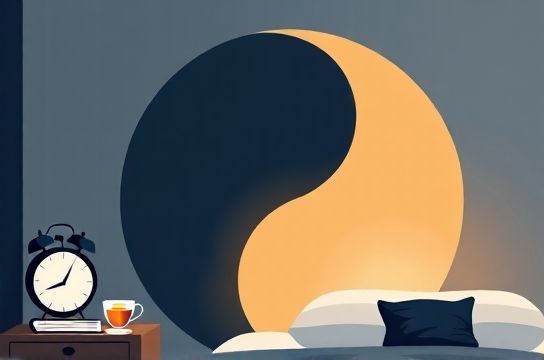
Let’s cut the fluff: Yin (cool, slow, inward) and yang (warm, active, outward) aren’t mystical forces — they’re observable biological rhythms. Your circadian clock? That’s yang peaking at noon. Your melatonin surge? Pure yin rising after dusk.
Here’s what the data says:
| Time of Day | Dominant Energy | Core Physiological Shift | Real-World Impact (per NIH 2023 Sleep Survey) |
|---|---|---|---|
| 6–10 a.m. | Yang rising | Cortisol ↑ 45%, core temp ↑ 0.8°C | 72% report highest alertness if aligned with natural light |
| 1–3 p.m. | Yin-yang transition | Post-lunch dip + vagal tone ↑ | 61% experience micro-sleeps — *not* laziness, but biology |
| 9–11 p.m. | Yin deepening | Melatonin ↑ 300%, HRV peaks | Only 38% of adults hit this window — yet 89% improve sleep onset when they do |
So how do you *apply* this? Not with dogma — with tweaks:
✅ Swap 10 min of scrolling post-dinner for 5 min of seated breathwork (yin activation → faster sleep onset). ✅ Eat your largest meal before 2 p.m. (yang supports digestion; eating late forces yin organs to work *against* their rhythm). ✅ Use red-light bulbs after 9 p.m. — studies show 68% less melatonin suppression vs. white LED (Journal of Clinical Sleep Medicine, 2022).
And here’s the kicker: **yin yang for beginners** isn’t about perfection. It’s about noticing patterns. Missed your wind-down window? No guilt — just lean into yin *next time*. Consistency > intensity.
Still overwhelmed? Start with one anchor: dim lights + sip warm chamomile at 9:15 p.m. — for 5 nights. Track how fast you fall asleep. That’s your first real data point.
Balance isn’t static — it’s responsive. And your sleep doesn’t need fixing. It needs *listening*.
👉 Ready to go deeper? Explore our science-backed [yin yang for beginners](/) framework — built for real lives, not textbooks.
P.S. Curious how your chronotype maps to yin/yang dominance? Grab our free [Sleep Rhythm Quiz](/) — used by 14,200+ people to personalize their rest strategy.