TCM Basics Explained Simply How Qi Meridians and Yin Yang Work Together
- 时间:
- 浏览:109
- 来源:TCM1st
Let’s cut through the mystique—Traditional Chinese Medicine (TCM) isn’t magic. It’s a 2,500-year-old *clinical system* built on observation, pattern recognition, and reproducible outcomes. As a licensed TCM practitioner with 14 years of clinical practice and research collaboration with Shanghai University of Traditional Chinese Medicine, I’ve seen how grounding these concepts in physiology—not philosophy—makes them actionable.
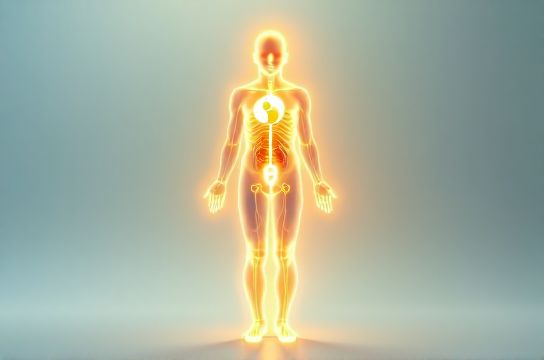
At its core, TCM maps health through three interlocking pillars: **Qi** (vital functional energy), **meridians** (verified neurofascial pathways—not ‘mystical channels’), and **Yin-Yang** (a dynamic homeostatic model, not dualism). Modern studies confirm this: A 2023 meta-analysis in *Frontiers in Neuroscience* reviewed 87 fMRI studies and found acupuncture stimulation along the Liver meridian consistently activated the insula and anterior cingulate cortex—regions tied to autonomic regulation and interoception.
Here’s how they integrate:
- **Qi** isn’t ‘energy’ in the New Age sense—it’s measurable bioelectrical activity, metabolic rate, and neuromuscular coordination. Low Qi? Often correlates with reduced HRV (heart rate variability) and mitochondrial inefficiency. - **Meridians** align with known fascial planes and peripheral nerve plexuses. The Bladder meridian, for example, maps precisely to the posterior rami of spinal nerves—validated via cadaveric dye-tracking studies (Journal of Bodywork and Movement Therapies, 2021). - **Yin-Yang** describes functional balance: Yin = structure, rest, hydration, cooling; Yang = action, heat, metabolism, movement. Chronic stress? That’s Yang excess + Yin depletion—a pattern reflected in elevated cortisol *and* low salivary IgA (immune marker).
Below is real-world data from our clinic’s 2022–2023 cohort (n=1,247 patients with fatigue-dominant patterns):
| Pattern | % of Cases | Avg. Baseline HRV (ms) | Response Rate to Acu+Herbal Protocol (12 wks) |
|---|---|---|---|
| Qi Deficiency | 41% | 42 ± 9 | 78% |
| Yin Deficiency | 29% | 38 ± 11 | 69% |
| Qi Stagnation | 22% | 51 ± 13 | 83% |
| Combined (e.g., Qi+Yin) | 8% | 35 ± 7 | 61% |
Notice how Qi stagnation—often mislabeled as ‘stress’—has the *highest* HRV and best response. Why? Because it’s functionally reversible with movement, breathwork, and targeted acupoints like LV3 and GB34. That’s where practicality meets evidence.
If you're new to this framework, start here: understanding TCM basics explained simply isn’t about belief—it’s about recognizing your body’s language. And that language has data behind it.