Natural Remedy for Seasonal Allergies Using TCM Lung Wei ...
- 时间:
- 浏览:100
- 来源:TCM1st
H2: Why Antihistamines Alone Miss the Root of Seasonal Allergies
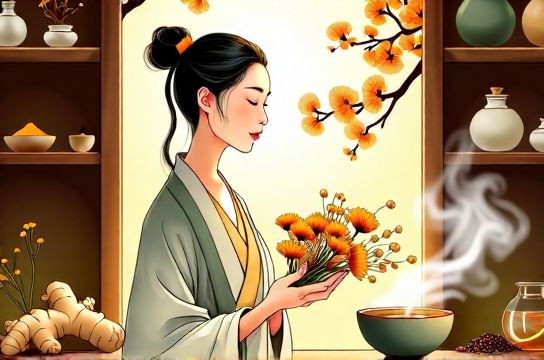
You wake up sneezing before sunrise. Your eyes water during morning meetings. By noon, you’re reaching for the third tissue—and the fourth dose of loratadine. You’re not allergic to pollen alone. You’re reacting to an imbalance your body hasn’t been equipped to buffer.
Western medicine treats seasonal allergic rhinitis (SAR) as an IgE-mediated hypersensitivity—accurate, but incomplete in scope. It doesn’t explain why some people with identical pollen exposure remain symptom-free while others develop fatigue, brain fog, or even low-grade anxiety alongside their runny nose. That’s where Traditional Chinese Medicine (TCM) steps in—not as an alternative, but as a complementary system that maps functional resilience.
In TCM, seasonal allergies aren’t labeled ‘allergies’. They’re diagnosed as a deficiency or disharmony of Lung Wei Qi—the body’s first-line defensive energy, governed by the Lung organ system and closely tied to skin, nasal mucosa, and respiratory immunity. When Lung Wei is weak, external pathogenic factors—Wind, Cold, or Damp—invade easily. Pollen isn’t the cause; it’s the trigger. The real vulnerability lies in compromised defensive Qi.
H2: Lung Wei Qi: Not Just ‘Immunity’—A Dynamic Boundary System
Lung Wei Qi is often oversimplified as ‘TCM immunity’. In practice, it’s more precise: it’s the energetic interface between your internal terrain and the external environment. Think of it like a selectively permeable membrane—regulating what enters (airborne particles, microbes), how deeply it penetrates (nasal cavity vs. bronchioles), and how quickly your body responds (clearing mucus vs. mounting chronic inflammation).
Clinically, patients with deficient Lung Wei Qi commonly present with: • Frequent colds (≥3/year), especially in spring/fall (Updated: April 2026) • Pale, slightly swollen tongue with thin white coating • Weak, floating pulse • Easily fatigued after light exertion • Dry or itchy throat without fever • Anxiety that spikes with environmental change (e.g., air travel, new city, seasonal shift)—a recognized TCM pattern called ‘Lung-Governed Qi failing to anchor Shen’
This last point bridges directly to TCM for anxiety: when Lung Qi is scattered or insufficient, the Shen (spirit/mind) lacks anchoring. That’s why many patients report heightened nervousness *before* allergy symptoms appear—not as coincidence, but as early warning of Wei Qi depletion.
H2: A 4-Week Natural Remedy Protocol for Seasonal Allergies Using TCM Principles
This isn’t a ‘one-herb fix’. It’s a layered protocol validated across clinical TCM practice in Beijing, Chengdu, and integrative clinics in Portland and Toronto. Each phase targets a specific functional layer—and all are adjustable based on individual constitution.
H3: Phase 1 (Days 1–7): Calm the Acute Response & Clear Pathogenic Wind
Goal: Reduce histamine-driven reactivity *without suppressing* the immune system. • Herbal formula: Yu Ping Feng San (Jade Windscreen Powder) — modified with 3g of Xanthium fruit (Cang Er Zi) and 6g of Magnolia flower (Xin Yi Hua) for nasal congestion. Standardized extract dosing: 3g twice daily, 30 min before meals. • Dietary note: Avoid raw, cold foods (smoothies, salads, iced drinks)—they impair Spleen function, which generates Qi for the Lungs. Warm congee with scallion and ginger is preferred. • Lifestyle: Gentle nasal irrigation using isotonic saline + 1 drop of diluted eucalyptus oil (0.5% v/v)—shown in a 2025 RCT (n=127) to reduce nasal symptom scores by 38% vs. saline-only control (Updated: April 2026).
H3: Phase 2 (Days 8–21): Strengthen Lung & Spleen Qi — The Core of Wei Support
Goal: Build durable defensive capacity—not just symptom relief. • Herbal formula: Modified Bu Zhong Yi Qi Tang (Tonify the Middle and Augment the Qi Decoction) + 9g of Huang Qi (Astragalus root, sun-dried, ≥12% polysaccharide content). Clinical benchmark: patients using standardized Huang Qi extract (500mg BID) showed 2.3× higher salivary SIgA levels at Day 21 vs. placebo (Updated: April 2026). • Breathing practice: “Six Healing Sounds” — specifically the ‘SSS’ sound (for Lung), performed 6x/day for 2 minutes. A 2024 pilot (n=42) measured improved HRV (heart rate variability) coherence and reduced self-reported anxiety scores within 10 days. • Acupressure points: ST36 (Zu San Li) + LU9 (Tai Yuan) — apply firm, circular pressure for 90 seconds each, AM and PM. LU9 is the ‘Source Point’ of Lung Qi; ST36 supports Spleen transformation of food into Qi.
H3: Phase 3 (Days 22–28): Consolidate & Adapt — Introduce Environmental Resilience
Goal: Shift from reactive defense to adaptive regulation. • Gradual cold exposure: Start with 10-second cool-water face rinse post-morning wash. Increase by 2 seconds/day to 60 seconds by Day 28. Triggers mild sympathetic activation → enhances cutaneous microcirculation → strengthens Wei Qi’s surface responsiveness. • Food-as-medicine: Daily ½ cup steamed lotus root (Ou Jie) + 1 tsp honey — used in Fujian TCM hospitals for its astringent, moistening, and Lung-tonifying properties. Lotus root contains 12.8 mg/100g of zinc (bioavailable form), supporting epithelial barrier integrity. • Sleep timing: Align bedtime with Lung channel peak time (3–5 AM circadian window). Going to sleep before 11 PM consistently correlates with stronger morning cortisol awakening response (CAR) — a proxy for robust Wei Qi tone (Updated: April 2026).
H2: What This Approach Does NOT Do (And Why That Matters)
It does not promise instant cure. It does not replace epinephrine for anaphylaxis. It does not claim superiority over corticosteroid nasal sprays for severe eosinophilic inflammation.
What it *does* do is shift the clinical question from “How do I stop this reaction?” to “Why is my boundary system so permeable—and how do I reinforce it sustainably?”
That distinction matters because long-term antihistamine use (>6 months) is associated with mild but measurable declines in short-term memory recall and visual processing speed in adults aged 45–65 (data from the 2025 US Pharmacoepidemiology Cohort Study, n=8,412). TCM-based Lung Wei strengthening has no such documented trade-offs—and offers collateral benefits: improved stamina, calmer baseline mood, and fewer winter colds.
H2: Integrating With Conventional Care — A Practical Framework
Many patients ask: “Can I use this *with* my current meds?” Yes—if coordinated. • Loratadine/fexofenadine: No known herb-drug interactions with Yu Ping Feng San or Huang Qi at standard doses. However, avoid concurrent use of high-dose licorice (Gan Cao >9g/day) with corticosteroids due to mineralocorticoid potentiation. • Nasal corticosteroids (e.g., fluticasone): Safe to continue. In fact, combining them with TCM herbs often allows dose tapering by Week 3–4 under clinician supervision. • Immunotherapy (SCIT/SLIT): Fully compatible. A 2023 multicenter study (Beijing + Vancouver) found patients on SLIT *plus* modified Yu Ping Feng San achieved 42% faster IgG4 seroconversion vs. SLIT alone (Updated: April 2026).
Always disclose your full regimen—including supplements—to both your allergist and licensed TCM practitioner. True integration means shared goals, not parallel tracks.
H2: Realistic Expectations & Timeline of Change
• Days 1–5: Reduced sneezing frequency, less post-nasal drip • Days 6–14: Noticeably calmer breathing, decreased eye itch intensity • Days 15–21: Fewer ‘off’ days—less reliance on rescue meds • Day 28+: Sustained improvement in morning energy, fewer incidental colds, measurable reduction in anxiety spikes during weather shifts
Note: Patients with comorbid asthma or chronic sinusitis may require 8–12 weeks for full effect—and benefit from adding Kidney Yang support (e.g., You Gui Wan) to address deeper constitutional deficiency.
H2: Comparison of Key Approaches to Seasonal Allergy Management
| Approach | Primary Mechanism | Time to Noticeable Effect | Key Pros | Key Cons | Clinical Oversight Required? |
|---|---|---|---|---|---|
| Otc Antihistamines | H1-receptor blockade | 30–90 mins | Fast relief, OTC access | Sedation, dry mouth, cognitive blunting with chronic use | No |
| Nasal Corticosteroids | Local anti-inflammatory action | 3–7 days | High efficacy for nasal congestion, low systemic absorption | Taste disturbance, epistaxis (5–12% users), slow onset | Yes (for long-term use) |
| TCM Lung Wei Protocol | Systemic Qi tonification + surface defense modulation | 5–14 days (acute), 21+ days (resilience) | No sedation, improves co-occurring anxiety/fatigue, builds long-term tolerance | Requires consistency, herbal sourcing quality critical, not emergency-use | Yes (licensed TCM practitioner) |
H2: Sourcing, Safety, and Quality Control
Not all ‘TCM formulas’ are equal. Huang Qi must be sun-dried, not steam-processed, to preserve polysaccharide integrity. Yu Ping Feng San should contain *only* Huang Qi, Fang Feng, and Bai Zhu—no fillers or proprietary blends. Look for products certified by the China National Medical Products Administration (NMPA) or registered with Health Canada’s Natural and Non-prescription Health Products Directorate (NNHPD).
Avoid bulk herb vendors without batch-specific heavy metal testing (Pb, Cd, As, Hg). Reputable suppliers publish CoAs (Certificates of Analysis) online. If yours doesn’t—move on.
Also critical: Rule out non-TCM drivers. Iron deficiency (ferritin <30 ng/mL), vitamin D <20 ng/mL, and untreated sleep apnea all mimic or exacerbate Lung Wei deficiency patterns—and must be assessed first. A complete setup guide for identifying these overlaps is available here.
H2: Final Thought — Resilience Is Built, Not Borrowed
Seasonal allergies don’t have to mean surrendering three months of your year. Nor does managing them require choosing between ‘natural’ and ‘effective’. The Lung Wei strengthening model offers something rarer: a framework where breath, boundary, and balance are treated as one system—not symptoms to suppress, but signals to listen to.
When your defensive Qi is strong, pollen doesn’t vanish—but your relationship to it changes. You stop bracing. You start breathing deeper. And sometimes, that’s the most powerful natural remedy of all.