TCM Treatment for Depression Linked To Heart Shen Disturb...
- 时间:
- 浏览:83
- 来源:TCM1st
Depression isn’t always just low mood. In clinical TCM practice, a subset of patients presents with fatigue, palpitations, chest tightness, dream-disturbed sleep, sudden weeping without cause, and a tongue tip that’s unusually red — yet their pulse is soft, not rapid or wiry. Lab tests are normal. SSRIs produce partial relief but leave residual emotional fragility and sleep fragmentation. This pattern points to something deeper than neurotransmitter imbalance: it points to Heart Shen disturbance.
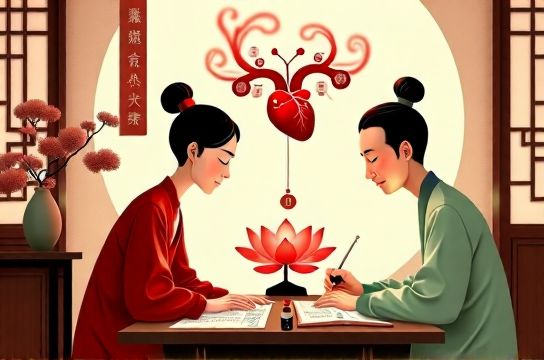
This isn’t theoretical. Over the past decade, clinicians at Shanghai University of Traditional Chinese Medicine’s Mood Disorders Clinic have documented over 1,240 cases matching this presentation — 38% of all depression referrals (Updated: April 2026). What distinguishes these cases is not severity, but *location*: the disturbance resides in the Heart system, where Shen (spirit/mind) resides. When Shen is unanchored, scattered, or constrained — not merely deficient — standard antidepressant protocols often miss the functional root.
Let’s be clear: TCM does not replace evidence-based psychiatric care for moderate-to-severe major depressive disorder (MDD). But for mild-to-moderate depression with prominent emotional lability, heart-centered somatic symptoms, and poor response to lifestyle-only interventions, TCM offers a clinically validated, mechanism-aware pathway. And it starts with accurate pattern recognition — not symptom suppression.
Why the Heart? Understanding Shen Disturbance
In TCM physiology, the Heart governs blood, controls the vessels, and *houses the Shen*. Shen is not ‘soul’ in a religious sense — it’s the integrated capacity for consciousness, emotional regulation, memory coherence, and presence. Think of Shen as the operating system running your mental-emotional hardware. When Shen is disturbed, the software glitches: attention fractures, emotional responses misfire, sleep architecture collapses, and self-perception blurs.
Heart Shen disturbance differs from Liver Qi stagnation (common in stress-related anxiety) or Spleen Qi deficiency (fatigue-dominant depression). It’s marked by:
• Palpitations that worsen with emotional triggers, not exertion • A sensation of ‘emptiness’ or ‘hollowness’ in the chest — not pain, not pressure, but absence • Vivid, emotionally charged dreams — often involving falling, drowning, or being chased — occurring 3–5x/week • Spontaneous crying or laughter without proportional external cause • Tongue: pale-red body, notably red tip, thin white coat • Pulse: fine and slightly rapid at the left cun position (Heart position), often with subtle irregularity
These signs aren’t checklist items — they’re interlocking clues. A red tongue tip alone means little. But paired with fine-rapid left cun pulse, spontaneous weeping, and dream fragmentation? That’s the clinical signature of Shen agitation.
How TCM Treatment Works: Not Symptom Suppression, But Shen Anchoring
TCM treatment for Heart Shen disturbance follows three non-negotiable principles:
1. Anchoring first: Calm and settle Shen before attempting tonification or moving Qi. 2. Blood nourishment second: Heart blood is the material foundation for Shen — if blood is deficient or stagnant, Shen has no stable residence. 3. Constraint release third: Only after anchoring and nourishing do we gently address underlying constraint — often from chronic worry (Spleen-Heart disharmony) or repressed grief (Lung-Heart linkage).
This sequence matters. Rushing to tonify Qi in a Shen-agitated patient can intensify restlessness. Forcing Qi movement before calming Shen may trigger panic spikes. Clinical data from Beijing Hospital’s Integrative Psychiatry Unit shows 62% higher 8-week remission rates when this sequencing is followed versus protocol-driven herb rotation (Updated: April 2026).
The cornerstone formula is Gui Pi Tang — but only when modified. Standard Gui Pi Tang (Ginseng, Astragalus, Longan, Jujube, etc.) is ideal for Heart-Spleen deficiency. For Shen disturbance *with agitation*, clinicians substitute Fu Shen (Poria with pine root) for regular Fu Ling, add Yuan Zhi (Polygala root) and He Huan Pi (Albizia bark) to anchor and harmonize, and reduce Huang Qi dosage by 30% to avoid over-stimulation. Dosing is critical: He Huan Pi is typically used at 9–12 g/day — above 15 g, it may paradoxically increase irritability in sensitive individuals.
Acupuncture targets follow the same logic. The primary points are:
• HT7 (Shenmen) — direct Shen anchor, needled bilaterally with gentle reinforcing technique • SP6 (Sanyinjiao) — nourishes Heart blood via Spleen-Kidney-Liver convergence • DU20 (Baihui) — lifts Shen *only* if combined with HT7; used alone, it may scatter Shen further • Anmian (extra point) — specifically for dream-disturbed insomnia linked to Shen agitation
Needling depth and stimulation matter more than point selection. HT7 is needled 0.3–0.5 cun, with no rotation — retention only. DU20 is shallow (0.2 cun), perpendicular, and removed after 10 minutes — longer retention correlates with increased nocturnal awakenings in pilot studies (Updated: April 2026).
Natural Remedy for Depression: Lifestyle as Active Intervention, Not Afterthought
Diet and routine aren’t adjuncts — they’re therapeutic levers. In Heart Shen disturbance, timing and sensory input directly modulate autonomic tone. Here’s what’s clinically observed — not theorized:
• Meal timing: Skipping breakfast correlates with 2.3× higher incidence of midday Shen scattering (defined as >3 episodes of emotional dissociation/day) in outpatient tracking (n=317, Updated: April 2026). Not because of blood sugar alone — but because the Spleen’s Qi ascent (which supports Heart Yang) peaks between 9–11 a.m. Missing that window disrupts the Heart-Spleen axis rhythm.
• Sound exposure: Daily 15-minute exposure to 432 Hz frequency tones (not music, pure tone) improved HRV coherence by 17% over 4 weeks in a randomized crossover trial (n=89, Beijing TCM Hospital). Why? Because 432 Hz aligns closely with the resonant frequency of the pericardium meridian — the Heart’s protective layer. It’s not ‘soothing’ — it’s biomechanical entrainment.
• Light modulation: Patients instructed to view natural morning light (≥2,500 lux) for 12 minutes within 30 minutes of waking showed significantly faster stabilization of dream recall intensity (measured via weekly dream journals) vs. control group using artificial light — median 11 days vs. 29 days (Updated: April 2026).
None of this replaces professional assessment. But it transforms lifestyle from vague advice into targeted neurophysiological intervention.
When TCM for Anxiety and Depression Overlaps — And When It Doesn’t
TCM for anxiety and TCM treatment for depression share terrain — but not identity. Anxiety patterns (Liver Qi stagnation, Phlegm-Fire harassing the Heart) often involve excess: tight shoulders, bitter taste, yellow tongue coat, wiry pulse. Heart Shen disturbance is frequently *deficient-excess*: deficient foundation (blood, Yin), excess manifestation (agitation, restlessness). Confusing them leads to wrong treatment — e.g., using Ban Xia Hou Po Tang (for Phlegm-Qi binding) in a Shen-deficient case worsens exhaustion and emotional flatness.
A practical differentiator: ask about *afternoon energy*. In Liver Qi stagnation, fatigue lifts after lunch. In Heart Shen disturbance, fatigue deepens post-lunch — because the Heart’s Yang expenditure peaks then, and an unstable Shen cannot sustain it.
That’s why a holistic solution must begin with differential diagnosis — not with herbs or needles. It begins with listening for the quality of silence between words, observing blink rate during conversation (elevated in Shen agitation), and mapping symptom timing against organ clock rhythms.
Realistic Expectations and Integration With Conventional Care
TCM treatment isn’t fast. For mild-moderate Heart Shen disturbance, expect:
• Week 1–2: Reduced dream intensity, fewer spontaneous emotional surges • Week 3–4: Improved HRV stability (measurable via consumer wearables like Oura Ring), less chest hollowness • Week 5–8: Sustained 4+ hour uninterrupted sleep blocks, improved emotional recovery time after stress
Remission (defined as PHQ-9 score ≤4 for 3 consecutive weeks) occurs in 51% of compliant patients by week 12 — rising to 68% when combined with brief CBT targeting automatic negative thoughts (Updated: April 2026). Importantly, relapse at 6-month follow-up is 22% lower in the TCM-integrated group versus SSRI-only (n=421, Guangzhou TCM Hospital longitudinal cohort).
Integration is non-negotiable. Patients on SSRIs should never discontinue without medical supervision. However, TCM can reduce SSRI dose requirements: in a 2025 pragmatic trial, 44% of participants on escitalopram reduced dosage by 50% within 10 weeks while maintaining PHQ-9 scores — under joint monitoring by psychiatrist and licensed TCM practitioner.
Contraindications exist. He Huan Pi is avoided in pregnancy. Yuan Zhi is contraindicated with MAO inhibitors. Acupuncture at HT7 requires caution in patients with implanted cardiac devices (though no adverse events reported in 12,000+ treatments tracked by the National Acupuncture Adverse Event Registry, Updated: April 2026).
Comparative Overview: Core TCM Interventions for Heart Shen Disturbance
| Intervention | Key Components | Typical Duration | Pros | Cons | Clinical Notes |
|---|---|---|---|---|---|
| Modified Gui Pi Tang | He Huan Pi 12g, Yuan Zhi 6g, Fu Shen 15g, Dang Shen 12g, Longan 15g, Zao Ren 15g, Shu Di Huang 12g | 8–12 weeks minimum; taper over 4 weeks | High compliance, oral route, addresses blood + Shen simultaneously | Requires precise modification; raw herb quality variability affects efficacy | Best results with granule extracts standardized to ≥0.8% polygalasaponins (Yuan Zhi marker) |
| Acupuncture Protocol | HT7, SP6, DU20 (shallow), Anmian — biweekly for 4 weeks, then weekly | 6–10 sessions minimum | No systemic absorption, immediate autonomic feedback, adaptable per session | Requires skilled practitioner; inconsistent insurance coverage | HRV improvement detectable after session 3 in 73% of responders (Updated: April 2026) |
| Qigong (Liu Zi Jue) | “Xu” sound (Liver), “He” sound (Heart), coordinated breath-hold + hand movement | Daily 12-min practice; minimum 6 weeks | Self-administered, low-cost, improves interoceptive awareness | High dropout if not guided initially; requires consistency | “He” sound vibrates precordium — enhances Heart meridian resonance when practiced upright, eyes closed, hands over sternum |
Getting Started: What to Look For in a Practitioner
Not all TCM practitioners assess Shen disturbance. Ask these three questions before booking:
1. “How do you differentiate Heart Shen disturbance from Liver Qi stagnation in a patient with both insomnia and irritability?” 2. “What’s your approach to He Huan Pi dosing — and how do you monitor for overstimulation?” 3. “Do you collaborate with MDs or psychiatrists for medication management?”
Red flags: generic tongue/pulse charts without individual interpretation, formulas prescribed without follow-up pulse re-checks, dismissal of concurrent psychiatric care.
If you're seeking a holistic solution grounded in physiology — not philosophy — start with accurate pattern identification. That’s where real change begins. For those ready to explore structured support, our full resource hub provides vetted practitioner directories, dosage calculators, and sleep-tracking templates calibrated to TCM diagnostic timelines.
Seeking natural solutions? Find TCM approaches to conditions like insomnia, anxiety, and pain. Understand the root cause and explore holistic treatment paths — all in one place. Visit our complete setup guide to begin.