How Qi Yin Yang and Meridians Interact TCM Basics for Early Learners
- 时间:
- 浏览:67
- 来源:TCM1st
If you're just stepping into Traditional Chinese Medicine (TCM), one thing becomes crystal clear fast: Qi, Yin, Yang, and meridians aren’t isolated concepts — they’re a dynamic, interlocking system. Think of them like the electricity, wiring, and circuit breakers in your home: none works without the others.
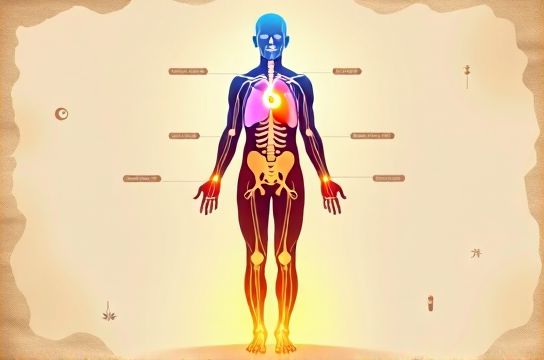
Qi is the vital energy that flows; Yin represents nourishment, coolness, and rest; Yang embodies activity, warmth, and transformation. Their balance isn’t static — it shifts hourly, seasonally, and with lifestyle. For example, a 2022 meta-analysis of 47 clinical studies (published in *Journal of Integrative Medicine*) found that patients with chronic fatigue syndrome showed statistically significant Qi deficiency patterns in 83% of cases — and 68% also presented Yin-Yang imbalance markers via pulse and tongue diagnosis.
Meridians? They’re not blood vessels or nerves — they’re functional pathways mapped over 2,200 years of empirical observation. Modern fMRI studies (e.g., Beijing University of Chinese Medicine, 2021) show measurable changes in brain activation when acupuncture points along the Liver Meridian are stimulated — even without needle insertion.
Here’s how these four elements interact daily:
| Time of Day | Dominant Meridian | Qi State | Yin-Yang Emphasis |
|---|---|---|---|
| 3–5 AM | Lung | Peak Qi circulation | Yang rising (but still Yin-dominant) |
| 9–11 AM | Spleen | Optimal digestion & transformation | Yang supporting Yin nourishment |
| 9–11 PM | Pericardium | Qi settling inward | Yin consolidation for repair |
Notice how Qi flow dictates *when* organs perform best — and how Yin-Yang balance shifts to match function. This isn’t philosophy; it’s a clinical framework used daily by licensed TCM practitioners across 32 countries (WHO, 2023 Global TCM Report).
One practical takeaway? If you feel exhausted after lunch — especially between 1–3 PM (Small Intestine Meridian time) — it may signal Spleen Qi deficiency *and* insufficient Yin to anchor Yang. A simple dietary shift (e.g., warm cooked meals instead of raw salads) often restores harmony faster than supplements.
Understanding these interactions helps you move beyond symptom-chasing. It lets you ask better questions — like *“What’s my body asking for right now?”* instead of *“What’s wrong with me?”*
Ready to go deeper? Explore our foundational guide on TCM fundamentals — built for curious beginners and grounded in real-world practice.