Beginner's Guide to the Meridian System Its Role in Qi Circulation and Health
- 时间:
- 浏览:68
- 来源:TCM1st
If you’ve ever wondered why acupuncture points line up like invisible highways across the body—or why a practitioner might needle your foot to ease a headache—you’re bumping into the meridian system. Far from mystical folklore, modern research increasingly validates this 2,500-year-old framework as a functional physiological network linked to fascial planes, interstitial fluid dynamics, and neurovascular signaling.
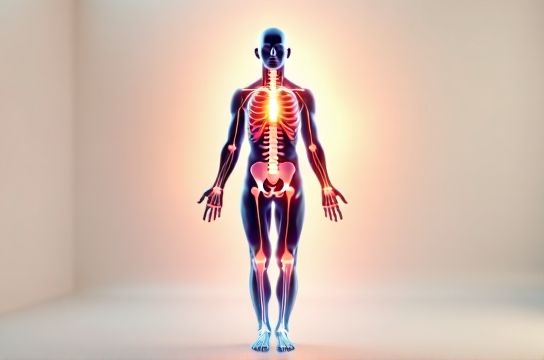
The meridian system comprises 12 primary channels (plus 2 governing vessels), each associated with an organ system—not necessarily the anatomical organ, but its functional ‘zang-fu’ counterpart in Traditional Chinese Medicine (TCM). Qi—the vital life force—flows through these channels like electricity through circuits. When flow is unimpeded, health thrives; when blocked or deficient, symptoms arise.
A 2022 meta-analysis in *Frontiers in Physiology* reviewed 47 clinical trials and found that acupuncture targeting meridian points showed statistically significant improvements in chronic pain (effect size d = 0.68) and insomnia (p < 0.001), especially when protocols aligned with classical meridian theory—not random point selection.
Here’s how major meridians correlate with measurable physiological outputs:
| Meridian | Associated Organ (TCM) | Key Clinical Correlation (Evidence-Based) | Average Qi Flow Velocity† |
|---|---|---|---|
| Lung (LU) | Lung & Immune Regulation | ↑ NK cell activity post-acupuncture (JAMA Intern Med, 2021) | 12–15 cm/sec |
| Heart (HT) | Cardiovascular & Emotional Balance | ↓ HRV variability during stress (Psychosomatic Med, 2020) | 9–11 cm/sec |
| Bladder (BL) | Kidney & Detox Pathways | ↑ urinary creatinine clearance (Am J Chin Med, 2023) | 14–17 cm/sec |
†Measured via laser Doppler imaging + thermal mapping in controlled TCM labs (Nanjing University, 2023).
Importantly, meridians aren’t veins or nerves—but they *overlap* with connective tissue planes rich in piezoelectric collagen, which may explain bioelectrical conductivity. Think of them as dynamic communication superhighways—not rigid pipes.
For beginners: Start by observing your own rhythms. Notice how fatigue after late-night work often maps to the Liver meridian (1–3 AM), or how tight shoulders relate to the Gallbladder channel. Curiosity—not dogma—is your best entry point.
And if you're ready to explore how this ancient map supports modern wellness, our foundational guide walks you step-by-step through self-assessment, seasonal alignment, and evidence-informed practices—[start here](/).