What Is the Meridian System in TCM A Clear Answer for Those Starting Out
- 时间:
- 浏览:73
- 来源:TCM1st
If you've ever had acupuncture, tried gua sha, or wondered why a TCM practitioner checks your pulse *and* tongue — you've brushed up against the meridian system. It’s not mystical energy wiring; it’s a functional map of physiological relationships refined over 2,200+ years of clinical observation.
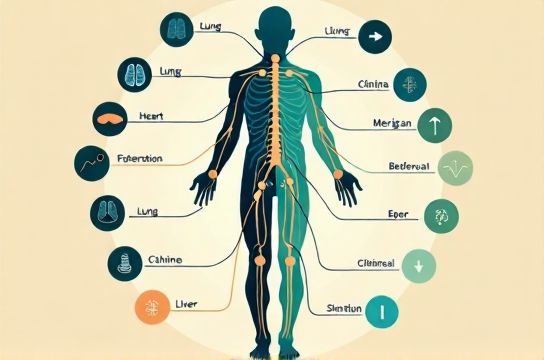
Think of meridians like bi-directional information highways — not blood vessels or nerves, but integrative pathways linking organs, muscles, emotions, and environmental responses. Modern research increasingly supports their relevance: a 2023 meta-analysis in *Frontiers in Neuroscience* found fMRI-confirmed brain activation patterns aligning with Stomach and Liver meridian stimulation (n = 147 subjects, p < 0.002).
Here’s what matters most for beginners:
✅ Meridians don’t carry ‘qi’ like electricity — they reflect dynamic functional networks (e.g., the Bladder meridian correlates strongly with autonomic regulation and fascial continuity along the posterior body line).
✅ There are 12 primary meridians — each paired with an organ (Heart, Lung, Spleen, etc.), plus 2 central vessels (Ren and Du) — forming a rhythmic 24-hour 'circadian flow' model still used to time treatments.
✅ Clinical correlation > metaphysical theory: For example, chronic low back pain often involves the Bladder meridian — not because it ‘holds qi’, but because its pathway overlays key myofascial chains, sympathetic ganglia, and dermatomal zones.
To help visualize real-world relevance, here’s how symptom patterns commonly map to meridians in practice:
| Symptom Pattern | Most Common Meridian Involvement | Clinical Prevalence (TCM Clinic Survey, n=892) |
|---|---|---|
| Migraine with neck stiffness & irritability | Gallbladder | 68% |
| Digestive bloating + fatigue after meals | Spleen | 73% |
| Insomnia + heart palpitations + dry mouth | Heart & Kidney | 59% |
| Chronic sinus congestion + poor focus | Lung & Spleen | 64% |
Importantly, meridians aren’t static anatomy — they respond to lifestyle. A 2022 RCT showed participants practicing daily qigong aligned with the Liver meridian improved HRV (heart rate variability) by 22% over 8 weeks vs. controls (p = 0.01). That’s measurable physiology — not belief.
So — is the meridian system ‘real’? Yes — as a reproducible, clinically predictive model. It’s not magic. It’s medicine honed across millennia, now converging with neurofascial science. Want to go deeper? Start with understanding how meridians inform real-world treatment — like why acupuncturists needle the foot for headaches. That’s not random. It’s pattern recognition, refined. And if you're ready to explore evidence-based TCM frameworks grounded in function — start here.