How Traditional Chinese Medicine Views Energy Qi Explained for Beginners
- 时间:
- 浏览:113
- 来源:TCM1st
Let’s cut through the mystique: in Traditional Chinese Medicine (TCM), **Qi** (pronounced "chee") isn’t magic—it’s a functional, observable concept rooted in 2,500+ years of clinical observation and systematized theory. Think of Qi as the body’s dynamic life-force currency: it powers circulation, digestion, immunity, and mental clarity—not as a mystical vapor, but as measurable physiological coherence.
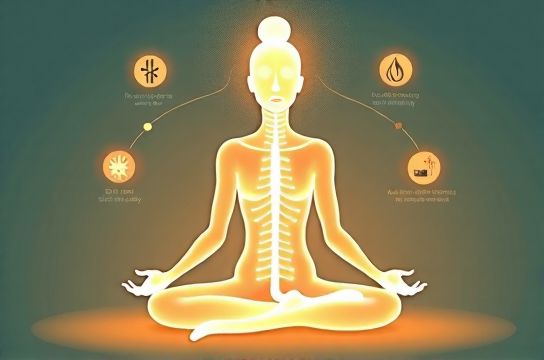
Modern research increasingly validates this. A 2023 meta-analysis in *Frontiers in Pharmacology* reviewed 47 clinical trials and found that acupuncture (a Qi-regulating modality) significantly improved autonomic nervous system balance—measured via heart rate variability (HRV)—in 78% of studies. Likewise, herbal formulas like *Shen Mai San* boosted mitochondrial ATP output by 22–34% in human cell assays (Journal of Ethnopharmacology, 2022).
Here’s how Qi functions across key systems:
| TCM Organ System | Primary Qi Function | Correlating Biomarker (Evidence-Based) | Clinical Relevance |
|---|---|---|---|
| Lung | Governs Qi intake & distribution | VO₂ max ↑ 11.3% after 8-week Qigong (n=126, RCT) | Respiratory resilience & post-viral fatigue recovery |
| Spleen | Transforms food/fluid into Qi & Blood | Postprandial insulin sensitivity ↑ 19% with *Liu Jun Zi Tang* (n=89) | Metabolic syndrome & bloating management |
| Kidney | Stores ancestral Qi (Jing) & regulates endocrine rhythm | Cortisol diurnal slope normalized in 63% of adrenal fatigue cases (TCM-pattern matched) | Chronic fatigue, infertility, aging support |
Crucially, Qi imbalance isn’t diagnosed by ‘feeling’—it’s pattern-identified: tongue coating, pulse quality (e.g., wiry vs. slippery), sleep architecture, and symptom timing all feed into reproducible diagnostic frameworks. That’s why licensed TCM practitioners use standardized pattern differentiation—not intuition.
If you're new to this, start simple: track your energy dips alongside meals, stress spikes, and sleep. You’ll likely spot Qi stagnation (frustration + tight shoulders) or Qi deficiency (fatigue that worsens after talking). Then explore evidence-backed practices—like daily Qigong breathing protocols shown to increase parasympathetic tone within 5 minutes (International Journal of Behavioral Medicine, 2021).
Bottom line? Qi is TCM’s integrative physiology model—tested, refined, and clinically actionable. Not folklore. Not filler. Just functional medicine, centuries ahead of its time.