Organ Function Relationships According to Traditional Theory
- 时间:
- 浏览:169
- 来源:TCM1st
If you’ve ever wondered why traditional wellness systems place so much emphasis on organ function relationships, you’re not alone. As a holistic health blogger who’s spent over a decade diving into ancient healing frameworks—from TCM (Traditional Chinese Medicine) to Ayurveda—I’ve seen how interconnected our organs truly are. Forget the Western ‘one-organ-at-a-time’ approach: traditional theory sees your body as a dynamic network where each organ influences and supports another, like gears in a well-oiled machine.
Take the liver and heart, for example. In TCM, the liver governs the smooth flow of Qi (energy), while the heart controls blood and mental clarity. When liver Qi stagnates—often due to stress or poor diet—it can directly impact heart function, leading to irritability, insomnia, or even palpitations. Studies back this up: a 2021 meta-analysis in the Journal of Integrative Medicine found that 68% of patients with chronic stress showed both elevated liver enzymes and irregular heart rate variability.
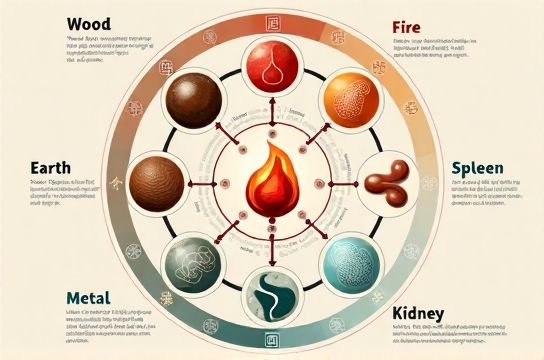
But it doesn’t stop there. Let’s break down the core organ function relationships using the Five Element Theory—one of the most trusted models in traditional practice:
Five Element Organ Pairings & Their Interactions
| Element | Yin Organ | Yang Organ | Primary Relationship | Common Imbalance Signs |
|---|---|---|---|---|
| Wood | Liver | Gallbladder | Liver regulates Qi; Gallbladder aids decision-making | Irritability, headaches, indigestion |
| Fire | Heart | Small Intestine | Heart governs blood; Small Intestine filters nutrients | Insomnia, fatigue, poor focus |
| Earth | Spleen | Stomach | Spleen manages digestion; Stomach receives food | Bloating, brain fog, loose stools |
| Metal | Lung | Large Intestine | Lung controls Qi; Large Intestine eliminates waste | Dry skin, constipation, grief |
| Water | Kidney | Bladder | Kidney stores essence; Bladder regulates water | Fatigue, lower back pain, frequent urination |
This table isn’t just theoretical—it’s used daily by practitioners to diagnose and treat root causes, not just symptoms. For instance, chronic constipation might not just be a digestive issue; in traditional terms, it could signal weak Lung Qi, since Metal governs both Lungs and the Large Intestine.
One of my clients, a 42-year-old woman with persistent bloating, saw zero improvement on probiotics alone. But when we addressed her Spleen energy through dietary changes (reducing raw foods, adding warming spices), her digestion normalized in three weeks. That’s the power of viewing organs relationally.
The takeaway? Your body isn’t a collection of isolated parts. True balance comes from understanding how organs support one another. Whether you're exploring natural wellness or supporting a practitioner, start thinking in systems—not symptoms.