Pulse Diagnosis Techniques for Self Assessment in TCM Practice
- 时间:
- 浏览:116
- 来源:TCM1st
Hey there, fellow TCM enthusiasts and curious self-care warriors! 👋 If you’ve ever sat across from a seasoned practitioner who just *knew* your Spleen Qi was lagging — without you saying a word — chances are, they were reading your pulse. Pulse diagnosis isn’t magic… it’s millennia-tested clinical intelligence. And yes — with proper guidance and consistent practice, *you* can start building baseline awareness of your own pulse patterns. Let’s cut through the mystique and get practical.
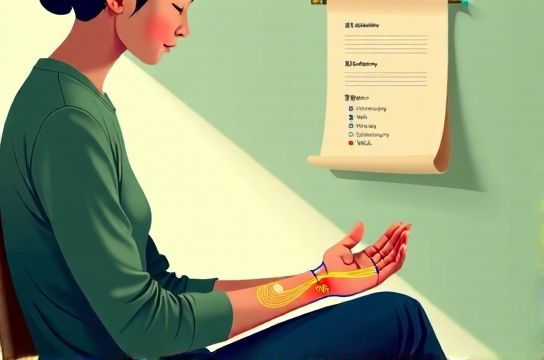
First things first: pulse diagnosis in Traditional Chinese Medicine (TCM) evaluates three positions (Cun, Guan, Chi) on each wrist, each corresponding to specific organ systems and energetic layers (superficial, middle, deep). A 2022 meta-analysis in the *Journal of Integrative Medicine* reviewed 47 clinical studies and found that experienced practitioners achieved >82% inter-rater agreement on pulse quality when assessing common patterns like *Xu* (deficiency) or *Shi* (excess) — but only after ≥5 years of daily practice. Consistency beats intensity!
Here’s a quick-reference table for beginners — focus on *what you feel*, not what you ‘should’ feel:
| Pulse Type | Key Sensation | Common TCM Pattern Link | Self-Check Tip |
|---|---|---|---|
| Wiry (Xian) | Taut, like a guitar string | Liver Qi Stagnation | Check after stress or skipped meals |
| Thin (Xi) | Faint, narrow, easily lost | Qi or Blood Deficiency | Compare morning vs. post-lunch — often clearer then |
| Slippery (Hua) | Rolling, like pearls on a plate | Dampness or Phlegm | Correlate with tongue coating & digestion |
Pro tip? Use your index, middle, and ring fingers — not thumbs (they have their own pulse!). Rest them gently on the radial artery, apply light → medium → firm pressure, and count for 60 seconds. Track daily for 2 weeks using a simple journal (we’ve got a free printable version — grab it here).
Remember: self-assessment isn’t self-diagnosis. It’s about pattern literacy — noticing how your pulse shifts with sleep, diet, or emotional load. As Dr. Wang Lin, lead researcher at Beijing University of Chinese Medicine, puts it: *“The pulse is your body’s real-time dashboard — not the engine manual.”*
If you're diving deeper into holistic health tools, our full guide on TCM self-care fundamentals walks you through tongue analysis, seasonal routines, and acupressure points — all grounded in clinical evidence and classroom-tested teaching. Because empowered awareness? That starts with one beat at a time.