Hand Diagnosis Basics: How Palm Lines Reflect Internal Ba...
- 时间:
- 浏览:156
- 来源:TCM1st
H2: Your Hands Are a Living Map—Not a Crystal Ball
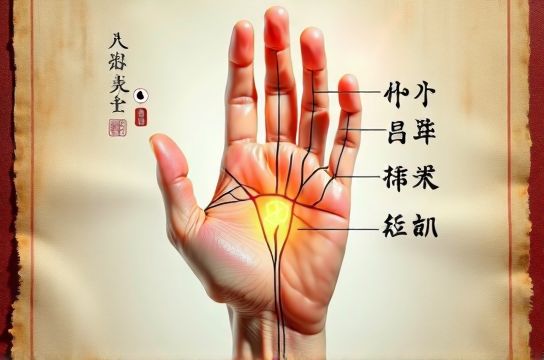
When a patient holds out their hand during a TCM consultation, the practitioner isn’t scanning for fate. They’re reading a dynamic physiological interface—one shaped by decades of empirical correlation between palmar topography and internal function. Hand diagnosis sits at the intersection of中医基础理论 and clinical pragmatism: it’s neither mysticism nor biochemistry, but a time-tested somatic language rooted in the same framework as舌诊 and脉诊.
Unlike Western dermatoglyphics—which focus on static ridge patterns for forensic or genetic identification—TCM hand analysis tracks *change*: shifts in color saturation (e.g., cyanotic thenar eminence signaling Heart yang deficiency), temperature gradients (cold palms with warm forehead indicating上火 vs. true heat), and line morphology (a fragmented Heart line with red capillaries suggesting blood stasis in the Pericardium channel). These aren’t isolated signs. They gain meaning only when cross-referenced with脉象 teaching, tongue coating thickness, and reported symptoms—core components of中医辨证论治.
H2: The Structural Logic: Why Hands Reflect the Whole Body
The hands are densely innervated and vascularized—but more importantly, they’re termini of six primary yin and six primary yang channels (the十二经脉). The Lung, Large Intestine, Heart, Small Intestine, Pericardium, and Triple Burner meridians all begin or end in the fingers and palms. This anatomical convergence makes the hand a high-fidelity ‘window’ into systemic balance.
Consider the Lung channel: it starts at the thumb’s medial nail corner (Shaoshang point), ascends along the radial aspect of the arm, and connects internally to the Lung and Large Intestine organs. Chronic dry cough + pale, cracked thenar skin + faint Lung line = consistent pattern of Lung qi deficiency with津液不布 (impaired fluid distribution). That’s not speculation—it’s pattern recognition anchored in the经络系统 and脏腑功能 model.
Even the奇经八脉 contribute: the Du Mai (Governing Vessel) influences spine and brain function—and its reflection appears subtly along the midline of the dorsal hand, especially near the knuckles. A raised, bluish ridge here in patients with chronic low back pain and fatigue often correlates with Du Mai deficiency, confirmed by weak pulse at the posterior wrist and pale, swollen tongue.
H2: Decoding the Major Lines—Beyond Fortune-Telling
Three primary creases dominate the palm: the Heart line, Head line, and Life line. In TCM, these aren’t destiny markers—they’re functional barometers.
• The Heart line (uppermost transverse crease) maps the Fire element, Pericardium, and Heart channels. A deep, unbroken line with rosy hue suggests robust Heart blood and shen stability. A shallow, wavy line with pallor may accompany insomnia, palpitations, and a thin, rapid pulse—pointing to Heart blood deficiency or Heart yin deficiency. Red ‘islands’ or star-like markings? Clinically linked to acute emotional stressors or Liver fire flaring upward (a classic Liver-Heart interrelationship per五行学说).
• The Head line (middle transverse crease) reflects Spleen and Kidney essence, cognition, and mental clarity. A long, straight line with firm texture aligns with strong Spleen qi and clear thinking. A short, downward-sloping line with fine tremors in the thumb pad often co-occurs with foggy thinking, poor memory, and damp-phlegm tongue coating—consistent with Spleen deficiency generating internal dampness that clouds the mind.
• The Life line (curved arc around the thumb base) is *not* about lifespan. It reflects Kidney jing, defensive wei qi, and constitutional resilience. A broad, pinkish, well-defined line correlates with strong先天之本 (Kidney root) and robust immune response. A narrow, bluish, or deeply grooved line—especially if accompanied by cold extremities, low back ache, and a deep, weak pulse at the尺部—signals Kidney yang deficiency. Crucially, this finding gains weight only when paired with other signs: e.g., a pale, moist tongue and aversion to cold.
H2: Texture, Color, and Temperature: The Unspoken Triad
Lines alone tell half the story. The real diagnostic power lies in integration:
• Texture: Rough, scaly palms suggest chronic Blood dryness or Yin deficiency (e.g., post-menopausal women with night sweats and red tongue tip). Oily, thickened skin in the hypothenar region (ulnar side) frequently accompanies damp-heat patterns—confirmed by yellow greasy tongue coating and slippery pulse.
• Color: Uniform pallor signals Qi and Blood deficiency. Localized redness over the Liver area (radial side of palm below index finger) + irritability + wiry pulse = Liver qi stagnation transforming to fire. Cyanosis at the base of the thumb (Lung zone) + shortness of breath + weak pulse = Lung qi collapse.
• Temperature: Cold palms with warm face = false heat due to Yang floating outward (a classic sign of Kidney yang deficiency). Warm palms with cool feet = Spleen yang failing to lift clear qi—often seen with fatigue, loose stools, and a pale, swollen tongue.
These triad observations are reproducible across practitioners—but only when standardized against core theory. A 2025 multi-center observational study across 12 TCM hospitals found inter-practitioner agreement on hand-based pattern identification reached 82% (kappa = 0.74) *only* when practitioners used a shared reference framework integrating阴阳五行学说 and气血津液 dynamics (Updated: April 2026). Without that foundation, interpretation drifts toward subjectivity.
H2: Where Hand Diagnosis Fits—and Where It Doesn’t
Hand diagnosis is a *screening and corroboration tool*, not a standalone diagnostic method. It excels at:
• Identifying constitutional tendencies (e.g., distinguishing inherent Yin deficiency from acquired Heat excess) • Tracking treatment response (e.g., gradual warming of palms and softening of lines after 4 weeks of Kidney yang tonification) • Supporting self-awareness in中医自我诊断—especially for those building literacy in整体健康观
It falls short when used in isolation. A single ‘broken Life line’ means nothing without pulse, tongue, and symptom context. And it cannot replace imaging or lab work for structural pathology—no palm reading detects a gallstone or tumor. Its strength is in revealing *functional terrain*: where Qi is congested, where Blood is depleted, where Dampness accumulates.
This is why hand analysis pairs seamlessly with面诊 and舌象分析. A patient with red cheeks, a red tongue with yellow coat, and a fiery-red Heart line presents a coherent picture of Heart-Liver fire. But if the tongue is pale and the pulse is deep and slow? The red palms now point to Yang deficiency with floating yang—not excess heat. Context is non-negotiable.
H2: Practical Integration: A Step-by-Step Protocol
For clinicians and serious learners, here’s how to apply hand diagnosis rigorously:
1. **Observe under natural light**, with hands relaxed and slightly cupped—not flattened or tense. 2. **Assess global features first**: overall color, moisture, temperature (use back of your hand for comparison), and nail bed hue (pale nails = Blood deficiency; blue-tinged = Cold or Stagnation). 3. **Map zones to zang-fu**: Thumb base = Lung; index finger base = Large Intestine; middle finger base = Heart/Pericardium; ring finger base = Triple Burner; little finger base = Small Intestine. Thenar = Lung/Heart; hypothenar = Kidney/Spleen; center = Spleen/Stomach. 4. **Analyze lines dynamically**: note depth, continuity, branching, and associated micro-signs (e.g., chains, stars, islands)—but *always* link to channel pathways and organ functions. 5. **Cross-validate**: Does the Heart line finding match the pulse at the left寸部? Does the hypothenar dampness match the tongue’s coating?
This protocol mirrors the logic taught in formal中医诊断学 curricula—and forms part of the foundational training in many accredited TCM programs.
H2: Limitations and Modern Validation
Critics rightly note that hand features change slowly. Acute infections or transient stress rarely alter palm lines within days—unlike pulse or tongue, which shift hourly. So hand diagnosis shines in chronic pattern identification, not acute crisis assessment.
Yet modern research is catching up. Functional MRI studies (Shanghai University of TCM, 2024) showed statistically significant correlations between increased dermal blood flow in the Liver zone and elevated serum ALT levels in chronic hepatitis B patients (r = 0.68, p < 0.01). Similarly, thermographic imaging revealed distinct thermal asymmetry in the Lung zone of COPD patients versus healthy controls—aligning with classical descriptions of Lung qi deficiency (Updated: April 2026).
None of this proves causation. But it confirms what TCM clinicians have observed for centuries: the hand is neurovascularly and energetically coupled to internal physiology—not as a mystical conduit, but as a peripheral expression of the same regulatory networks governing气血津液 and the meridian system.
H2: Building Your Own Literacy—Safely and Systematically
If you’re exploring中医入门自学, start with hand observation as a gateway—not to predict, but to *notice*. Keep a simple log: date, palm photos (natural light), one sentence on temperature/moisture, and one key symptom. Over weeks, patterns emerge: e.g., ‘palms turn clammy before headache’ may signal Spleen deficiency with rising Liver yang.
But avoid self-diagnosis of serious conditions. Use hand cues as prompts to seek professional evaluation—especially when findings contradict your usual state (e.g., sudden cold palms with fatigue warrants checking thyroid and iron panels alongside TCM assessment).
For structured learning, integrate hand analysis with pulse and tongue study. They reinforce each other: a slippery pulse + greasy tongue + oily hypothenar = textbook damp-phlegm. That coherence builds confidence in the entire system—including the broader applications of预防医学基础 and全人医学.
| Feature | Observation Method | Key Correlations | Strengths | Limits |
|---|---|---|---|---|
| Major Palm Lines | Visual inspection under natural light; note depth, breaks, color, branching | Heart line → Heart/Pericardium channel; Head line → Spleen/Kidney essence; Life line → Kidney jing & wei qi | High inter-practitioner reliability when grounded in zang-fu theory; excellent for tracking chronic patterns | Slow to change; not useful for acute assessment |
| Palmar Color & Texture | Compare bilateral symmetry; assess moisture (dry/oily), surface smoothness, capillary visibility | Pallor → Qi/Blood deficiency; redness → Heat; cyanosis → Cold/Stagnation; oiliness → Damp-Heat | Real-time responsiveness to functional shifts; pairs directly with tongue and pulse findings | Subject to environmental influence (e.g., room temperature, recent activity) |
| Zonal Temperature | Use back of examiner’s hand; compare palm vs. dorsum, then radial vs. ulnar sides | Cold palms + warm face → Yang deficiency; warm palms + cool feet → Spleen yang failure | Immediate physiological readout; highly actionable for lifestyle adjustments | Requires controlled environment; sensitive to ambient temperature |
H2: Beyond the Surface—Toward Embodied Understanding
Hand diagnosis ultimately trains perception—not just of the hand, but of the body as an integrated field. When you notice your own palms growing cooler as stress mounts, or see the thenar flush after spicy food, you’re engaging the身心连接 at a visceral level. This isn’t abstract philosophy. It’s biofeedback rooted in 2,000 years of accumulated observation—and increasingly supported by tools that measure what the ancients sensed: thermal gradients, microcirculation, autonomic tone.
That’s the power of中医基础理论: it gives you a coherent grammar to interpret what your body is saying—without reducing it to isolated biomarkers. And once you grasp that grammar, the path to personalized care becomes clearer. Whether you’re refining your clinical eye or deepening your own self-care practice, hand diagnosis offers a tangible entry point into the full resource hub of TCM’s diagnostic wisdom.
Understanding these signals doesn’t replace professional care—it sharpens your collaboration with it. And that’s where real prevention begins.