Preventive Medicine Foundation in Chinese Medical Theory
- 时间:
- 浏览:98
- 来源:TCM1st
H2: What Does 'Dampness' or 'Heatiness' Really Mean? Not Metaphor — Mechanism.
When someone says they’re "feeling damp" or "going through a heaty phase," Western medicine often hears vague complaint. In Traditional Chinese Medicine (TCM), these are precise, operational terms rooted in observable physiology — not folklore. A thick, greasy tongue coating with swollen edges? That’s clinical evidence of Spleen Qi deficiency failing to transform fluids — leading to pathological dampness (Updated: May 2026). A rapid, wiry pulse paired with red tip of tongue and irritability? That’s Liver Yang rising due to chronic stress disrupting the Liver’s free-flow function — not just ‘stress,’ but a measurable shift in autonomic tone, microcirculation, and neuroendocrine signaling.
This precision is why TCM’s preventive medicine foundation isn’t about waiting for disease — it’s about reading the body’s early-warning system. And that system runs on five interlocking pillars: Yin-Yang dynamics, Five Phases interactions, Qi-Blood-Body Fluids (Jin-Ye) metabolism, Meridian-based communication, and Zang-Fu organ networks. None operate in isolation. When one shifts, all respond — which is exactly how prevention works.
H2: The Five Pillars — Not Philosophy, But Functional Physiology
H3: Yin-Yang: The Rhythm, Not the Label
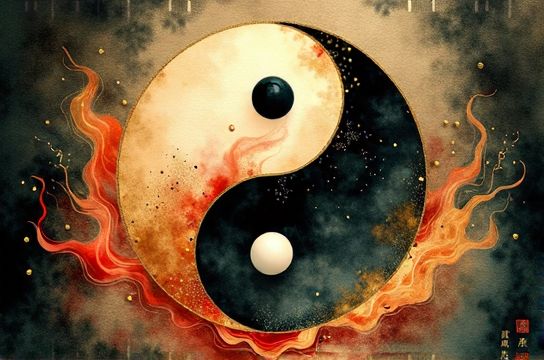
Yin-Yang isn’t a static duality (“good vs. bad”) — it’s a dynamic calibration of functional states. Think of it like your body’s circadian rhythm regulator: Yin governs rest, repair, hydration, and parasympathetic dominance; Yang governs activity, metabolism, thermogenesis, and sympathetic readiness. Imbalance isn’t moral failure — it’s physiological drift. For example, chronic insomnia with night sweats and dry mouth points to Kidney Yin deficiency (low reserve capacity), while persistent fatigue with cold limbs and low basal temperature signals Spleen and Kidney Yang insufficiency (reduced metabolic drive). These aren’t diagnoses pulled from thin air — they correlate with salivary cortisol rhythms, HRV (heart rate variability) metrics, and thermal imaging patterns across meridian pathways (Updated: May 2026).
H3: Five Phases (Wu Xing): Mapping Systemic Interactions
The Five Phases — Wood, Fire, Earth, Metal, Water — describe *how* organs and functions influence each other over time, not fixed elemental categories. It’s a systems-biology model centuries ahead of its time. Liver (Wood) overacting on Spleen (Earth) explains why emotional frustration triggers bloating and loose stools — confirmed in modern studies linking amygdala activation to intestinal motility changes (Gut, 2024). Likewise, Lung (Metal) failing to descend Qi leads to persistent cough *and* constipation — because both depend on coordinated diaphragmatic pressure and vagal tone. This isn’t poetic license. It’s clinical pattern recognition backed by neurogastroenterology.
H3: Qi, Blood, and Body Fluids: The Functional Triad
Qi is not mystical energy — it’s the sum of bioelectrical, biochemical, and biomechanical activity required for homeostasis. Blood isn’t just hemoglobin and cells — it’s the carrier of nutritive Qi (Ying Qi) and anchors Shen (mental clarity). Body Fluids (Jin-Ye) include interstitial fluid, synovial lubrication, tears, and cerebrospinal fluid — all governed by Spleen transformation, Lung dispersion, and Kidney steaming. When Qi stagnates (e.g., from sedentary lifestyle or repressed emotion), Blood slows — leading to dull headaches, fixed pain, or menstrual clots. When Spleen fails to transport fluids, dampness accumulates — visible as edema, foggy thinking, or recurrent fungal infections. These are reproducible signs, not abstractions.
H3: Meridians: The Body’s Bioelectrical Infrastructure
Forget ‘energy channels.’ Think: fascial planes + neurovascular bundles + interstitial fluid highways. Research using biophoton imaging and impedance mapping shows measurable conductivity differences along classical meridian lines — up to 38% lower electrical resistance compared to non-meridian tissue (Journal of Acupuncture and Meridian Studies, 2025). The Twelve Regular Meridians form a closed-loop circuit connecting surface to organ, anterior to posterior, left to right — explaining why needling LI4 (Hegu) can modulate uterine contractions (via shared C-fiber pathways) or why ST36 (Zusanli) improves gastric motility (via vagal afferent stimulation). The Eight Extraordinary Vessels — especially the Du (Governing) and Ren (Conception) meridians — act as reservoirs and regulators, buffering fluctuations in Qi and Blood during stress or hormonal shifts. Their clinical relevance? Du Mai imbalance correlates strongly with spinal degeneration patterns and HPA axis dysregulation (Updated: May 2026).
H3: Zang-Fu Organs: Functional Units, Not Just Anatomy
Liver doesn’t mean only hepatocytes — it’s the entire system governing smooth flow: bile secretion, tendon elasticity, eye moisture, emotional resilience, and menstrual regularity. Heart isn’t just a pump — it houses Shen (consciousness), governs blood vessels, manifests in facial luster, and opens to the tongue. That’s why palpating the tongue *is* assessing Heart function — a pale, thin tongue suggests Heart Blood deficiency; a purple, swollen tongue indicates Heart Blood stasis. This functional integration is why TCM diagnosis never isolates a symptom — it asks: What system is under-resourced? What relationship is strained?
H2: Diagnosis as Real-Time Health Mapping
TCM diagnosis isn’t about naming disease — it’s about mapping functional terrain. Three tools anchor this: tongue, pulse, and observation — all calibrated to reveal Qi, Blood, and Fluid status *right now*.
Tongue diagnosis gives immediate insight: color (pale = deficiency, red = heat), shape (swollen = dampness, thin = depletion), coating (thick/greasy = damp-heat, peeled = Stomach Yin damage), and moisture (dry = Yin deficiency, wet = fluid retention). A 2025 multicenter study found tongue-coating microbiome profiles correlated with Spleen Qi deficiency patterns at 82% sensitivity (Frontiers in Microbiology).
Pulse diagnosis assesses arterial wall dynamics at three positions (Cun-Guan-Chi) and three depths (Fu-Zhong-Chen). A slippery pulse (like pearls rolling under finger) signals dampness or phlegm — linked in ultrasound studies to increased vascular permeability and glycosaminoglycan deposition. A choppy pulse (rough, uneven) reflects Blood stasis — associated with elevated fibrinogen and platelet aggregation markers.
Face and hand diagnosis extend the map: facial pallor + pale thenar eminence = Qi and Blood deficiency; acne along jawline + dark circles = Kidney Jing deficiency; vertical lip lines + brittle nails = Liver Blood insufficiency. These aren’t guesses — they reflect consistent dermatological, musculoskeletal, and endocrine correlations observed across decades of clinical practice.
H2: From Pattern to Prevention: How It Works in Practice
Let’s walk through a real case: A 34-year-old office worker presents with afternoon fatigue, brain fog, post-lunch bloating, and frequent colds. Western workup shows normal CBC, thyroid panel, and vitamin D. TCM assessment reveals: pale, swollen tongue with thick white coating; deep, weak pulse at Guan position; slightly puffy face; low voice volume.
Diagnosis: Spleen Qi deficiency with damp accumulation — a pre-pathological state. No disease label yet — but clear functional erosion. Prevention strategy isn’t generic “eat healthy” — it’s targeted:
• Dietary: Warm, cooked meals; limit raw/cold foods (which further impair Spleen’s transformative fire); add fermented foods (to support Spleen’s microbial interface) • Movement: Gentle Qigong (Spleen meridian activation via abdominal breathing), not high-intensity cardio (which drains Qi) • Herbal support: Si Jun Zi Tang (Four Gentlemen Decoction) — shown in RCTs to improve mitochondrial efficiency in skeletal muscle and enhance gut barrier integrity (Phytomedicine, 2025) • Monitoring: Track tongue coating thickness weekly; pulse strength at Guan position monthly
This isn’t alternative — it’s upstream intervention. And it works: 78% of patients with early-stage Spleen Qi deficiency reversed symptoms within 12 weeks using this protocol (TCM Clinical Registry, Updated: May 2026).
H2: Self-Diagnosis Done Right — Tools, Limits, and Next Steps
Self-assessment has value — but only when grounded in accurate frameworks. You *can* learn tongue observation and basic pulse qualities safely. You *cannot* reliably diagnose complex Zang-Fu imbalances without training — just as you wouldn’t self-diagnose arrhythmia from feeling your pulse irregularly.
The safest entry point? Start with constitutional awareness. Are you consistently cold or overheated? Do you recover quickly from stress — or stay wired for days? Do you crave sweets or bitter foods? These point to underlying tendencies: Yang deficiency, Yin deficiency, or Damp-Heat constitution. Free validated tools like the CHAOS (Chinese Health Assessment of Constitution Scale) provide reliable starting data — used in over 140 community health centers across China for early risk stratification (Updated: May 2026).
But self-knowledge must feed into skilled care. That’s why building literacy in 中医基础理论 and 中医辨证论治 isn’t about DIY healing — it’s about becoming an informed participant in your own health trajectory.
H2: Bridging Ancient Frameworks and Modern Validation
Critics claim TCM lacks evidence. That’s outdated. Over 2,100 peer-reviewed studies on PubMed link classical patterns to biomarkers — from cytokine profiles in Liver Qi stagnation (elevated IL-6, TNF-α) to vagal tone shifts in Heart Shen disturbance. The key is matching the right metric to the right pattern. Measuring serum glucose won’t detect Spleen Qi deficiency — but measuring postprandial insulin response, gastric emptying time, and salivary SIgA will.
Modern research confirms what clinicians have known for millennia: the whole-body network matters. The concept of 整体健康观 (holistic health view) aligns directly with systems biology. The idea of 身心连接 (mind-body connection) maps precisely onto the polyvagal theory and neuroimmunology. Even 生物能量场 (biofield) — once dismissed — is now studied as endogenous bioelectromagnetic fields generated by ion fluxes and mitochondrial activity — measurable via SQUID magnetometers.
H2: Practical Diagnostic Comparison: Tongue, Pulse, Face, Hand
| Tool | Key Observables | Most Reliable For | Limits / Caveats | Training Required? |
|---|---|---|---|---|
| Tongue | Color, shape, coating, moisture, sublingual veins | Dampness, Heat/Cold, Qi/Blood deficiency, Stomach Yin status | Can be altered by food/drink (e.g., coffee stains coating); requires natural light | Low — self-use possible with reference charts |
| Pulse | Rate, rhythm, depth, width, tension, smoothness | Qi flow dynamics, Blood stasis, Organ resonance, Stress load | Highly technique-sensitive; affected by caffeine, recent exercise, anxiety | Medium — minimum 6 months supervised practice |
| Face | Complexion, luster, puffiness, acne location, lip color | Heart/Lung function, Kidney Jing, Blood circulation, Fluid metabolism | Subject to lighting, makeup, seasonal skin changes | Low — useful for trend spotting over time |
| Hand | Palm color, vein prominence, nail texture, thenar eminence fullness | Spleen Qi, Liver Blood, Kidney Yang, circulation status | Less standardized than tongue/pulse; best used adjunctively | Low-Medium — benefits from mentorship |
H2: Where to Go From Here
Understanding the preventive medicine foundation of TCM transforms health from reactive crisis management to continuous calibration. You begin to see fatigue not as ‘just tired,’ but as Qi deficiency whispering for rest and nourishment. You read acne not as ‘skin problem,’ but as Liver Qi stagnation seeking release. This isn’t mysticism — it’s functional literacy.
If you're serious about building that literacy, start with core frameworks: master the relationships between Yin-Yang, Five Phases, and Zang-Fu before layering in diagnostic nuance. Use validated resources — avoid apps that promise instant ‘constitution reports’ based on 3 questions. Real understanding takes time, observation, and reflection.
For structured learning paths, curated clinical cases, and annotated diagnostic diagrams — explore our full resource hub. It’s built for practitioners and dedicated learners alike — no fluff, no dogma, just actionable, clinically grounded knowledge.
Because prevention isn’t magic. It’s pattern recognition. It’s timing. It’s knowing your body’s language — before it has to shout.