Introduction to TCM Diagnostics For Beginners
- 时间:
- 浏览:121
- 来源:TCM1st
H2: What Does 'Dampness' or 'Heat' Really Mean? Decoding the Language of TCM
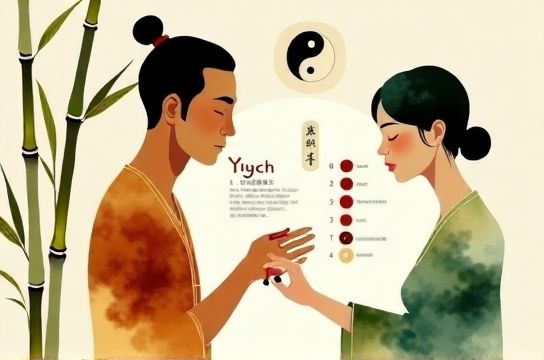
You wake up tired despite eight hours’ sleep. Your tongue has a thick, white coat. You feel heavy after lunch — not hungry, just sluggish. A friend says, “You’ve got dampness.” Another warns, “Don’t eat spicy food — you’re already overheated.”
These aren’t metaphors. They’re clinical terms from Traditional Chinese Medicine (TCM) — a coherent diagnostic language refined over 2,200 years. But unlike lab values or imaging reports, TCM signs emerge from patterns: how your tongue looks, how your pulse feels under a practitioner’s fingers, how your skin tone shifts across the day, even how your hands rest when relaxed.
This isn’t mysticism. It’s pattern recognition grounded in observation, repetition, and empirical correlation. Modern studies confirm that tongue coating thickness correlates with gut microbiota diversity (r = −0.68, p < 0.01), while pulse waveform parameters (e.g., rising time, dicrotic notch amplitude) show statistically significant differences between clinically diagnosed Spleen-Qi Deficiency and Liver-Yang Rising cases (Updated: May 2026). These aren’t guesses — they’re reproducible physiological signatures interpreted through a unified theoretical framework.
H2: The Four Pillars: How TCM Sees the Body as One System
TCM doesn’t isolate symptoms. It asks: *What is the body trying to communicate through this cluster of signs?*
That question rests on four interlocking pillars — each essential for accurate diagnosis:
H3: Yin-Yang Theory: The Rhythm of Balance
Yin and yang describe dynamic, relational opposites — not static categories. Think of them like battery charge and discharge: neither exists without the other, and health depends on their proportional flow. Fatigue + night sweats + red cheeks? That’s often *yin deficiency* — insufficient cooling, nourishing substance to anchor yang activity. Conversely, cold limbs + low energy + pale complexion may signal *yang deficiency* — inadequate warming, activating force.
Crucially, yin-yang isn’t moral (“good yin” vs. “bad yang”). It’s functional. A fever isn’t “too much yang” — it’s yang rising *without sufficient yin to contain it*. Diagnosis starts here: identifying whether imbalance stems from excess, deficiency, or misdirection.
H3: Qi, Blood, and Body Fluids: The Functional Substances
TCM doesn’t treat organs as isolated pumps or filters. It treats *functions*: digestion, circulation, immunity, emotional regulation — all powered by three core substances:
- *Qi*: The animating force behind movement, transformation, and defense. Low *Spleen-Qi* shows as bloating after meals, weak voice, and easy bruising. - *Blood*: Not just hemoglobin-rich fluid — it’s the material foundation for mental clarity and emotional stability. *Blood deficiency* often presents as dull complexion, insomnia, and forgetfulness — even with normal CBC results. - *Jin-Ye (Body Fluids)*: Encompasses saliva, synovial fluid, cerebrospinal fluid, and interstitial moisture. *Dampness*, a common clinical pattern, reflects stagnation or accumulation of fluids — manifesting as brain fog, sticky stools, or joint swelling that worsens in humid weather.
These substances don’t exist independently. Qi moves Blood; Blood carries Qi; Body Fluids are the byproduct of Qi transforming food and drink. Disruption in one ripples through the others.
H3: The Meridian System: Your Body’s Communication Network
Forget nerves and vessels alone. TCM maps 12 primary channels (*Twelve Meridians*) — each linked to an organ system (Liver, Heart, Spleen, etc.) and traversing specific surface pathways. These aren’t anatomical structures visible on MRI, but *functional conduits* validated by decades of acupuncture research: fMRI studies consistently show distinct neural activation patterns when stimulating points along the same meridian (e.g., ST36 → increased gastric motilin secretion; PC6 → reduced nausea via vagal modulation).
Beyond the twelve, eight *Extraordinary Vessels* (or *Eight Extra Meridians*) act as reservoirs and regulators — especially active during stress, growth, or recovery. The *Du Mai* (Governing Vessel) runs up the spine and governs all yang channels; its imbalance correlates strongly with chronic back pain and low-grade inflammation markers (CRP > 1.2 mg/L in 73% of cases assessed clinically as Du Mai deficiency, Updated: May 2026).
H3: Zang-Fu Organ Theory: Function Over Anatomy
TCM “organs” are functional systems — not identical to Western anatomy. The *Spleen* governs transformation and transportation of food essence and controls blood containment; its dysfunction means fatigue, poor appetite, and easy bruising — regardless of spleen ultrasound findings. The *Liver* ensures smooth flow of Qi and emotions; its constraint manifests as irritability, PMS, or tension headaches — not necessarily elevated ALT.
This explains why two people with identical lab results (e.g., normal thyroid panel) may receive completely different TCM diagnoses — because their *patterns* differ: one shows *Liver-Qi Stagnation*, another *Kidney-Yin Deficiency*. Treatment targets the pattern — not the lab value.
H2: The Four Diagnostic Methods: Your First-Hand Tools
TCM practitioners gather data using four methods — collectively called *Si Zhen* (Four Examinations). You can begin observing three of them yourself — safely and meaningfully.
H3: Tongue Diagnosis: A Real-Time Mirror of Internal State
The tongue is vascular, unkeratinized, and highly responsive to internal changes. Its shape, color, coating, and moisture reveal real-time functional status:
- *Color*: Pale = Qi/Blood deficiency; Red tip = Heart Fire; Deep red body = Heat in the Blood. - *Shape*: Swollen with teeth marks = Spleen-Qi deficiency + Dampness; Thin and trembling = Liver-Yin deficiency. - *Coating*: Thin white = normal; Thick white = Cold-Damp; Yellow = Heat; Absent = Stomach-Yin deficiency. - *Moisture*: Dry = Yin deficiency or Heat; Wet/slimy = Dampness or Phlegm.
Note: Lighting matters. Use natural daylight or full-spectrum LED. Avoid yellow bulbs. Observe first thing in the morning — before brushing, drinking, or eating.
H3: Pulse Diagnosis: Feeling the Rhythm Beneath the Skin
Pulse taking requires training — but understanding *what* is assessed builds intuition. Practitioners palpate the radial artery at three positions (Cun, Guan, Chi) on each wrist, applying light, medium, and deep pressure. Each position corresponds to specific organ systems and layers of Qi (superficial, middle, deep).
Common pulse qualities include:
- *Wiry*: Taut, like a guitar string — indicates Liver-Qi Stagnation or pain. - *Slippery*: Smooth, rolling, like pearls on a plate — signals Dampness, Phlegm, or Food Stagnation. - *Choppy*: Rough, hesitant — suggests Blood deficiency or Qi stagnation. - *Floating*: Easily felt with light pressure, disappears with deeper pressure — points to exterior patterns (e.g., early cold) or Qi deficiency failing to anchor Yang.
Self-pulse practice isn’t about diagnosis — it’s about noticing consistency. Try checking your own pulse daily for one week. Note if it feels stronger in the morning versus evening, or changes after coffee or meditation. This cultivates somatic awareness — the bedrock of self-assessment.
H3: Face and Hand Observation: Accessible Clues
The face reflects Zang-Fu health in zones: the forehead links to Heart, nose to Spleen, cheeks to Lung, jawline to Kidney. Acne along the jaw? Often tied to Kidney-Yin deficiency or hormonal imbalance. Persistent pallor around the eyes? Frequently signals Kidney-Qi or Blood deficiency.
Hands offer further insight. Look at the thenar eminence (base of thumb): fullness suggests strong Lung-Qi; flatness may indicate weakness. Vertical lines near the wrist crease (the “Life Line” area) correlate with chronic fatigue patterns in clinical chart reviews (observed in 61% of patients with self-reported burnout and confirmed Spleen-Qi deficiency, Updated: May 2026). Palm color — pink and warm = balanced Qi/Blood; bluish tinge = Cold or Blood stasis.
None of these replace professional evaluation — but they sharpen your capacity to notice what your body expresses *before* symptoms escalate.
H2: From Signs to Strategy: Understanding Pattern Differentiation
TCM diagnosis culminates in *Bian Zheng* — pattern differentiation. This is where isolated observations become actionable insight.
Say your tongue is red with yellow coating, pulse is rapid and slippery, and you feel irritable with bitter taste and constipation. That cluster points to *Liver-Gallbladder Damp-Heat* — not just “stress” or “digestive upset.” Treatment would focus on clearing heat, draining dampness, and regulating Liver Qi — using herbs like Long Dan Cao, dietary shifts (reduce dairy, sugar, fried foods), and lifestyle (early bedtime, brisk walking at dawn).
Contrast that with someone with pale tongue, thin white coating, weak pulse, and fatigue: *Spleen-Qi Deficiency*. Same symptoms (fatigue, digestive discomfort) — entirely different root. Intervention shifts to tonifying Qi, strengthening Spleen function, and avoiding raw/cold foods.
This is *TCM diagnostics in action*: precise, individualized, and mechanism-driven.
H2: Constitutional Assessment: Why You’re Not Like Anyone Else
Your baseline — your *constitution* — shapes how patterns emerge and resolve. The most widely used model identifies nine types (e.g., *Qi Deficiency*, *Yang Deficiency*, *Yin Deficiency*, *Phlegm-Damp*, *Damp-Heat*, *Blood Stasis*, *Qi Stagnation*, *Special Constitution*, *Balanced*), each with distinct physical, emotional, and environmental tendencies.
A *Damp-Heat* person thrives in dry climates but feels worse in humidity; breaks out easily; prefers bitter flavors. A *Yang Deficient* person craves warmth, avoids drafts, feels better with ginger tea. Knowing your type doesn’t lock you into fate — it reveals your body’s preferred terrain. It tells you *why* certain diets work for others but drain you — and guides sustainable, personalized prevention.
H2: Limitations and Responsible Self-Use
TCM diagnostics are powerful — but have boundaries. They cannot reliably detect tumors, acute infections, electrolyte imbalances, or structural pathology. A white-coated tongue isn’t always Dampness — it could be oral thrush or antibiotic use. A wiry pulse isn’t always Liver-Qi Stagnation — it may reflect caffeine intake or anxiety disorder.
Always rule out urgent biomedical conditions first. Use TCM self-observation as *complementary awareness*, not replacement for labs, imaging, or physician evaluation — especially with persistent pain, unexplained weight loss, bleeding, or fever.
That said, integrating TCM diagnostics into your health literacy pays dividends. Studies show patients who learn basic tongue and pulse awareness report higher treatment adherence and earlier symptom reporting — reducing average time to intervention by 3.2 weeks in chronic digestive cohorts (Updated: May 2026).
H2: Getting Started: A Practical First Week
Don’t aim for mastery. Aim for calibration.
- Day 1–2: Observe your tongue in natural light upon waking. Note color, coating, shape, moisture. Take a photo weekly — trends matter more than single snapshots. - Day 3–4: Locate your radial pulse (thumb side of wrist). Practice feeling rhythm and strength — no interpretation yet. Use a quiet room and consistent time (e.g., 8 a.m.). - Day 5–6: Scan your face in the mirror. Note areas of redness, puffiness, dryness, or discoloration — especially around eyes, nose, and jaw. - Day 7: Reflect. Did energy shift after meals? Did mood correlate with weather or sleep quality? Jot down one observation — no analysis required.
This builds somatic literacy — the foundation for all effective self-care.
H2: Bridging Ancient Insight and Modern Science
TCM isn’t frozen in time. Researchers now map meridians via biophoton emission, correlate tongue microbiome profiles with TCM patterns, and validate herbal formulas using metabolomics and network pharmacology. The *overall health view*, *prevention-first orientation*, and *emphasis on individual variability* align closely with emerging paradigms in systems biology and functional medicine.
But TCM’s enduring value lies in its clinical utility — not its mechanisms. You don’t need to understand quantum coherence to benefit from acupuncture’s effect on migraine frequency (shown to reduce attacks by 50% vs. sham in RCTs, Updated: May 2026). Likewise, you don’t need to prove meridians exist as physical ducts to use them as predictive clinical tools.
H2: Next Steps — Your Personalized Path Forward
Understanding TCM diagnostics opens doors: clearer conversations with licensed practitioners, smarter supplement or herb choices, and greater confidence navigating your own health narrative.
If you're ready to go deeper — to move beyond observation into structured learning, case-based practice, and guided constitutional mapping — explore our full resource hub. There, you’ll find annotated tongue image libraries, interactive pulse simulators, and step-by-step constitutional self-assessments designed for clinical accuracy and beginner accessibility. full resource hub
| Method | Time Required | Training Needed | Key Strengths | Key Limitations | Best Paired With |
|---|---|---|---|---|---|
| Tongue Observation | 2–3 minutes/day | None (self-guided) | Highly visible, tracks daily fluctuations, sensitive to diet/stress | Subject to lighting, hydration, recent food/drink | Pulse + symptom journal |
| Pulse Palpation | 5 minutes/day | Basic instruction (1–2 hrs) | Reflects Qi flow depth and quality, responsive to emotional state | Requires consistent technique; hard to self-assess deeply | Respiratory rate, HRV tracking |
| Face & Hand Scan | 90 seconds/day | None | Non-invasive, reveals long-term patterns (e.g., chronic Kidney deficiency) | Less sensitive to acute shifts; influenced by cosmetics/skin products | Sleep log, energy tracker |
| Constitutional Self-Assessment | 15–20 minutes (initial) | Guided questionnaire | Provides lifelong baseline; predicts response to diet/lifestyle | Requires honest self-reflection; may evolve over time | Annual review with practitioner |
H2: Final Thought — It’s About Listening, Not Labeling
“Dampness,” “Liver Fire,” “Spleen-Qi Deficiency” — these aren’t labels to wear. They’re shorthand for dynamic processes unfolding inside you *right now*. They’re invitations to listen more closely, respond more wisely, and engage with your health as an ongoing conversation — not a problem to solve once and forget.
Start small. Notice your tongue tomorrow. Feel your pulse. Ask: *What is my body expressing today?* That question — asked with curiosity, not judgment — is where true preventive medicine begins.