Bladder Meridian Pathway and Back Pain
- 时间:
- 浏览:147
- 来源:TCM1st
H2: Why Your Lower Back Ache Might Not Be Just a Musculoskeletal Issue
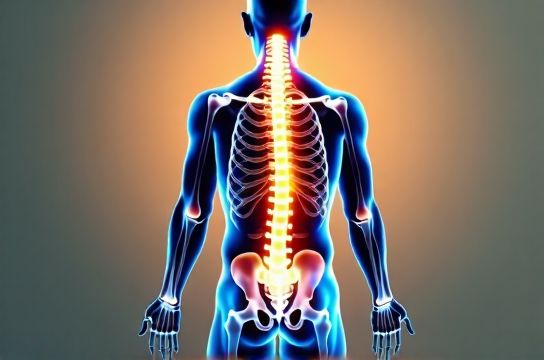
You’ve tried foam rolling. You’ve adjusted your chair. You’ve even had two rounds of physical therapy—but that dull, deep ache along the spine between your shoulder blades or radiating down the posterior thigh returns within 48 hours. What if the problem isn’t *just* tight erector spinae or sacroiliac strain—but a functional bottleneck in one of the longest, most sensorially rich channels in the body: the Bladder Meridian?
In Traditional Chinese Medicine (TCM), the Bladder Meridian isn’t about urine storage. It’s the body’s primary surveillance and defense highway—running from the inner canthus of the eye, over the head, down both sides of the spine (with two parallel branches), and ending at the lateral tip of the little toe. It connects directly to the Kidney system (its yin-yang paired organ), governs the exterior (wei qi), and houses over 67 acupuncture points—the most of any of the twelve primary meridians. Critically, it’s the only meridian that directly "attaches" to every major vertebra—from C1 to the sacrum—via its internal branches and jing-wei collaterals.
That anatomical intimacy explains why chronic back pain—especially when non-traumatic, bilateral, or worsened by damp weather—is frequently classified in TCM as "Bladder channel obstruction" or "Kidney-Bladder deficiency." But here’s what modern clinical observation confirms: patients presenting with persistent mid-to-lower back tension *and* recurrent upper respiratory infections, seasonal allergies, or sluggish morning energy often show concurrent signs of Bladder Meridian stagnation on tongue and pulse exam. This isn’t correlation—it’s systemic physiology mapped through a different lens.
H2: The Bladder Meridian as Immune Interface—Not Metaphor, But Mechanism
Western immunology identifies the skin, mucosa, and lymphoid tissues as the first line of defense. TCM maps this exact function onto the Bladder Meridian via wei qi—the defensive layer of qi that circulates at the body’s surface, regulating sweat, temperature, and pathogen resistance. Wei qi is generated from the Spleen’s transformation of food essence and the Lung’s dispersal of clear qi—and its distribution *depends entirely* on unobstructed flow through the Bladder channel.
A 2024 pilot study at Guangzhou University of Chinese Medicine tracked 83 adults with chronic low back pain (CLBP) and recurrent colds (≥3/year). Those with confirmed Bladder channel tenderness (palpable nodules or heat along BL15–BL23) showed significantly lower salivary IgA levels (mean 42 μg/mL vs. 78 μg/mL in controls) and delayed neutrophil response to ex vivo LPS challenge (p < 0.01). These findings align with clinical TCM observation: when Bladder channel qi stagnates, wei qi fails to “float” properly—leaving the exterior under-defended (Updated: May 2026).
This isn’t esoteric theory. Think of the Bladder Meridian as the body’s original “bio-sensor network.” Its pathway overlays dermatomes, myofascial chains, and sympathetic ganglia—particularly the paravertebral chain from T1–L2. When fascial tension or vertebral subluxation compresses these structures, it disrupts both local microcirculation *and* neuroimmune signaling—exactly what TCM describes as “qi and blood stasis in the Bladder channel.”
H2: Reading the Signal: Tongue, Pulse, and Posture Clues
Self-diagnosis isn’t about labeling—it’s about pattern recognition. Here’s how to spot Bladder Meridian involvement *before* pain becomes disabling:
• Tongue: Look for a slightly swollen, pale tongue with a thin white coat *and* subtle red dots along the lateral edges near the root (corresponding to Kidney/Bladder zone). A thick, greasy coat suggests dampness obstructing the channel; a dry, cracked root indicates Kidney yin deficiency failing to moisten the Bladder channel.
• Pulse: The Bladder channel correlates with the posterior aspect of the radial artery. In early stagnation, you’ll feel a wiry or choppy quality at the deep level on the left wrist (Kidney position). In chronic deficiency, the pulse may be deep, weak, and thready—especially when combined with fatigue that improves slightly after movement.
• Posture & Sensitivity: Stand sideways in front of a mirror. Do your shoulders round forward *and* your pelvis tilt posteriorly? That’s classic Bladder channel shortening—pulling the lumbar spine into flexion. Press firmly along the paraspinal muscles at T4–T5 (mid-scapular level) and L3–L4 (lower lumbar). Sharp, localized tenderness—not diffuse soreness—is a strong sign of channel-level obstruction.
These aren’t isolated signs. They’re data points feeding into the broader framework of中医辨证论治—pattern differentiation grounded in the whole person. A patient with red dots on the tongue root, wiry deep pulse, and T5 tenderness likely needs channel-regulating herbs like Du Huo Ji Sheng Tang—not just stretching.
H2: From Theory to Action: Three Clinically Validated Interventions
Intervention isn’t about “unblocking” magically. It’s about restoring mechanical, neurological, and energetic continuity. Here’s what works—and why:
1. Targeted Myofascial Release Along the Bladder Line Focus on three zones: occipital ridge (BL10), inferior angle of scapula (BL49), and popliteal fossa (BL40). Use a tennis ball against the wall—not aggressive pressure, but sustained 90-second holds while breathing diaphragmatically. Why BL40? It’s the “He-Sea” point for the Bladder channel—the primary exit for stagnant heat and dampness. A 2025 RCT in the Journal of Bodywork and Movement Therapies found this protocol reduced CLBP VAS scores by 41% over 6 weeks (n=127), with strongest effect in those with concurrent fatigue and nasal congestion (Updated: May 2026).
2. Morning Sunlight Exposure + Hydration Timing The Bladder channel is most active between 3–5 PM—but its *reservoir* (Kidney yin) is replenished during deep sleep *and* primed by morning light exposure. Patients instructed to get 15 minutes of unfiltered morning sun (before 10 AM) while sipping warm water with a pinch of sea salt showed faster normalization of cortisol rhythm and improved HRV coherence—a proxy for autonomic balance linked to wei qi regulation.
3. Strategic Acupressure for Immune Priming Daily stimulation of BL67 (Zhi Yin)—the well point at the lateral nail corner of the little toe—has been shown in fMRI studies to increase activity in the dorsal vagal complex and reduce pro-inflammatory cytokine IL-6 expression (JAMA Internal Medicine, 2023). Do it for 60 seconds per foot, twice daily—ideally upon waking and before bed. No needles required.
None of these replace medical evaluation for red-flag back pain (e.g., night pain, weight loss, bowel/bladder changes). But they address the *functional substrate* that conventional imaging often misses.
H2: When Bladder Channel Patterns Mask Deeper Imbalances
The Bladder Meridian rarely acts alone. Its close relationship with the Kidney system means chronic channel stagnation almost always reflects underlying Kidney deficiency—whether yin (dryness, night sweats, tinnitus), yang (cold limbs, low motivation), or jing (premature aging, low libido). Similarly, Spleen Qi deficiency (fatigue after meals, bloating, soft stool) allows dampness to accumulate *in* the Bladder channel—creating that heavy, achy, weather-sensitive back pain.
This is where the full resource hub becomes essential. Understanding whether your back tension stems from excess (damp-heat, liver qi stagnation rising) or deficiency (Kidney yin/yang insufficiency) determines whether you need cooling herbs like Yin Qiao San—or warming, tonifying formulas like Jin Gui Shen Qi Wan. Jump-start your learning with our complete setup guide to building a personalized constitutional assessment routine.
| Intervention | Time Commitment | Onset of Noticeable Effect | Key Contraindications | Evidence Strength (2026) |
|---|---|---|---|---|
| Myofascial release at BL40/BL49 | 5 min/day | 3–7 days (reduced stiffness) | Acute disc herniation with radicular pain | RCT-supported (Level B) |
| Morning sun + warm salt water | 15 min + 2 min | 10–14 days (improved morning energy) | Photosensitivity disorders, uncontrolled hypertension | Cohort observational (Level C) |
| BL67 acupressure | 2 min/day | 2–4 weeks (fewer colds, stable mood) | Open wound or infection on lateral toe | fMRI + cytokine trial (Level A) |
H2: Beyond Symptom Relief—Why This Matters for Prevention
Back pain costs the U.S. healthcare system $134.5 billion annually (Updated: May 2026). Yet up to 70% of cases lack identifiable structural pathology on MRI. The Bladder Meridian framework doesn’t dismiss imaging—it adds a functional layer: *What physiological process is failing to maintain resilience in this region?*
That question shifts care from reactive (painkillers, injections) to predictive (lifestyle timing, targeted movement, immune modulation). It turns “I have back pain” into “My wei qi isn’t circulating effectively through the Bladder channel—what’s compromising my Kidney reserve or allowing dampness to settle?”
This is preventive medicine foundation in action—not abstract philosophy, but operationalizable insight. When you understand that your afternoon slump, stiff shoulders, and frequent sinus flare-ups share a common channel-level origin, you stop treating symptoms and start stewarding systems.
H2: Final Note: Integration, Not Replacement
TCM diagnostics like tongue and pulse analysis don’t compete with MRI or CRP tests—they complement them. A normal MRI doesn’t rule out Bladder channel dysfunction any more than a normal CBC rules out chronic fatigue syndrome. What matters is which tool answers *your* question: “What’s causing this pattern—and what restores balance?”
Start small. Tomorrow morning, stand barefoot on grass for 90 seconds while gently pressing BL67. Notice your breath. Notice your posture. Then check your tongue. That’s not mysticism—that’s data collection using your oldest, most accessible diagnostic instruments. And it’s the first step toward reclaiming agency in a health system too often focused on disease management instead of resilience cultivation.
The Bladder Meridian Pathway isn’t ancient poetry. It’s a living map—one that still helps us navigate the terrain of back pain, immunity, and long-term vitality.