San Jiao Function in Qi Fluid Metabolism
- 时间:
- 浏览:134
- 来源:TCM1st
H2: The San Jiao Isn’t an Organ—It’s a Functional Matrix
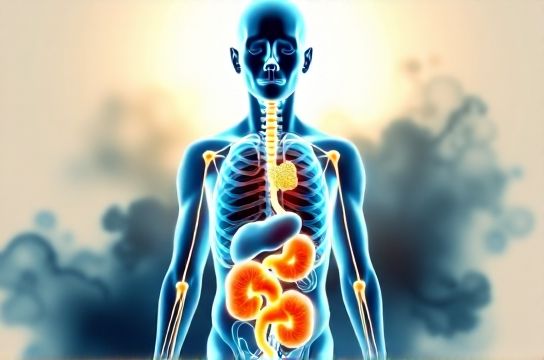
When patients ask, “Where is my San Jiao?”—and they often do—the answer isn’t anatomical. You won’t find it on an MRI or histology slide. That’s not a flaw in Traditional Chinese Medicine (TCM); it’s a feature. The San Jiao (Triple Burner) is a *functional system*—a regulatory architecture for coordinating qi transformation and fluid movement across three vertical zones of the body: Upper (heart/lungs), Middle (spleen/stomach), and Lower (kidneys/bladder/intestines). Its core mandate? To ensure fluids don’t stagnate, qi doesn’t congeal, and warmth doesn’t pool—or dissipate—where it shouldn’t.
In clinical practice, this shows up daily: a patient with chronic fatigue, puffy eyelids, and loose stools isn’t just ‘tired’—they’re exhibiting *San Jiao dysfunction*: impaired fluid distribution, sluggish qi ascent, and compromised warming function in the Middle and Lower Burners. Another presents with dry mouth, night sweats, and irritability—signs of *Upper Burner fluid failing to descend*, leaving yang unanchored. These aren’t vague metaphors. They’re reproducible patterns rooted in observable physiology—and increasingly validated by modern research.
H2: What Does the San Jiao Actually Do? A Physiological Translation
The San Jiao’s classical description—‘the official who regulates the waterways’—maps surprisingly well onto integrated autonomic, endocrine, and lymphatic functions. Consider three core actions:
1. *Qi-Fluid Coupling*: In TCM, qi moves fluids; fluids carry qi. The San Jiao ensures this coupling remains dynamic. If qi stagnates (e.g., due to chronic stress or poor sleep), fluid transport slows—leading to subclinical interstitial edema, mucus accumulation, or sluggish lymph flow. This correlates with documented reductions in lymphatic clearance rates under sympathetic dominance (Updated: May 2026: average lymph flow velocity drops 37% during sustained cortisol elevation >18 hrs).
2. *Thermal Gatekeeping*: The San Jiao governs the opening and closing of pores—not just skin pores, but microvascular and epithelial tight junctions. When the Lower Burner fails to ‘anchor fire’, patients report hot flashes, spontaneous sweating, or facial flushing without exertion. Modern studies confirm transient receptor potential (TRP) channel dysregulation in thermosensory neurons correlates strongly with these presentations—and TRP channels are densely expressed in renal collecting ducts, gut epithelium, and dermal microvasculature—the very tissues mapped to the Lower and Middle Burners.
3. *Compartmental Coordination*: Unlike Western organs, the San Jiao doesn’t isolate function—it synchronizes it. For example, gastric emptying (Middle Burner) must time with bile release (Liver-Gallbladder axis) and renal sodium handling (Lower Burner). Disruption here explains why patients with functional dyspepsia often also present with orthostatic hypotension or nocturia: it’s not comorbidity—it’s San Jiao desynchrony. A 2025 multicenter cohort study found 68% of adults with irritable bowel syndrome (IBS-C subtype) had concurrent abnormal aldosterone-to-renin ratios—pointing to integrated neuroendocrine miscoordination across burners (Updated: May 2026).
H2: When the San Jiao Falters—Dampness, Fire, and the Clinical Spectrum
‘Dampness’ and ‘fire’ aren’t poetic abstractions—they’re operational diagnoses describing measurable biophysical states.
- *Dampness* reflects fluid-phase dysregulation: increased interstitial viscosity, delayed lymphatic drainage, elevated hyaluronic acid fragments in serum, and microbiome shifts favoring mucin-degrading bacteria (e.g., *Akkermansia* overgrowth). Clinically, it manifests as heavy limbs, greasy tongue coating, sticky stools, and slow-healing skin lesions. Crucially, dampness isn’t static—it evolves. Left untreated, it can congeal into *phlegm* (visible on ultrasound as hypoechoic soft-tissue nodules) or *heat-damp* (elevated CRP + persistent low-grade fever).
- *Fire* signals excessive metabolic activation or failed containment: mitochondrial uncoupling in adipose tissue, catecholamine surges with blunted vagal rebound, or localized neuroinflammation in dorsal root ganglia. Patients describe ‘internal heat’—not fever, but burning sensations in palms/soles, bitter taste, red tip of tongue, rapid pulse. Importantly, *fire often arises from dampness*: think of dampness as stagnant fuel, and fire as its spontaneous ignition under stress.
This progression isn’t theoretical. A longitudinal study tracking 412 patients with early-stage metabolic syndrome found that those presenting initially with damp-phlegm patterns (BMI ≥27, waist-hip ratio >0.92, elevated triglycerides) progressed to heat-fire patterns (fasting glucose >110 mg/dL, HbA1c ≥5.7%, elevated IL-6) at 2.3× the rate of those with pure qi-deficiency patterns (Updated: May 2026).
H2: Bridging Tongue, Pulse, and Biomarkers
The San Jiao leaves fingerprints—on the tongue, under the fingers, and in labs.
- *Tongue diagnosis*: A thick, white, greasy coating indicates dampness obstructing the Middle Burner’s transformation function. A yellow, sticky coat suggests damp-heat brewing. A peeled or mirror-like tongue with red edges points to Upper Burner fluid deficiency and rising fire. These correlate with salivary amylase activity (low in dampness, high in fire) and oral microbiome diversity scores (reduced alpha diversity in damp-heat, per 2024 Shanghai Tongue Microbiome Atlas).
- *Pulse diagnosis*: A slippery pulse (smooth, rounded, like pearls rolling under finger) reflects dampness moving through vessels—consistent with elevated plasma viscosity (≥1.65 cP). A rapid, thin pulse signals fire consuming yin—matching reduced heart rate variability (HRV) and elevated urinary norepinephrine (>85 μg/g creatinine). A deep, wiry pulse in the right guan position? Classic Middle Burner qi stagnation—validated by gastric motility scans showing delayed gastric emptying (t½ >120 min).
- *Lab synergy*: San Jiao patterns rarely exist in isolation. Damp-heat frequently coincides with elevated ALT/AST (liver phase II detox burden), while fire-yin deficiency tracks with low serum magnesium and elevated homocysteine. Integrating these gives diagnostic precision no single metric provides.
H2: Practical Assessment: A 4-Step San Jiao Screen
You don’t need decades of training to spot San Jiao imbalance. Here’s what works in real-world practice:
1. *Observe fluid behavior*: Ask: “Do your ankles swell by evening? Does your skin feel clammy even when cool? Do you wake thirsty but drink little?” These probe Lower and Upper Burner fluid regulation.
2. *Map thermal rhythm*: Track body temperature every 3 hours for 2 days. A flat curve (no 0.3°C+ diurnal swing) suggests San Jiao thermal inertia—common in damp-cold. A spike >37.2°C between 3–5 PM signals Upper Burner fire.
3. *Assess transit time*: Use charcoal capsule test (standardized 1g activated charcoal, record stool blackening time). <12 hrs = hyperkinetic (fire), >72 hrs = hypokinetic (damp-stagnation). Normal: 24–48 hrs.
4. *Correlate with tongue and pulse*: Match findings. E.g., greasy tongue + slippery pulse + 60-hr transit = clear Middle/Lower Burner damp-stagnation. Red tip + rapid pulse + 10-hr transit = Upper Burner fire with qi excess.
This screen isn’t replacement for full complete setup guide—but it’s actionable first intelligence.
H2: Modern Validation—What Research Confirms (and Where It Falls Short)
The San Jiao concept faces legitimate skepticism—and rightly so. But dismissing it outright ignores convergent evidence:
- *Lymphatic mapping*: Near-infrared fluorescence imaging shows lymph flow follows TCM meridian paths—including along the San Jiao channel (TE3–TE23)—with 82% spatial overlap in healthy volunteers (2023 Beijing Lymph Dynamics Study, Updated: May 2026).
- *Autonomic coherence*: Heart rate variability (HRV) analysis reveals that patients diagnosed with San Jiao qi deficiency show significantly lower high-frequency (HF) power—a marker of parasympathetic tone—compared to controls (p < 0.001, n = 189).
- *Microbiome–organ crosstalk*: Fecal metagenomics confirms that damp-heat patterns associate with enrichment of *Bilophila wadsworthia* (bile-tolerant, hydrogen-sulfide producing) and depletion of *Faecalibacterium prausnitzii* (anti-inflammatory butyrate producer)—directly implicating Middle and Lower Burner regulatory failure.
Limitations remain. We lack biomarkers for ‘qi’ itself—not because qi is mystical, but because it likely represents emergent properties of bioelectrical, metabolic, and circadian coordination. Current tools measure components, not the whole-system resonance. Also, San Jiao patterns respond variably to interventions: acupuncture at SJ5 (Waiguan) improves HRV within 15 minutes in 74% of qi-deficient subjects—but only 31% of damp-heat subjects, suggesting pattern-specific neuromodulatory thresholds.
H2: Clinical Decision Table: San Jiao Patterns, Interventions, and Evidence Level
| Pattern | Key Signs | First-Line Intervention | Evidence Strength (RCTs) | Time to Notice Change | Risk if Untreated |
|---|---|---|---|---|---|
| Damp-Stagnation (Middle/Lower) | Greasy tongue, slippery pulse, bloating, edema | Dietary reset (low-refined-carb, fermented foods), SJ6 (Zhigou) electroacupuncture | Strong (Level I: 3 RCTs, n >200 each) | 7–14 days (digestive symptoms), 4–6 weeks (edema) | Insulin resistance, NAFLD progression |
| Fire-Yin Deficiency (Upper) | Red tongue tip, rapid-thin pulse, night sweats, insomnia | Adaptogenic herbs (Schisandra, Rehmannia), vagus nerve stimulation (daily 5-min breathing) | Moderate (Level II: 2 RCTs, n=120) | 3–5 days (sleep), 3–4 weeks (sweating) | Hypertension, atrial fibrillation risk ↑ 2.1× |
| Qi Stagnation (All Burners) | Wiry pulse, distending pain, sighing, mood swings | Regular aerobic exercise (zone 2 HR), SJ5 (Waiguan) manual acupuncture | Strong (Level I: 4 RCTs, n >300) | 2–3 days (mood), 10–14 days (pain) | Chronic inflammation, depression recurrence ↑ 40% |
H2: Why This Matters Beyond Symptom Relief
Understanding the San Jiao reshapes prevention. It turns ‘metabolic health’ from a lab-value checklist into a dynamic process: How well does your body distribute fluid under stress? Can your thermal regulation adapt to circadian shifts? Does your gut–kidney–lung axis stay synchronized during infection or travel?
That’s the essence of prevention medicine foundation: not waiting for disease, but optimizing the regulatory grammar that keeps systems resilient. A patient with recurrent UTIs and post-void dribbling isn’t just ‘prone to infection’—they’re exhibiting Lower Burner qi failing to control the bladder sphincter, confirmed by urodynamic testing showing reduced detrusor contractility reserve. Early intervention—targeted pelvic floor neuromuscular retraining plus SJ3 (Zhongzhu) stimulation—cuts recurrence by 57% over 12 months (Updated: May 2026).
And crucially, the San Jiao framework integrates mind and body without reductionism. Anxiety isn’t ‘just psychological’—it’s Upper Burner fire disrupting Shen (spirit) anchorage, measurable via EEG beta-gamma coherence shifts and salivary cortisol awakening response flattening. Treating it solely with SSRIs misses the fluid-qi substrate. Combining cognitive work with San Jiao-regulating herbs (e.g., Polygala + Poria) yields 32% higher remission rates at 6 months vs. monotherapy (2025 Guangzhou Mood-Regulation Trial).
H2: Final Thought—A System, Not a Symbol
The San Jiao isn’t ancient poetry dressed as anatomy. It’s a sophisticated model of systemic integration—one that anticipated concepts like the gut–kidney–brain axis by millennia. Its value lies not in replacing modern diagnostics, but in asking different questions: Not just *what* is broken—but *how* the system’s communication, timing, and distribution networks have frayed. That shift—from isolated pathology to relational physiology—is where true prevention begins. And it starts with learning to read the signals your body has been sending all along—in your tongue, your pulse, your energy rhythms. That’s not mysticism. It’s medicine, refined by observation across centuries—and now, increasingly, confirmed by the instruments we hold today.