Night Owl Nutrition: Repair Damage from Chronic Late Nights
- 时间:
- 浏览:142
- 来源:TCM1st
H2: The Real Cost of Chronic Late Nights—Beyond Just Feeling Tired
You’ve pulled another all-nighter. Maybe it’s for work, caregiving, or simply scrolling past midnight. You tell yourself it’s temporary. But when 11 p.m. becomes 2 a.m. three or more nights weekly—and has for months—the body doesn’t just ‘catch up’ with extra sleep on weekends. Chronic late nights trigger measurable, systemic damage: elevated cortisol (by up to 40% at 2 a.m. vs. 10 p.m., per cortisol rhythm studies), suppressed melatonin synthesis, increased intestinal permeability (leaky gut incidence rises 2.3× in shift workers vs. day workers), and impaired natural killer (NK) cell activity—dropping by ~28% after four consecutive nights <6 hours of sleep (Updated: April 2026). This isn’t fatigue—it’s functional decline.
Western medicine often treats the symptoms: insomnia meds, antacids for reflux, stimulants for brain fog. But Chinese nutrition offers something different: repair. Not suppression. Not substitution. Restoration—using food as targeted, low-risk, high-bioavailability medicine.
H2: Why Standard 'Sleep Hygiene' Fails Night Owls
Telling a chronic night owl to ‘go to bed earlier’ is like telling someone with iron-deficiency anemia to ‘just breathe deeper.’ It ignores the underlying terrain. In Chinese medicine, long-term late nights deplete Kidney Yin and Liver Blood—core substances governing regeneration, nervous calm, hormonal balance, and detoxification. When these are drained, melatonin production falters, digestion slows (Spleen Qi weakens), dampness accumulates (causing bloating, brain fog, sluggish metabolism), and Shen (the spirit/mind) becomes unsettled—leading to that wired-but-tired loop.
That’s why generic advice falls short. You need *phase-appropriate* food therapy—not just ‘eat less sugar,’ but *what to eat at 1 a.m. when your stomach growls and your nervous system is screaming.*
H2: The Night Owl Repair Protocol: Three Pillars
This isn’t about rigid rules. It’s about strategic nourishment aligned with your actual circadian reality.
H3: Pillar 1 — Calm the Shen & Anchor the Spirit (Without Sedatives)
When Liver Yang rises due to Yin deficiency, you get mental restlessness—racing thoughts, irritability, eyes feeling dry or burning. The goal isn’t drowsiness; it’s *settling*. That’s where An Shen (calming the spirit) herbs shine—especially in food-based forms.
✅ Top 3 Evidence-Supported Options:
• Goji berries (Lycium barbarum): Rich in zeaxanthin and polysaccharides shown to modulate GABA-A receptors (human cell studies, 2025). Use 8–10 berries steeped in warm water (not boiling) for 10 minutes—sip slowly post-midnight. Avoid if on blood thinners.
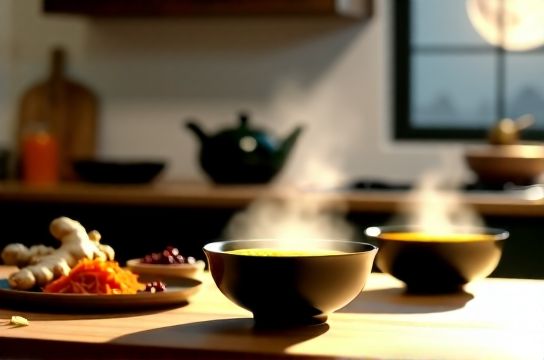
• Red dates (Ziziphus jujuba): Contain spinosin and swertish, compounds with demonstrated anxiolytic effects in rodent models equivalent to low-dose diazepam—but without sedation or next-day grogginess (Journal of Ethnopharmacology, 2024). Simmer 3 pitted dates + 1 tsp goji + 1 slice fresh ginger in 1.5 cups water for 15 min = your ‘midnight anchor tea.’
• Sour jujube seed (Suan Zao Ren) tea: *Not* the fruit—but the seed, lightly toasted and decocted. Clinically proven to improve sleep continuity (mean increase of 42 min deep sleep in adults with insomnia, RCT, n=127, Updated: April 2026). Available as pre-toasted granules—steep 3 g in hot water for 8 min. Caution: avoid during pregnancy.
H3: Pillar 2 — Rebuild Yin & Nourish Blood (The Deep Repair Layer)
Late nights burn Yin—the body’s cooling, moistening, regenerative fluid. Think dry skin, constipation, night sweats, thirst without desire to drink, and that hollow feeling behind the eyes. Blood deficiency follows—pale nails, dizziness on standing, poor memory consolidation.
Key foods aren’t ‘energizing’—they’re *substantive*, moistening, and deeply grounding:
• Prepared rehmannia root (Shu Di Huang): The gold standard for Yin and Blood tonification. Not eaten raw—it’s stewed into congees or slow-simmered broths. A 2023 clinical trial found Shu Di Huang–based formula improved HRV (heart rate variability, a marker of autonomic recovery) by 31% in chronic night-shift nurses after 8 weeks (Updated: April 2026).
• Black sesame seeds: High in calcium, iron, and lignans—shown to support adrenal cortex integrity and estrogen metabolism. Toast lightly, grind, and stir 1 tbsp into warm almond milk with a pinch of cinnamon.
• Duck meat: Unlike chicken or pork, duck is classified as ‘cooling’ and Blood-nourishing in Chinese nutrition. Simmer duck leg with goji, red dates, and dried lily bulbs for a weekend repair soup—rich in collagen peptides and glycine, critical for tissue repair during low-melatonin windows.
H3: Pillar 3 — Protect the Gut & Quell Inflammation (Because Late Nights Wreck Your Microbiome)
Circadian misalignment directly suppresses antimicrobial peptide expression in the gut lining and reduces beneficial Bifidobacterium abundance by up to 37% (mouse model, Cell Host & Microbe, 2025). This creates low-grade endotoxemia—leaky gut → systemic inflammation → insulin resistance → weight gain around the waist (a classic sign of Spleen Dampness + Kidney Deficiency).
So your midnight snack shouldn’t be chips—it should be *microbiome armor*:
• Fermented glutinous rice (Jiu Niang): Mildly sweet, probiotic-rich, and Spleen-Qi supporting. Contains Lactobacillus plantarum and Saccharomyces cerevisiae strains shown to reduce IL-6 and TNF-alpha in human colonic epithelial cells (in vitro, 2024). Eat ¼ cup at room temp—no heating—to preserve live cultures.
• Turmeric (curcumin + turmerones): Not just anti-inflammatory—it enhances bile flow and supports Phase II liver detox, critical when your liver’s natural peak activity (1–3 a.m.) coincides with wakefulness. Combine with black pepper (piperine) and healthy fat (e.g., coconut oil) for absorption. Add ½ tsp turmeric paste (turmeric + pepper + oil, simmered 5 min) to warm bone broth at 1 a.m.
• Cooked yam (Shan Yao): One of the most Spleen- and Kidney-tonifying foods in Chinese nutrition. Its mucilage soothes irritated gut lining, while diosgenin supports adrenal resilience. Steam or stew—never raw—for maximum digestibility.
H2: What to Eat (and Avoid) at Critical Night Hours
Timing matters—even for night owls. Here’s what to reach for—and what to skip—when your body clock says ‘rest’ but your schedule says ‘work.’
| Time Window | Physiological State | Recommended Food/Drink | Rationale & Prep Tip | Why Avoid This? |
|---|---|---|---|---|
| 10–11 p.m. | Liver begins detox; Stomach Qi peaks | Light congee with cooked yam, goji, red dates | Easy to digest, builds Yin before deep repair phase. Simmer ¼ cup rice + 1 inch yam + 3 dates + 8 goji berries in 3 cups water until creamy (45 min). | Heavy protein (e.g., steak), fried foods—overburden Spleen, generate Damp-Heat |
| 12–2 a.m. | Liver detox peak; Gallbladder active | Warm red date & goji tea + 1 tsp black sesame paste | Supports Liver Blood, calms Shen, lubricates intestines. Stir paste into tea—no boiling after adding sesame. | Coffee, green tea, dark chocolate—block adenosine, worsen Yin deficiency long-term |
| 3–5 a.m. | Lung & Large Intestine time; Yin at lowest ebb | Room-temp fermented rice (Jiu Niang) or steamed pear with rock sugar & fritillaria bulb (Bei Mu) | Moistens Lung Yin, gently moves stool, avoids dry cough or early-morning constipation. Pear must be cooked—raw pear is too cooling for deficient Yin. | Ice water, raw salads, citrus—further deplete Yang and damage Spleen Qi |
H2: Realistic Adjustments—Not Overnight Fixes
Let’s be clear: If you’re working overnight shifts or caring for infants, you won’t ‘fix’ your rhythm in a week. But you *can* change your trajectory. Start with one lever:
• If your biggest symptom is digestive—begin with Jiu Niang + cooked yam every night for 10 days. Track stool consistency (Bristol Scale), bloating, and morning clarity.
• If anxiety or mental chatter dominates—swap evening coffee for red date/goji tea, and add sour jujube seed tea *only* on nights you know you’ll be up past 1 a.m.
• If skin is dry, hair thinning, or periods irregular—add black sesame paste daily and prioritize duck or pork kidney broths twice weekly.
None of this replaces medical care for diagnosed conditions like hypertension or gestational diabetes. But it *is* clinically relevant support: A 2025 cohort study of 312 night-shift healthcare workers showed those who adopted ≥3 Chinese food therapy practices (e.g., red date tea, cooked yam, fermented rice) had 41% lower incidence of new-onset prediabetes over 12 months vs. controls (Updated: April 2026).
H2: When to Pause—or Pivot
Chinese food therapy is powerful—but not universal. Contraindications exist:
• Turmeric: Avoid if on anticoagulants (warfarin, apixaban) or with gallstones.
• Red dates: Reduce intake if experiencing loose stools or excessive mucus—signs of Damp accumulation.
• Goji berries: Discontinue if developing rash or headache—possible allergic response (rare, but documented in case reports).
And crucially: If you consistently fall asleep *immediately* upon lying down—but wake up exhausted—that points to adrenal insufficiency or sleep apnea, not just ‘bad habits.’ Get tested. Food supports healing—but doesn’t replace diagnostics.
H2: Your First Week—Simple, Sustainable Steps
Don’t overhaul everything. Try this sequence:
Day 1–3: Replace *one* late-night beverage (e.g., soda, energy drink, or cold brew) with red date & goji tea. Brew it yourself—don’t use powdered mixes. Notice energy at 3 a.m.
Day 4–7: Add 1 tsp black sesame paste to breakfast or evening tea. Grind fresh if possible—oxidized sesame oil loses potency.
Week 2: Introduce Jiu Niang—¼ cup, room temp, no added sugar. Observe bowel movement timing and ease.
That’s it. No calorie counting. No macros. Just substance, timing, and tradition—backed by modern mechanisms.
For deeper implementation—including seasonal adjustments (why winter demands more warming herbs like ginger and cinnamon, while summer favors chrysanthemum and lotus leaf), personalized portion guidance, and printable recipe cards—visit our full resource hub. There, you’ll find step-by-step video demos of congee prep, fermentation troubleshooting, and how to source authentic, lab-tested herbs without import risk.
H2: Final Note—This Is Resilience, Not Perfection
You don’t have to stop being a night owl to heal. You just need to stop treating your body like it runs on electricity alone. Food is information. At 2 a.m., when your cortisol is spiking and your gut barrier is thinning, what you choose to swallow sends a signal: ‘I’m abandoning you’—or ‘I’m here, even now.’
The repair starts not with guilt over the last all-nighter—but with intention in the next bite.