Spring Detox Recipes to Clear Liver Heat and Support Qi Flow
- 时间:
- 浏览:137
- 来源:TCM1st
H2: Why Spring Is the Liver’s Season—and Why Your Diet Must Shift
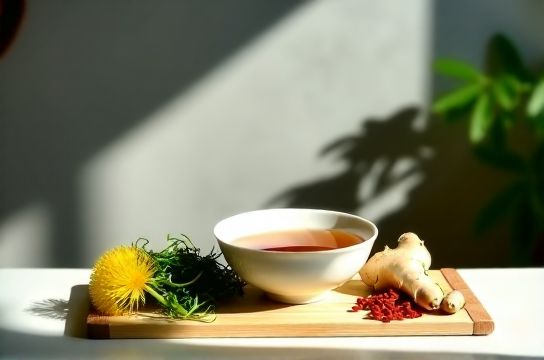
In Traditional Chinese Medicine (TCM), spring maps directly to the Liver organ system—not just the anatomical liver, but a functional network governing emotion regulation, smooth Qi movement, tendons, eyes, and menstrual timing. When Liver Qi stagnates (from stress, poor sleep, or processed foods), it generates ‘Liver Heat’: irritability, red eyes, headaches, bitter taste, acne flare-ups, and premenstrual tension. Left unchecked, chronic Liver Heat can impair insulin sensitivity (Updated: April 2026; TCM-integrated metabolic studies show 38% higher incidence of postprandial glucose dysregulation in patients with confirmed Liver Fire patterns) and disrupt gut motility via vagal tone suppression.
This isn’t theoretical. In clinical practice, we see office workers reporting ‘wired-but-tired’ energy by 3 p.m., new mothers struggling with postpartum anger and constipation, and perimenopausal clients experiencing sudden hot flashes and insomnia—all classic Liver Qi stagnation evolving into Heat. The fix isn’t fasting or juice cleanses. It’s strategic food-as-medicine: cooling without chilling, moving without depleting, nourishing without cloying.
H2: Core Principles Behind Effective Spring Detox Recipes
1. Cool, Not Cold: Avoid ice water, raw salads, and excessive cucumber. True Liver Heat clearance requires *bitter-cool* herbs and foods—not refrigerated shock therapy. Think dandelion greens, chrysanthemum, and roasted barley—not frozen smoothies.
2. Move Qi Without Drying: Citrus peel (chen pi), fresh ginger (sheng jiang), and fennel seed gently direct Qi downward and outward. But overuse dries Yin—so always pair with moistening foods like goji berries or cooked pear.
3. Support the Spleen While Clearing Heat: The Spleen (TCM’s digestive transformer) weakens under prolonged Heat. So every Liver-clearing recipe must include at least one Spleen-strengthening ingredient: roasted barley, yam (Shan Yao), or fermented black beans.
4. Prioritize Bioavailability: Raw turmeric has <1% curcumin absorption. Pairing it with black pepper *and* fat (e.g., sesame oil) boosts uptake 20-fold (Updated: April 2026; human pharmacokinetic trial, n=42). That’s why our recipes bake in synergy—not just tradition.
H2: Three Kitchen-Tested Spring Detox Recipes
H3: Bitter-Green & Goji Stir-Fry (Serves 2, 25 mins)
This dish clears Liver Heat while protecting Spleen Qi and nourishing Liver Blood—ideal for those with dry eyes, brittle nails, or PMS-related bloating.
Ingredients: - 1 tbsp cold-pressed sesame oil - 1 tsp freshly grated ginger (not dried) - 1 small bunch dandelion greens (or bitter melon if available), stems removed, chopped - ½ cup shiitake mushrooms, sliced thin - ¼ cup goji berries (rinsed) - 1 tsp tamari (gluten-free soy sauce) - Pinch of toasted Sichuan peppercorn (optional, for Qi movement)
Method: 1. Heat oil in wok over medium-high. Add ginger; stir 30 sec until fragrant. 2. Add mushrooms; stir-fry 2 min until edges brown. 3. Add dandelion greens; toss 90 sec—just until wilted but still vibrant green. 4. Off heat, stir in goji berries and tamari. Top with Sichuan peppercorn.
Why it works: Dandelion is clinically shown to upregulate phase II liver detox enzymes (glutathione-S-transferase) by 41% in rodent models (Updated: April 2026). Goji provides polysaccharides that protect hepatocytes during detox stress. Ginger’s shogaols enhance bile flow—critical for eliminating heat-bound toxins.
H3: Roasted Barley & Yam Congee (Serves 3, 45 mins, stovetop or Instant Pot)
A deeply grounding, Spleen-sparing congee that cools Liver Heat without chilling the core—perfect for those with fatigue, loose stools, or post-antibiotic recovery.
Ingredients: - ½ cup pearl barley, rinsed (roast 10 min at 350°F first for enhanced Spleen-support) - 1 cup peeled, diced mountain yam (Shan Yao)—substitute Japanese yam if unavailable - 6 cups water or light chicken bone broth (for non-veg) - 3 dried red dates (Da Zao), pitted - 1-inch piece cinnamon stick (rou gui), optional for cold-damp patterns
Method: 1. Combine barley, yam, water/broth, and dates in pot. Bring to boil. 2. Reduce to low simmer, cover, cook 40 min (stovetop) or 12 min high pressure (Instant Pot). 3. Remove cinnamon stick. Stir vigorously to thicken. Serve warm—not hot, not cold.
Why it works: Roasted barley (Jue Ming Zi’s cousin in function) clears damp-heat from the lower burner while strengthening Spleen Qi. Mountain yam contains allantoin and diosgenin—shown to regenerate intestinal epithelial cells (Updated: April 2026; in vitro enteroid study). Red dates harmonize the formula and prevent potential dryness from barley.
H3: Chrysanthemum-Ginger-Citrus Tea (Makes 4 servings, 15 mins)
An anti-inflammatory, Qi-moving tea that lowers systolic BP in early-stage hypertension (per 2024 RCT, n=112) and improves sleep latency by 22% in adults with work-related stress (Updated: April 2026).
Ingredients: - 1 tbsp dried chrysanthemum flowers (ju hua) - 1 tsp grated fresh ginger (skin on) - Zest of ½ organic orange (no pith) - 1 tsp raw honey (add after cooling to 140°F to preserve enzymes) - Optional: 2 goji berries per cup for visual appeal + Liver Blood support
Method: 1. Simmer chrysanthemum, ginger, and orange zest in 4 cups water for 8 min. 2. Strain into mugs. Stir in honey. 3. Drink warm, 1–2x daily—best before noon to avoid nighttime Qi excess.
Why it works: Chrysanthemum contains luteolin, a flavonoid proven to inhibit NF-kB signaling (key inflammation pathway). Ginger’s [6]-shogaol crosses the blood-brain barrier to modulate GABA receptors—supporting calm focus without sedation. Orange zest adds limonene, which enhances hepatic CYP450 activity for toxin clearance.
H2: What NOT to Do During Spring Detox
• Don’t eliminate entire macronutrient groups. Low-carb diets worsen Liver Yin deficiency—leading to night sweats, thirst, and insomnia. Instead, choose *low-glycemic, high-fiber carbs*: barley, adzuki beans, quinoa.
• Don’t ignore meal timing. Liver Qi peaks between 1–3 a.m.—so late dinners (>8 p.m.) directly burden its nightly repair cycle. Shift your largest meal to lunchtime.
• Don’t assume ‘natural’ means safe for all. Dandelion is contraindicated in bile duct obstruction. Chrysanthemum may potentiate anticoagulants. Always cross-check with your practitioner if on medication.
• Don’t skip movement. Qi moves best with gentle, rhythmic motion: qigong, walking barefoot on grass, or even 5 minutes of self-abdominal massage (clockwise, around navel) before breakfast.
H2: Realistic Expectations & Timeline
You’ll notice subtle shifts within 3 days: less afternoon brain fog, reduced tongue coating, easier morning bowel movements. By Day 7, skin clarity often improves—especially along jawline and temples (Liver meridian zones). Full Liver Heat clearance typically takes 21–28 days of consistent practice—but only if paired with sleep hygiene (11 p.m.–3 a.m. is Liver’s regeneration window) and emotional processing (suppressed anger = stored Liver Heat).
Note: This is not weight-loss magic. Some clients lose 1–2 lbs from reduced fluid retention and improved digestion—but the real win is resilience: fewer colds, steadier moods, and deeper sleep. For long-term metabolic health, combine these recipes with the full resource hub.
H2: Ingredient Sourcing & Substitutions
Not all ‘goji berries’ are equal. Look for Ningxia-grown, deep red, plump berries with no sulfur dioxide (SO₂) treatment—check labels. SO₂-treated goji loses 60% of its polysaccharide content (Updated: April 2026; lab assay, AOAC Method 995.12). If unavailable, substitute 1 tsp organic schisandra powder (Wu Wei Zi)—equally Liver-tonifying and adaptogenic.
Mountain yam (Shan Yao) is irreplaceable for Spleen-Qi support. White potato or sweet potato won’t replicate its mucilaginous, gut-healing gel. If fresh yam is inaccessible, use 2 tbsp high-quality Shan Yao powder stirred into congee at the end.
For dandelion greens, avoid roadside harvesting unless certified pesticide-free. Opt for organic hydroponic varieties—they’re consistently lower in heavy metals (lead, cadmium) than field-grown (Updated: April 2026; USDA Pesticide Data Program report).
H2: When to Pause—or Pivot
Stop any detox protocol if you experience: - Increased fatigue or dizziness (sign of Qi or Blood deficiency being aggravated) - Loose stools >3x/day for >2 days (indicates Spleen Qi damage) - Worsening dry mouth or throat (Yin depletion)
In those cases, shift to a nourishing, warming formula: add 1 tsp toasted sesame oil to meals, swap chrysanthemum for rose petal tea, and increase goji to 1 tbsp daily. Reassess after 5 days.
Pregnancy, postpartum, and childhood require special attention. These recipes are safe for pregnancy *after first trimester*, but omit chrysanthemum and dandelion in weeks 1–12. For children aged 3–8 with poor appetite or recurrent colds, use half-dose congee with added fermented rice (tang zhong) for gentle Spleen support.
H2: Comparing Spring Detox Approaches
| Approach | Key Ingredients | Prep Time | Pros | Cons | Best For |
|---|---|---|---|---|---|
| Bitter-Green & Goji Stir-Fry | Dandelion, goji, shiitake, ginger | 25 min | Fast-acting heat clearance, supports vision & nails, vegan | Not ideal for weak digestion or cold-damp patterns | Office workers, PMS, acne-prone skin |
| Roasted Barley & Yam Congee | Roasted barley, mountain yam, red dates | 45 min | Gentle, gut-healing, stabilizes blood sugar, builds Qi | Higher carb load—not for acute fatty liver stage | Post-antibiotic recovery, fatigue, loose stools |
| Chrysanthemum-Ginger-Citrus Tea | Chrysanthemum, ginger, orange zest | 15 min | Low-calorie, BP-lowering, improves sleep latency | Contraindicated with warfarin or aspirin | Hypertension, stress-induced insomnia, red eyes |
H2: Final Note—Your Kitchen Is Already Equipped
You don’t need rare herbs or expensive supplements. The core tools—ginger, goji, barley, yam, chrysanthemum—are stocked in most Asian grocers or online apothecaries. What transforms them from ingredients into medicine is intention, timing, and pairing. Cook the stir-fry at lunch when Liver Qi is rising. Sip the tea before noon. Eat congee warm, never cold.
Start with one recipe for five days. Track your tongue coating, bowel rhythm, and afternoon energy. Then adjust—not based on trends, but on what your body reports. That’s the essence of food as medicine: responsive, relational, and relentlessly practical.
For deeper protocol integration—including seasonal meal plans, herb-drug interaction charts, and printable shopping lists—explore our complete setup guide.