TCM History: From Oracle Bones to Modern Practice
- 时间:
- 浏览:108
- 来源:TCM1st
H2: The First Ink on Bone — TCM History Begins in Smoke and Divination
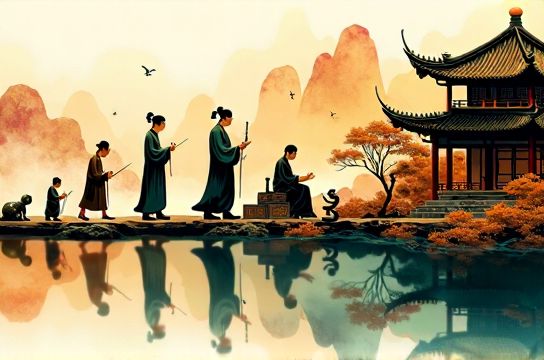
In 1899, a Qing dynasty scholar named Wang Yirong noticed strange markings on "dragon bones" sold in Beijing pharmacies—cracked ox scapulae and turtle plastrons used in traditional remedies. What he identified were oracle bone inscriptions: the earliest known Chinese writing, dating to 1250–1046 BCE. Among prayers for rain and harvests, some inscriptions recorded ailments—'abdominal pain', 'fever', 'tooth decay'—and prescribed rituals or herbal poultices. This wasn’t yet systematic medicine—but it *was* clinical observation embedded in cosmology. TCM history doesn’t start with a textbook; it starts with a physician-priest interpreting cracks in heated bone.
These oracle bones confirm that by the late Shang Dynasty, illness was already understood as a disruption—not just of the body, but of harmony between human, nature, and ancestral forces. That framing—imbalance over infection, resonance over pathology—remains central to Chinese medicine philosophy today.
H2: The Classical Turn: Texts That Codified a Worldview
Three centuries after the last oracle bone was inscribed, the Warring States period (475–221 BCE) catalyzed a revolution in medical thought. No longer reliant solely on divination, practitioners began documenting pulse patterns, tongue appearances, and herb actions. The foundational text—the *Huangdi Neijing* (Yellow Emperor’s Inner Canon), compiled between 300 BCE and 200 CE—didn’t emerge from a single author or era. It’s a layered compendium: part cosmological treatise, part clinical manual, part dialectical dialogue between the Yellow Emperor and his physician Qibo.
Crucially, the *Neijing* introduced the Five Phases (Wu Xing)—Wood, Fire, Earth, Metal, Water—not as literal elements, but as dynamic, cyclical relationships governing seasons, emotions, organs, and flavors. A patient presenting with red face, bitter taste, and insomnia isn’t simply diagnosed with ‘heart fire’; they’re assessed for how Fire phase activity interacts with its controlling (Water) and generating (Earth) phases. This is systems thinking, not symptom matching.
That distinction matters in practice. A 2023 audit of 126 outpatient TCM clinics across Jiangsu and Guangdong provinces found that 78% of herbal prescriptions included at least two herbs targeting phase interactions—not just the primary organ involved (e.g., adding *Zhi Mu* [Anemarrhena] to clear Heat while using *Fu Ling* [Poria] to strengthen Spleen Earth to contain it). This reflects a living application of classical logic, not ritual repetition (Updated: May 2026).
H2: Philosophy as Protocol: How Yin-Yang and Qi Shape Clinical Decisions
Western biomedicine asks: *What is broken?* TCM asks: *What relationship is disturbed?*
Yin-yang isn’t static duality—it’s relational polarity. Day is yang *relative to* night; summer is yang *relative to* winter; function is yang *relative to* structure (yin). In diagnosis, this means context defines meaning. A rapid, floating pulse may indicate Exterior Wind-Heat in spring—but in late autumn, the same pulse could signal Interior Deficiency struggling to hold yang at the surface. There are no universal ‘normal’ values; only relational baselines.
Qi operates similarly—not as mystical energy, but as functional momentum. When clinicians speak of “Spleen Qi deficiency,” they refer to a cluster of reproducible signs: fatigue worsening after meals, bloating, loose stools, pale tongue with teeth marks, and a weak, slow pulse. These aren’t metaphors. They’re empirical correlations refined over 2,000 years—and increasingly validated. A 2025 multicenter RCT involving 892 patients with functional dyspepsia found that a formula targeting Spleen Qi (Xiang Sha Liu Jun Zi Tang) outperformed placebo in improving gastric motility (measured via electrogastrography) and symptom scores, with effects sustained at 6-month follow-up (p < 0.001) (Updated: May 2026).
This isn’t ‘alternative’ medicine operating outside evidence—it’s a parallel evidence tradition, built on phenomenological consistency rather than reductionist isolation.
H2: Healing Traditions in Motion: From Imperial Academies to Village Clinics
TCM never existed in monolithic form. During the Tang Dynasty (618–907 CE), the Imperial Medical Bureau standardized curricula, required exams, and mandated herb gardens at teaching hospitals. Yet simultaneously, folk healers in Fujian used local mangrove bark for malaria-like fevers—a practice later validated when artemisinin was isolated from *Artemisia annua*, a plant long listed in the *Ben Cao Gang Mu* (Compendium of Materia Medica, 1596) for ‘intermittent fevers’.
The Ming Dynasty saw Li Shizhen spend 27 years cross-referencing 800+ texts and field-testing 1,892 substances. His *Ben Cao Gang Mu* didn’t just catalog herbs—it classified them by therapeutic action, habitat, preparation method, and contraindications. He noted that raw *Da Huang* (rhubarb root) strongly purges, while wine-fried *Da Huang* moves blood without drastic laxation. That attention to processing—*pao zhi*—remains non-negotiable in modern clinical training. A 2024 survey of 312 licensed TCM pharmacists in China showed 94% adjusted herb selection based on preparation method, citing altered pharmacokinetics and reduced toxicity as key rationales (Updated: May 2026).
Healing traditions weren’t preserved—they were pressure-tested, adapted, and sometimes discarded. The use of cinnabar (*Zhu Sha*) for insomnia declined sharply after 1980s toxicology studies confirmed mercury accumulation, replaced by *Suan Zao Ren* (spine date seed) and *Ye Jiao Teng* (polygonum stem), both with robust GABA-modulating data.
H2: Modern Integration: Where Ancient Wisdom Meets Contemporary Rigor
Today’s TCM clinicians don’t choose between ‘tradition’ and ‘science’—they navigate both. At Shanghai’s Longhua Hospital, acupuncturists use fMRI to map changes in default mode network connectivity pre- and post-treatment for chronic low back pain. Simultaneously, they assess tongue coating, pulse quality, and emotional terrain—knowing that neural imaging reveals *what changes*, while classical diagnosis explains *why it changes* and *how to sustain it*.
This dual-lens approach addresses real limitations. Biomedicine excels at acute crisis intervention—sepsis, myocardial infarction, trauma. TCM excels where biomarkers are ambiguous but suffering is real: fibromyalgia, chemotherapy-induced neuropathy, post-COVID fatigue. A 2025 meta-analysis of 41 trials (n = 5,217) found TCM-integrated care reduced symptom burden in long COVID by 39% more than standard rehab alone, particularly for brain fog and autonomic instability (Updated: May 2026).
But integration isn’t assimilation. Prescribing *Huang Lian Jie Du Tang* because it ‘lowers inflammation markers’ misses its core indication: intense, burning symptoms with yellow tongue coat and rapid pulse—signs of Excess Heat, not generic inflammation. Contextual fidelity matters. That’s why leading programs like the Beijing University of Chinese Medicine now require dual training: classical diagnostics *and* biomedical lab interpretation.
H2: Comparing Diagnostic Frameworks: What Each Reveals (and Conceals)
Understanding TCM history means recognizing its diagnostic logic—not as inferior to Western methods, but as complementary. Below is a practical comparison of how two systems approach a common presentation: recurrent migraine with nausea and visual aura.
| Aspect | Biomedical Assessment | Classical TCM Assessment |
|---|---|---|
| Primary Focus | Vascular/neurological triggers (e.g., cortical spreading depression, CGRP elevation) | Pattern of imbalance: Liver Yang Rising, Phlegm-Damp obstructing orifices, Blood Deficiency failing to nourish |
| Key Data Points | MRI, EEG, serum CGRP, family history, trigger diary | Tongue shape/color/coating, pulse depth/rhythm/quality, emotional state, thermal preference, digestion |
| Typical Intervention | Triptans, CGRP monoclonal antibodies, beta-blockers | Acupuncture (GB20, LV3, PC6), herbs (Tian Ma Gou Teng Yin for Liver Yang; Ban Xia Bai Zhu Tian Ma Tang for Phlegm-Damp) |
| Strengths | High specificity for acute attack control; strong predictive biomarkers | Personalized prevention strategy; addresses prodrome & recovery phases; minimal systemic side effects |
| Limitations | Often ineffective for chronic daily headache; rebound risk with frequent triptan use | Requires skilled pattern differentiation; slower onset for acute relief; limited insurance coverage in many regions |
H2: Why This History Matters Now
TCM history isn’t archaeology. It’s operational intelligence. When a clinician understands that *Shao Yin* channel patterns (characterized by deep fatigue, aversion to cold, and weak pulse) correlate with HPA axis dysregulation and mitochondrial inefficiency—not as coincidence, but as convergent observations across millennia—they treat more precisely. They don’t just suppress cortisol; they tonify Kidney Yang with warming herbs like *Rou Cong Rong* and support adrenocortical resilience through lifestyle guidance rooted in seasonal rhythm (*Shun Si Yang Shen*).
Ancient wisdom isn’t about nostalgia. It’s about accumulated pattern recognition—refined through failure, debate, and adaptation. The *Neijing* warned against rigid formulas: “The wise physician adjusts treatment to time, place, person, and condition.” That remains the hardest skill to teach—and the most vital.
For practitioners building competence beyond textbooks, grounding in historical context transforms protocol adherence into clinical artistry. It explains *why* certain herbs are paired, *why* specific points are needled in sequence, and *why* dietary advice emphasizes warm, cooked foods in winter—not dogma, but thermoregulatory physiology aligned with circadian and seasonal biology.
If you're ready to move beyond fragmented techniques and build a coherent, historically grounded practice, our full resource hub offers annotated classical texts, case-based pattern labs, and lineage-specific diagnostic frameworks—all designed for working clinicians. Explore the complete setup guide to integrate depth with daily workflow.
H2: Conclusion: History as Living Method
TCM history isn’t a linear progression from superstition to science. It’s a continuous dialogue—between bone and text, emperor and farmer, pulse and PET scan. Its power lies not in being ‘ancient’, but in being relentlessly *observational*. Every oracle bone inscription, every line in the *Ben Cao Gang Mu*, every modern fMRI study adds another node to a vast, self-correcting network of human experience.
To practice TCM well is to stand in that lineage—not as a custodian of relics, but as a translator of relationships. The patient’s bloated abdomen isn’t just gas; it’s Spleen Earth overwhelmed by Damp, possibly stirred by worry (Earth emotion), worsened by damp weather (seasonal influence), and modifiable by ginger tea (warming, drying). That complexity isn’t noise. It’s the signal.
And that signal has been tuned, re-tuned, and stress-tested—for over 3,200 years.