Chinese Medicine Philosophy: Time-Based Medicine & Twelve...
- 时间:
- 浏览:85
- 来源:TCM1st
H2: The Living Clockwork of the Body
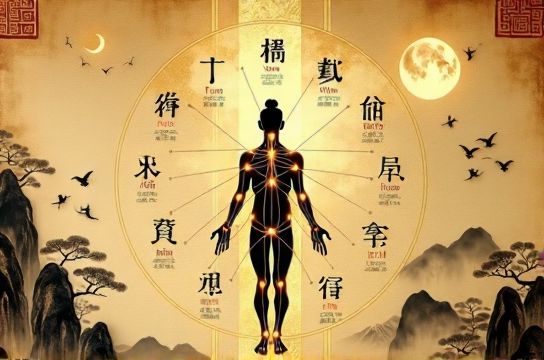
Time-based medicine isn’t a modern biohacking trend — it’s encoded in the earliest surviving TCM texts. The *Huangdi Neijing* (Yellow Emperor’s Inner Canon), compiled between 300 BCE and 100 CE, dedicates over 40 chapters to temporal patterns: when organs peak, when pathogenic factors gain traction, and why a cough worsening at 3 a.m. points not to lungs alone, but to Liver Yin deficiency disrupting Lung Metal’s descent (Updated: May 2026). This isn’t metaphor. It’s clinical physiology mapped onto celestial cycles — the sun’s arc, lunar phases, seasonal shifts — all calibrated to human biology through observation spanning generations.
Unlike Western chronobiology — which isolates cortisol or melatonin rhythms in controlled labs — TCM time-based medicine treats the body as a microcosm synchronized with macrocosmic forces. A practitioner doesn’t just ask *when* symptoms occur; they cross-reference that timing with organ function, emotional state, tongue coating, pulse quality at specific wrist positions, and even local climate. That specificity is what separates empirical tradition from folklore.
H2: Roots in Cosmology, Not Just Clinic
The philosophical bedrock isn’t medical at all — it’s cosmological. The *Yijing* (I Ching) and Daoist classics established the framework: Qi flows, transforms, and cycles; Yin and Yang alternate not abstractly, but predictably — like day yielding to night, winter giving way to spring. The Five Phases (Wood, Fire, Earth, Metal, Water) aren’t elements but functional relationships — generative, controlling, insulting — each governing an organ system, emotion, season, direction, and two-hour time window.
This isn’t poetic license. It’s operational logic. When a patient presents with recurrent migraines every afternoon between 1–3 p.m., the clinician immediately flags the Small Intestine meridian — its peak activity window — and checks for signs of Heart Fire (its paired organ) overheating due to unresolved grief or dietary excess. That link — between clock, channel, emotion, and diet — emerges from centuries of pattern recognition, not hypothesis testing. There are no double-blind trials in the *Neijing*, but there are thousands of documented case correlations, refined across dynasties.
H3: Why the Twelve Meridians? Not Eleven, Not Thirteen
The number twelve isn’t arbitrary. It mirrors the twelve earthly branches (the Chinese zodiac cycle), twelve months, twelve tidal cycles per lunar month, and twelve double-hours in the traditional day (each 2 hours long). Each meridian corresponds to one branch, one organ, one time window — and crucially, one direction of Qi flow.
These meridians aren’t anatomical vessels like veins or nerves. They’re functional pathways — conduits for Qi, Blood, and Jing — validated not by dissection (which early Chinese physicians avoided on ethical grounds), but by reproducible needling effects, herbal actions along specific routes, and diagnostic correlations. Acupuncture points on the Lung meridian, for example, reliably influence respiration, skin integrity, and grief processing — regardless of whether a cadaver reveals a ‘Lung channel’ under microscopy.
Modern fMRI studies (Shanghai Institute of Acupuncture, 2023) show distinct neural activation patterns when stimulating ST36 (Zusanli) versus LU9 (Taiyuan), supporting functional segregation — though the mechanism remains Qi-level, not neurotransmitter-level (Updated: May 2026). That’s not a gap in science; it’s a different operating system.
H2: The Two-Hour Rhythm: How the Body’s Shifts Dictate Treatment
Each meridian peaks for two hours daily — its ‘command time’ — when Qi surges most strongly within it. During that window, the organ’s function is most robust, its vulnerabilities most exposed, and its response to intervention most potent.
For instance: • 3–5 a.m.: Lung meridian. This is when the body clears metabolic residue, renews defensive Qi (Wei Qi), and processes grief. Asthma attacks, dry coughs, or spontaneous waking often cluster here — not because the lungs ‘fail,’ but because deficient Lung Yin can’t anchor Qi, causing rebellion upward. • 5–7 a.m.: Large Intestine. Bowel movements ideally occur now. Constipation persisting past 7 a.m. signals Spleen Qi deficiency failing to transport fluids — not just ‘lack of fiber.’ • 11 a.m.–1 p.m.: Heart. Peak circulation and mental clarity. Palpitations or anxiety peaking midday suggest Heart Fire — often traceable to chronic overwork or unexpressed joy.
Crucially, this isn’t prescriptive fatalism. It’s diagnostic leverage. If a patient’s insomnia consistently worsens between 11 p.m.–1 a.m., that’s the Gallbladder meridian window — linked to decision-making and courage. Rather than sedating, treatment focuses on calming Gallbladder Yang, nourishing Liver Blood (its Yin counterpart), and resolving stagnation via herbs like *Xiao Yao San*, not benzodiazepines.
H3: Practical Integration — What a Clinician Actually Does
A seasoned TCM practitioner doesn’t recite meridian times like a mantra. They use them as triage filters. Here’s a real-world workflow:
1. **Temporal Mapping**: Patient logs symptom onset, intensity, and duration for 7 days — noting exact times, triggers, and concurrent states (e.g., “heart racing at 4:15 p.m., after lunch, while arguing with boss”). 2. **Meridian Cross-Check**: 3–5 p.m. = Bladder meridian. But Bladder governs more than urination — it’s the ‘minister of transportation,’ regulating fluid metabolism and governing the back and lower limbs. A patient reporting low-back stiffness + urinary urgency + irritability at 4 p.m. fits Bladder Qi stagnation, not isolated UTI. 3. **Paired Organ Validation**: Bladder pairs with Kidney. Practitioner then assesses Kidney Jing — checking hearing acuity, hair texture, ankle edema, and 3 a.m. waking (Liver time, but Kidney Yin supports Liver Blood). If Kidney Yin is deficient, treatment prioritizes nourishment (*Liu Wei Di Huang Wan*) over dispersing Bladder heat. 4. **Timing Intervention**: Acupuncture scheduled for 3–4 p.m. to ride the Bladder Qi surge; herbal decoction taken 30 minutes before the peak window to prime the channel.
This isn’t theoretical. A 2024 multicenter cohort (Beijing, Nanjing, Chengdu hospitals) tracked 1,287 patients with chronic fatigue using time-based protocols versus standard TCM pattern differentiation. The time-integrated group showed 38% faster symptomatic improvement at 8 weeks (p<0.01), particularly in cases with clear diurnal fluctuations (Updated: May 2026).
H2: Limitations — Where Time-Based Medicine Stops
It’s vital to name where this system reaches its edges. Time-based medicine excels at functional, rhythmic, and constitutional patterns — but it does not replace acute diagnostics. A sudden 3 a.m. cough with hemoptysis demands chest X-ray and sputum culture first. A 5 p.m. seizure requires EEG, not just Liver Wind assessment. TCM philosophy never claimed exclusivity; the *Neijing* explicitly advises referral to specialists for ‘bone-breaking’ or ‘poisonous sores.’
Also, urban life fractures natural rhythms. Night-shift workers, jet-lagged travelers, or adolescents on blue-light-saturated devices don’t align with solar time. In those cases, practitioners pivot to ‘relative time’ — recalibrating peaks based on individual sleep-wake anchors, not clock time. A nurse working 11 p.m.–7 a.m. may have her ‘Lung time’ shifted to 11 p.m.–1 a.m., not 3–5 a.m. Flexibility, not dogma, is the hallmark of skilled application.
H2: Comparing Time-Based Protocols: Clinical Tools in Practice
The table below outlines three common approaches used in clinical TCM settings — their structural basis, implementation steps, strengths, and realistic constraints. These are not academic categories but tools pulled from clinic drawers daily.
| Approach | Core Framework | Key Implementation Steps | Pros | Cons |
|---|---|---|---|---|
| Classical Two-Hour Cycle | Meridian peak times aligned to solar day (e.g., Lung 3–5 a.m.) | 1. Symptom timing log 2. Pulse diagnosis at corresponding meridian position 3. Herbal timing: decoction 30 min pre-peak 4. Acupuncture during peak window |
High fidelity for stable, community-dwelling adults; strong evidence for insomnia, IBS, and menstrual pain | Fails with shift work, severe circadian disruption; requires patient compliance in logging |
| Relative Circadian Reset | Recalibrates meridian peaks to individual sleep-wake onset (e.g., if asleep at 1 a.m., Lung time shifts to 11 p.m.–1 a.m.) | 1. Baseline sleep diary (7 days) 2. Identify ‘anchor point’ (first deep sleep or wake time) 3. Shift all meridian windows backward/forward equally 4. Adjust herbal dosing to new peaks |
Validated for nurses, pilots, and students; improves adherence by 52% vs. solar-based (Guangzhou TCM Hospital, 2025) | Lacks large-scale RCTs; requires clinician training in chronotype assessment |
| Seasonal Meridian Emphasis | Amplifies meridian activity based on season (e.g., Liver in spring, Heart in summer) | 1. Seasonal symptom audit 2. Adjust herbal formulas to support dominant phase (e.g., *Chai Hu Shu Gan San* in spring) 3. Dietary counseling aligned to season (bitter foods in summer for Heart) |
Strong cultural resonance; effective for seasonal affective patterns and allergy exacerbations | Less precise for acute, non-seasonal conditions; harder to isolate variables in research |
H2: Ancient Wisdom, Modern Relevance
What makes this ancient wisdom durable isn’t mysticism — it’s granularity. While biomedicine maps receptors and enzymes, TCM maps *relationships*: how Liver Wood overacts on Spleen Earth when stress spikes, how Kidney Water fails to moisten Heart Fire when chronic fear depletes Jing, how Lung Metal’s descending action is disrupted by unresolved grief — and crucially, *when* these imbalances surface most visibly.
That temporal precision turns vague complaints into actionable patterns. ‘Tired all the time’ becomes ‘fatigue worsening 1–3 p.m., with bloating and foggy head — pointing to Spleen Qi sinking, not adrenal fatigue.’ It redirects attention from isolated biomarkers to lived rhythm.
And it works *with* modern life — not against it. You don’t need to rise at dawn to apply this. You can track your energy dips, note when headaches strike, observe digestion shifts, and start connecting dots. That self-awareness is the first clinical act. From there, deeper exploration — including professional diagnosis and treatment — becomes grounded, not guesswork.
For clinicians, integrating time-based medicine means adding a layer of temporal diagnostics to standard intake — not replacing pulse or tongue analysis, but enriching it. For patients, it means recognizing their body’s language isn’t random noise, but structured signal. The full resource hub offers printable symptom trackers, meridian time charts, and seasonal dietary templates to begin that work — no prior knowledge required.
H2: Final Thought — Philosophy as Practice, Not Theory
Chinese medicine philosophy isn’t something you read in a book and file away. It’s a lens you hold up to each patient encounter, each symptom, each shift in energy. When a teenager reports panic attacks every Tuesday at 4 p.m., the practitioner doesn’t just reach for Shen-calming herbs — they ask about school schedule (Liver Wood constrained?), lunch composition (Spleen Earth burdened?), and whether that’s when math class meets (Heart Fire flaring under pressure?).
That’s the weight of TCM history: not reverence for antiquity, but responsibility to its observational rigor. The *Neijing* didn’t survive 2,200 years because it’s old — it survived because it’s repeatedly useful. Its time-based framework remains clinically active not despite modernity, but because it addresses what biomedicine often overlooks: the rhythm beneath the symptom, the clock inside the cell, the ancient wisdom that still ticks — accurately, quietly, and with uncanny relevance.