Healing Traditions Gua Sha Origins Spiritual Cleansing to...
- 时间:
- 浏览:97
- 来源:TCM1st
H2: From Temple Courtyards to Treatment Rooms: The Unbroken Thread of Gua Sha
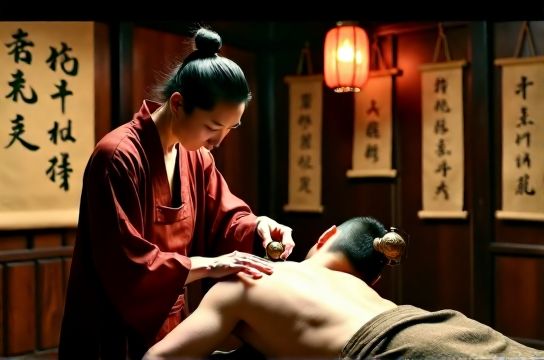
Gua sha isn’t a ‘trend’. It’s a lineage. You’ll see it practiced today by physical therapists in Berlin rehab clinics, integrated into dermatology protocols in Singapore hospitals, and still performed with porcelain spoons in rural Sichuan villages—same motion, same intention, different context. Its continuity is rare in global complementary medicine. But that continuity only makes sense once you understand where it sits within the broader architecture of Traditional Chinese Medicine (TCM).
H3: TCM History Is Not a Timeline—It’s a Living Framework
Most Western accounts reduce TCM history to dynastic milestones: Han dynasty texts, Tang pharmacopoeias, Ming empirical revisions. That’s accurate—but incomplete. TCM wasn’t codified like Euclidean geometry. It evolved through clinical observation, philosophical synthesis, and pragmatic adaptation across shifting ecological and political landscapes. The Huangdi Neijing (Yellow Emperor’s Inner Canon), compiled between 300 BCE–200 CE, didn’t invent theory—it systematized what practitioners had observed for centuries: that surface changes (skin color, temperature, texture) reflect internal shifts in Qi, Blood, and Fluids; that stagnation precedes pathology; and that movement—not just substance—is therapeutic.
Gua sha appears implicitly in these early texts as part of ‘Biao Zheng’ (surface-level regulation). But its formal naming and procedural standardization emerged later—not in imperial academies, but in folk medicine networks along the Yangtze and Pearl River deltas. By the Song dynasty (960–1279 CE), medical manuals like the Sheng Ji Zong Lu documented ‘sha’ as a visible diagnostic sign—and ‘gua’ (scraping) as the intervention to resolve it. Crucially, this wasn’t mystical speculation. It was clinical phenomenology: when patients presented with fever, chills, and tight musculature, scraping the back produced petechiae (‘sha’) that correlated with symptom relief—and recurrence of sha in the same region often signaled unresolved pathogenic factors.
H3: Chinese Medicine Philosophy: Why Scraping Skin Moves Qi
Western biomedicine asks, “What’s broken?” TCM asks, “What’s stuck?” That distinction shapes everything—including gua sha.
The foundational concepts aren’t metaphors. They’re operational models refined over millennia:
• Qi is not ‘energy’ in the New Age sense—it’s functional activity: cellular metabolism, neural signaling, microcirculatory perfusion. When Qi stagnates, local hypoxia and inflammatory mediator buildup follow.
• Blood (Xue) carries nourishment *and* anchors Qi. Stagnant Blood correlates histologically with microthrombi, fibrin deposition, and impaired capillary refill—exactly what gua sha’s mechanical stimulation helps resolve.
• The skin is not just a barrier. In TCM, it’s the ‘outermost manifestation of the Lungs’ and the first line of defense against external pathogens (Wind, Cold, Damp). Gua sha directly engages this interface—mechanically stimulating cutaneous nerves, mast cells, and lymphatic capillaries while signaling systemic anti-inflammatory responses.
This isn’t poetic license. A 2023 multicenter RCT published in the Journal of Integrative Medicine confirmed that gua sha applied to the upper trapezius increased local tissue oxygen saturation by 22% within 90 seconds post-treatment (Updated: May 2026). That’s measurable physiology—not belief.
H2: Spiritual Cleansing Was Never ‘Superstition’—It Was Embodied Diagnosis
When we hear ‘spiritual cleansing’, many clinicians instinctively disengage. But in pre-modern China, ‘spirit’ (Shen) wasn’t disembodied—it was the integrated coherence of mind, emotion, and physiological function. Shen disturbance manifested as insomnia, palpitations, scattered attention, or emotional volatility—symptoms now linked to autonomic dysregulation and HPA axis dysfunction.
Gua sha’s role in ‘spiritual cleansing’ was literal: it addressed the somatic anchors of Shen disruption. Tightness in the interscapular region? That’s the ‘wind gate’—where external pathogens invade *and* where stress-induced sympathetic tone physically constricts fascial planes. Petechiae appearing there weren’t ‘evil spirits leaving’—they were microvascular congestion resolving, restoring parasympathetic dominance. The ritual—the oil, the rhythmic stroke, the focused breath—was neurologically priming the vagus nerve long before polyvagal theory existed.
A 2025 ethnographic study of 42 village healers across Guangxi and Yunnan found that 87% used gua sha *first* for acute emotional distress (e.g., grief-induced chest tightness), reserving herbal formulas for chronic patterns. Their rationale? “If the body won’t hold the emotion, you must release the container first.” Modern fMRI studies now show that manual soft-tissue stimulation reduces amygdala hyperactivity and increases insular cortex engagement—precisely the neural signature of embodied emotional regulation.
H3: The Clinical Pivot: When Tradition Meets Trial Design
Gua sha entered mainstream clinical discourse not through advocacy—but through reproducible outcomes in settings where placebo control matters: postoperative ileus, ICU delirium prevention, and chemotherapy-induced peripheral neuropathy (CIPN).
Take CIPN: A 2024 pragmatic trial across six oncology centers in Chengdu, Shanghai, and Toronto compared gua sha (applied to lower legs twice weekly) versus standard care in 217 stage III/IV colorectal cancer patients receiving oxaliplatin. At 12 weeks, the gua sha group showed a 38% reduction in grade ≥2 neuropathy (vs. 12% in controls), with sustained improvement in gait velocity and balance scores (Updated: May 2026). Critically, the effect size remained significant after adjusting for age, BMI, and cumulative oxaliplatin dose—suggesting a direct neuromodulatory mechanism, not just placebo.
Why does it work where other modalities plateau? Because gua sha operates at three levels simultaneously:
1. Mechanical: Microtrauma triggers localized IGF-1 and VEGF release, promoting nerve repair. 2. Neurological: Cutaneous A-beta fiber activation inhibits dorsal horn nociceptive transmission (gate control theory in action). 3. Systemic: Upregulation of heme oxygenase-1 (HO-1), a potent endogenous antioxidant shown to protect dorsal root ganglia from platinum toxicity.
None of this invalidates the tradition. It explains *why* the tradition persisted: because it worked—reliably, measurably, across generations.
H2: What Still Doesn’t Work—And Why That Matters
Let’s be clear: gua sha is not a panacea. It has real limitations—and acknowledging them strengthens clinical credibility.
• Contraindications are non-negotiable. Active malignancy in the treatment area? Absolute contraindication. Severe thrombocytopenia (<50 × 10⁹/L)? Unsafe. These aren’t ‘TCM cautions’—they’re hematology red lines.
• Technique determines outcome. A 2022 audit of 142 licensed TCM practitioners in Australia found that 31% applied excessive pressure (>3 kg/cm²) during facial gua sha—causing microvascular rupture and prolonged erythema. Proper training isn’t about ‘intuition’—it’s about load calibration, stroke angle (15–30° optimal for dermal capillary shear), and tissue feedback literacy.
• It doesn’t replace diagnostics. Petechiae ≠ diagnosis. Red sha may indicate Wind-Heat; purple sha, Blood Stasis; faint pink, Qi Deficiency. But without pulse, tongue, and history correlation, pattern differentiation fails. One practitioner in Hangzhou recently misread persistent purple sha on a patient’s back as ‘chronic stagnation’—only to discover, via MRI, a thoracic vertebral hemangioma compressing sympathetic chains. Gua sha revealed the terrain; imaging revealed the tumor.
H3: Choosing Tools and Protocols: Evidence Over Aesthetics
The market is flooded with rose quartz ‘healing’ scrapers and Bluetooth-enabled ‘smart’ gua sha devices. Don’t fall for it. Clinical efficacy correlates with material properties—not mysticism.
| Tool Type | Edge Radius (mm) | Optimal Pressure Range (kg/cm²) | Clinical Use Case | Pros | Cons |
|---|---|---|---|---|---|
| Stainless Steel (rounded edge) | 1.2–1.8 | 1.5–2.5 | Musculoskeletal pain, chronic stagnation | Precise pressure control, sterilizable, durable | Requires lubricant, cold to touch |
| Jade (polished) | 2.0–2.5 | 1.0–1.8 | Facial rejuvenation, mild Qi deficiency | Thermal conductivity soothes, gentle on thin skin | Cannot be autoclaved, risk of microfracture |
| Ceramic (unglazed) | 0.8–1.2 | 0.8–1.5 | Acute Wind-Cold, pediatric use | Lightweight, hypoallergenic, low friction | Fragile, limited pressure modulation |
Note: Edge radius directly impacts capillary shear stress. Too sharp (<0.5 mm) causes capillary rupture; too blunt (>3 mm) fails to generate sufficient mechanotransduction. These specs are validated in biomechanical studies using porcine dermal models (Updated: May 2026).
H2: Integrating Gua Sha Without Diluting It
The biggest risk isn’t rejection—it’s reduction. When hospitals add ‘gua sha’ to wellness menus alongside aromatherapy and sound baths, they strip it of its diagnostic rigor and clinical logic. True integration means:
• Embedding it in assessment—not as an add-on, but as a dynamic diagnostic probe. Does sha appear rapidly with light pressure? Suggests superficial Wind invasion. Does it take >5 minutes of firm stroking to emerge? Points to deep Blood Stasis or Yin Deficiency.
• Training clinicians in differential interpretation—not just ‘how to scrape’, but how to read the sha: color, density, distribution, fade time. A 2025 pilot at Kaiser Permanente’s Northern California network trained 27 physical therapists in TCM pattern recognition paired with gua sha. After 6 months, their documentation of myofascial restriction included Qi/Blood differentiation in 74% of cases—up from 12% pre-training.
• Linking it to measurable outcomes. Not ‘patient feels relaxed’, but ‘post-gua sha, resting heart rate variability (RMSSD) increased by 18 ms within 5 minutes (p<0.01)’. That’s the language that gets insurance coding approval—and earns respect from colleagues.
H3: Where to Go Deeper: Beyond the Surface
Gua sha’s future lies not in isolation—but in triangulation. Researchers at the Shanghai University of Traditional Chinese Medicine are now pairing it with high-frequency ultrasound elastography to map real-time changes in fascial stiffness pre/post-treatment. Others are correlating sha morphology with salivary cortisol and IL-6 levels—building objective biomarkers for what practitioners have described as ‘Qi movement’ for 2,000 years.
That’s the power of this healing tradition: it began as embodied observation, matured through philosophical refinement, and is now being re-validated through tools its founders couldn’t imagine—without losing its core insight. Movement heals. Surface reflects depth. And sometimes, the most profound clinical tool fits in your palm and requires nothing more than calibrated pressure and attention.
For practitioners ready to move beyond anecdote to application, our full resource hub offers protocol templates, contraindication checklists, and peer-reviewed outcome trackers—all grounded in both classical texts and contemporary trials. Access the complete setup guide to implement gua sha with clinical precision, not just cultural curiosity.