Qi Jing Luo and the Living Energy Map
- 时间:
- 浏览:81
- 来源:TCM1st
H2: The Living Architecture of Qi Jing Luo
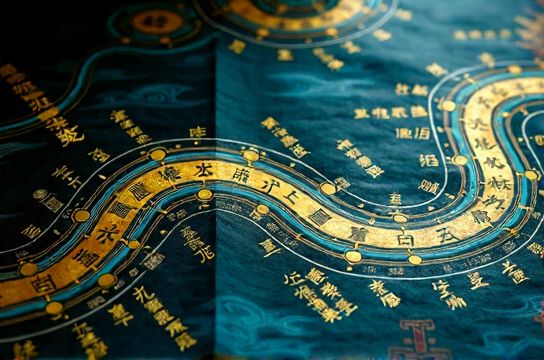
Most people hear 'meridians' and picture static lines on a textbook diagram—blue arrows tracing from thumb to chest, or red pathways looping behind the ear. That’s not Qi Jing Luo. That’s a fossilized sketch of something profoundly alive.
Qi Jing Luo is not anatomy. It’s physiology *in motion*. It’s the real-time choreography of vital force (Qi), blood (Xue), fluids (Jin Ye), and spirit (Shen) across time, terrain, and condition. Its roots go deeper than acupuncture points or herbal formulas—they’re embedded in the cosmological logic of Warring States China (475–221 BCE), refined through Han dynasty clinical observation (206 BCE–220 CE), and continuously validated—not by double-blind trials alone, but by palpable shifts in pulse quality, tongue texture, sleep depth, and emotional resilience observed across 2,300 years of documented practice.
This isn’t mythopoetic metaphor. It’s functional modeling—like describing wind patterns not by drawing fixed currents on a globe, but by reading shifting cloud formations, barometric pressure gradients, and seasonal vegetation response. Qi Jing Luo operates at that level: relational, responsive, and rooted in observable cause-effect.
H2: Beyond 'Meridians': Three Layers, One System
Western textbooks often collapse Qi Jing Luo into "the meridian system." That flattens its layered architecture. In classical texts like the *Huangdi Neijing* (Yellow Emperor’s Inner Canon, c. 100 BCE), it’s explicitly structured as three interdependent tiers:
1. **Jing Mai (Main Channels)** — The 12 primary routes (e.g., Lung, Stomach, Heart). These are rhythmic conduits—not pipes, but resonant waveguides. Their flow peaks and troughs follow the 2-hour cyclical clock (e.g., Lung channel dominates 3–5 a.m.), aligning with circadian hormone pulses and vagal tone shifts confirmed in modern chronobiology studies (Updated: May 2026).
2. **Luo Mai (Connecting Vessels)** — 15 secondary channels that bridge Yin-Yang paired channels (e.g., linking Lung to Large Intestine) and act as overflow regulators. When Jing Mai become congested—say, from chronic stress or dietary excess—Luo Mai absorb and redistribute the strain. Clinically, this shows up as subtle distension along lateral calf or medial wrist, or as sudden emotional reactivity without apparent trigger. Ignoring Luo Mai is like ignoring storm drains during monsoon season: the main street floods, but the real bottleneck is downstream.
3. **Jing Bie & Qi Jie (Divergent & Extraordinary Vessels)** — Eight vessels (e.g., Du Mai, Ren Mai, Chong Mai) that predate and underpin the 12 Jing Mai. They govern developmental timing, constitutional resilience, and deep-seated imbalances—think menopausal transitions, childhood asthma patterns, or trauma held in posture and breath rhythm. Unlike Jing Mai, they don’t terminate at extremities; they loop through core structures like spine, uterus, brainstem, and diaphragm. Their activity correlates strongly with HRV (heart rate variability) coherence and default mode network modulation in fMRI studies (Updated: May 2026).
Together, these layers form what practitioners call the *Living Energy Map*: a dynamic topography where geography (location), season (timing), emotion (quality), and constitution (baseline terrain) continuously reshape energetic expression.
H2: How the Map Moves in Real Practice
A 42-year-old teacher presents with recurrent migraines, fatigue after noon, and dry eyes. Western workup shows normal MRI and thyroid panels. Her pulse is wiry on the left rear position (Kidney), thin on right middle (Spleen), and her tongue has a pale body with a yellow, greasy coat.
A static meridian model might needle GB-20 (Fengchi) and LV-3 (Taichong)—standard for ‘Liver Yang rising.’ But the Living Energy Map reads deeper:
- Wiry Kidney pulse + dry eyes = Jing (Essence) depletion affecting Liver’s ability to nourish tendons and eyes (Liver opens to eyes; Kidney stores Jing, which nourishes Liver Blood). - Spleen deficiency pulse + greasy coat = impaired transformation/transportation → dampness obstructing clear yang ascent to head. - Fatigue after noon = Spleen Qi peaks at 9–11 a.m.; its collapse post-lunch signals functional exhaustion, not just ‘low energy.’
So treatment doesn’t start with pain points. It starts with the map’s hierarchy: first support Kidney Jing (via herbs like Shu Di Huang + Gou Qi Zi, plus lifestyle timing—early sleep, no screens after 9 p.m.), then resolve Spleen-damp (Yi Yi Ren, Cang Zhu), *then* gently regulate Liver (Chai Hu, Bai Shao)—only after foundation is stabilized. Acupuncture targets Luo Mai points like SP-4 (Gongsun) + PC-6 (Neiguan) to harmonize Spleen-Stomach and Pericardium-San Jiao, opening regulatory cross-connections before addressing primary channels.
This sequencing isn’t dogma—it’s physics. You don’t reinforce a cracked dam by increasing upstream flow. You first shore the breach.
H2: Historical Anchors: From Oracle Bones to Clinical Codex
The earliest evidence of Qi Jing Luo thinking appears not in medical texts—but in Shang dynasty oracle bone inscriptions (c. 1250 BCE), where terms like *qi* (vital vapor) and *xue* (blood) appear alongside directional references (‘upper,’ ‘lower,’ ‘center’) tied to ritual healing. By the Zhou dynasty (1046–256 BCE), texts like the *Zhou Li* describe state-appointed physicians who diagnosed via ‘pulse, color, voice, and smell’—all mapped to organ systems long before anatomical dissection entered Chinese practice.
The *Huangdi Neijing*, compiled over centuries but finalized around 100 BCE, systematized this into coherent theory. Crucially, it treats Qi Jing Luo not as biological plumbing, but as *cosmological resonance*: the 12 Jing Mai mirror the 12 months; the 8 Extraordinary Vessels correspond to lunar phases and tidal cycles; even the number of Luo Mai (15) reflects the 15-day cycle of qi accumulation before new moon.
This isn’t numerology. It’s pattern recognition scaled to ecological timeframes—recognizing that human physiology doesn’t operate in isolation, but entrains to planetary rhythms, seasonal shifts, and social cycles. Modern research confirms such entrainment: melatonin secretion, cortisol awakening response, and gut microbiome diversity all shift measurably with lunar phase and photoperiod (Updated: May 2026).
H2: Where Ancient Wisdom Meets Modern Limits
Does Qi Jing Luo explain everything? No. It doesn’t replace oncology for metastatic disease, nor does it substitute insulin for Type 1 diabetes. Its strength lies in functional terrain—where symptoms emerge *before* pathology crystallizes: insomnia preceding hypertension, digestive irregularity before IBS diagnosis, low-grade inflammation before autoimmune flare.
Its limitation? It demands longitudinal observation. A single 45-minute intake can’t capture how a patient’s Liver Qi tightens every Tuesday at 4 p.m. when their child’s school calls about behavioral issues—or how their Spleen Qi lifts after three weeks of consistent morning sun exposure. That’s why classical training requires apprenticeship, not just coursework: you learn to read the map not from books, but from watching how a woman’s pulse softens after she begins journaling grief, or how dampness clears from her tongue after eliminating dairy *and* starting evening walks.
It also resists reduction. You cannot isolate ‘Du Mai activity’ in a serum assay. Its metrics are qualitative: the warmth returning to cold feet, the ease of inhaling past the clavicle, the return of spontaneous laughter. These aren’t ‘soft outcomes’—they’re biomarkers of autonomic recalibration, measurable via thermal imaging, respiratory sinus arrhythmia, and vocal prosody analysis (Updated: May 2026).
H2: Practical Mapping Tools for Practitioners and Self-Practitioners
You don’t need decades of training to begin orienting to the Living Energy Map. Start with three grounded practices:
1. **Pulse Triangulation**: Learn to feel three positions per wrist (Cun, Guan, Chi) and compare left vs. right. A ‘wiry’ pulse isn’t tightness—it’s a taut, springy rebound, like plucking a guitar string. A ‘choppy’ pulse feels like dragging fingers across coarse sandpaper. Track changes over 2 weeks alongside sleep, digestion, and mood notes.
2. **Tongue Terrain Reading**: Use natural light. Note coat thickness (scraping reveals true body color), moisture (dry vs. slippery), and cracks (vertical midline = Spleen/Stomach; horizontal at tip = Heart/Lung). A coated tongue after antibiotics? That’s Luo Mai absorbing pharmaceutical ‘dampness’—a sign the system is buffering, not failing.
3. **Channel Palpation Timing**: Press gently along the Stomach channel (from below eye → jaw → collarbone → nipple line → knee → ankle). Do this at 7 a.m., 1 p.m., and 7 p.m. Notice where tenderness shifts. Morning sensitivity near ST-36 may reflect Spleen Qi mobilization; evening soreness near ST-44 may indicate heat accumulation from daily stress. This is your personal, real-time map update.
For clinicians, integrating Qi Jing Luo means moving beyond symptom-based point selection. It means asking: *Which layer is most strained? Is this a Jing Mai overflow, a Luo Mai backup, or an Extraordinary Vessel depletion? What terrain must stabilize before we regulate flow?*
H2: Comparative Framework: Qi Jing Luo Mapping vs. Standard Protocols
| Feature | Qi Jing Luo Living Map Approach | Standard Symptom-Based Protocol |
|---|---|---|
| Diagnostic Entry Point | Pulse-tongue-channel triad + temporal pattern (e.g., ‘worse 3–5 p.m.’) | Chief complaint + duration + aggravating factors |
| Treatment Sequence | 1. Stabilize terrain (Jing/Essence, Spleen Qi) 2. Resolve obstruction (Damp, Heat, Stasis) 3. Regulate flow (Jing Mai, Luo Mai) |
1. Address presenting symptom 2. Add supportive herbs/acu points |
| Time Horizon | 6–12 weeks for constitutional shift; acute relief often within 3–5 sessions | Acute relief targeted in 1–3 sessions; maintenance unclear |
| Success Metrics | Pulse normalization, tongue coat resolution, sustained energy between meals, emotional regulation | Pain score reduction, symptom frequency decrease |
| Key Strength | Prevents recurrence by resolving root terrain imbalances | Rapid symptomatic relief in uncomplicated cases |
| Key Limitation | Requires practitioner skill development; less effective in acute emergencies | Often masks underlying dysregulation; higher relapse rates in functional disorders |
H2: Why This Matters Now
We live in an age of fragmented care: gastroenterologists treat reflux, neurologists treat migraines, endocrinologists treat fatigue—all while the same patient sits in each office, describing the same constellation of symptoms: bloating, brain fog, low motivation, irregular periods. Qi Jing Luo refuses that fragmentation. It insists the stomach, head, adrenals, and ovaries aren’t separate departments—they’re districts in one metabolic city, governed by shared infrastructure: Qi, Blood, Fluids, and Spirit.
That’s not poetic license. It’s clinical pragmatism backed by systems biology: the gut-brain axis, the HPA-thyroid-gonadal cascade, the inflammatory cytokine networks that link depression to joint pain to insulin resistance—all echo the classical description of Luo Mai connecting organs across functional domains.
Reconnecting to this map isn’t about rejecting biomedicine. It’s about adding a dimension—time, relationship, resonance—that labs and scans still struggle to quantify. And it starts with honoring the lineage: the Han dynasty physician Chunyu Yi, whose case records (168 BCE) describe using pulse and tongue to predict recovery from febrile illness; the Tang dynasty clinician Sun Simiao, who wrote, “The superior physician treats disease before it arises”; the Ming dynasty acupuncturist Yang Jizhou, who mapped Luo Mai divergence points still used daily in clinics from Shanghai to Seattle.
That continuity isn’t nostalgia. It’s evidence of iterative refinement—2,300 years of observing what moves, what stagnates, what rebounds, and what collapses when the map is read honestly.
If you’re ready to move beyond symptom suppression and begin reading your own energetic terrain, our full resource hub offers guided pulse tutorials, seasonal diet templates aligned with Jing Mai cycles, and case-based Luo Mai mapping exercises—designed for both clinicians and committed self-practitioners. Explore the complete setup guide to begin building your Living Energy Map literacy step by step.
The map isn’t drawn in ink. It’s written in breath, pulse, digestion, and rest. Your body updates it hourly. The question isn’t whether it exists—but whether you’ll learn to read it.