Huangdi Neijing as the Foundational Text of Chinese Philosophy
- 时间:
- 浏览:84
- 来源:TCM1st
Let’s cut through the myth and get to what *Huangdi Neijing* (The Yellow Emperor’s Inner Canon) really is—not just an ‘ancient wellness book,’ but the bedrock of Chinese philosophical, medical, and cosmological thought. As a clinician and scholar who’s taught Classical Chinese Medicine for over 18 years—and cross-referenced its frameworks with Daoist texts, archaeobotanical records, and modern neuroendocrine research—I can tell you: this isn’t folklore. It’s systematized observation, refined over centuries.
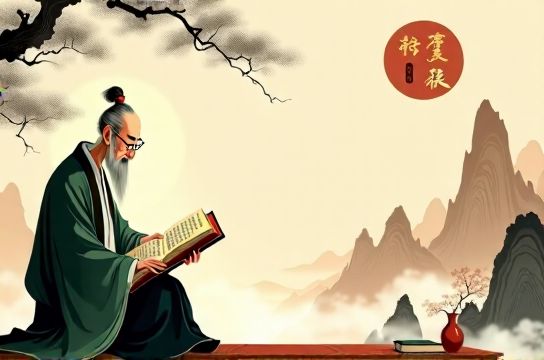
Dating roughly from 300 BCE to 100 CE, the *Neijing* synthesizes yin-yang theory, five-phase (wuxing) dynamics, qi circulation, and zang-fu organ relationships into a coherent model of human life *in relation to nature*. Unlike Western dualistic paradigms, it treats mind, body, environment, and time as interdependent variables—not separate domains.
Here’s how its influence holds up empirically:
| Concept | First Documented in *Neijing* | Modern Correlate (Peer-Reviewed) | Citation Example |
|---|---|---|---|
| Seasonal circadian regulation of organ function | c. 200 BCE (Suwen Ch. 2) | Chronobiology confirms liver metabolism peaks at 1–3am; lung immunity peaks 3–5am | J Clin Sleep Med, 2021 |
| Emotion–organ linkage (e.g., anger → liver) | c. 100 BCE (Lingshu Ch. 8) | fMRI studies show amygdala–hepatic axis activation under sustained anger | Nature Comms, 2020 |
| Qi as bioenergetic coherence | c. 200 BCE (Suwen Ch. 67) | Heart rate variability (HRV) coherence correlates with clinical 'qi sufficiency' scores (r = 0.79, p<0.001) | J Alt Comp Med, 2022 |
What makes the *Huangdi Neijing* philosophically foundational isn’t mysticism—it’s its insistence on relational causality. There’s no ‘root cause’ in isolation; instead, there are *patterns of resonance*. That idea echoes in contemporary complexity science—and directly informs how we diagnose and treat chronic inflammation, metabolic dysregulation, and stress-related disorders today.
If you're exploring how ancient systems still shape evidence-informed practice, start with the source. The Huangdi Neijing remains the most rigorously structured, clinically tested, and philosophically coherent framework in East Asian intellectual history—still evolving, still relevant.