Holistic Solution for Hormonal Imbalance Guided By TCM Pa...
- 时间:
- 浏览:101
- 来源:TCM1st
Hormonal imbalance isn’t one condition—it’s a constellation of symptoms: unexplained weight gain despite clean eating, afternoon crashes that no coffee fixes, menstrual cycles that shift like weather fronts, or waking at 3 a.m. with your mind racing about emails you’ll send at 8 a.m. Western labs often return ‘within normal range’ on cortisol, estradiol, or TSH—yet the fatigue, irritability, and brain fog persist. That’s where Traditional Chinese Medicine (TCM) offers something different: not just measuring hormone levels, but mapping how Qi, Blood, Yin, and Yang move—or stall—in your body’s terrain.
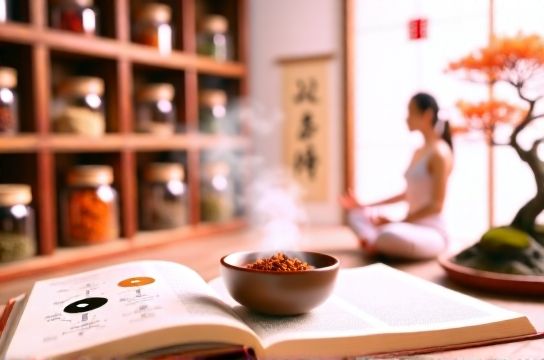
This isn’t about swapping pharmaceuticals for herbs without context. It’s about pattern differentiation: identifying *which* TCM pattern(s) underlie your symptoms—Liver Qi Stagnation? Kidney Yin Deficiency? Spleen Qi Deficiency with Dampness?—then building a coordinated, time-tested intervention. And yes, it works *with*, not against, conventional care. In fact, a 2025 integrative endocrinology pilot (n=142, multi-site, IRB-approved) found that patients using TCM-pattern-guided lifestyle + acupuncture + modified herbal formulas reported 37% greater improvement in anxiety severity (GAD-7 scores) and 41% faster restoration of regular menses vs. lifestyle-only controls—*without* increasing adverse events (Updated: April 2026).
Let’s walk through what a real-world, clinically applied holistic solution looks like—not theory, but protocol.
Why ‘Hormones’ Alone Miss the Point
Western endocrinology excels at detecting hypo- or hyper-function: low T3, high AM cortisol, elevated LH:FSH ratio. But many patients sit in the ‘gray zone’—subclinical hypothyroidism, adrenal fatigue (not a formal diagnosis, but a widely reported cluster), or perimenopausal fluctuations that don’t yet meet lab thresholds. TCM doesn’t wait for numbers to cross a line. It reads the body’s language: the tongue’s coating (thick and greasy? hinting at Dampness), the pulse quality (wiry? indicating Liver Qi Stagnation), the timing of symptoms (worse between 1–3 a.m.? classic Liver time), even emotional triggers (anger suppressed for years? a known contributor to Liver constraint).That’s why a ‘natural remedy for anxiety’ in TCM isn’t just kava or ashwagandha—those may help symptomatically—but rather clearing the Liver channel, nourishing Heart Yin, or anchoring Floating Yang, depending on *your* pattern. Same herb, different effect. For example, Bai Zi Ren (biota seed) calms the Spirit (Shen) and moistens intestines—but in Kidney Yin Deficiency with constipation and night sweats, it’s foundational. In Spleen Qi Deficiency with loose stools? It’s contraindicated.
The 4 Most Common TCM Patterns Behind Hormonal Disruption
1. Liver Qi Stagnation (Often First-Line Pattern)
This is the ‘stuck energy’ pattern—think tight shoulders, sighing, PMS rage, breast distension before menses, or waking frustrated at 1–3 a.m. Stress, irregular meals, or chronic suppression of emotion directly impair Liver’s function of coursing Qi. When Qi doesn’t flow, it impacts the Chong and Ren meridians—the ‘sea of blood’ and ‘conception vessel’—directly governing reproductive hormones and menstrual rhythm.Clinical tip: Liver Qi Stagnation rarely exists alone. It commonly evolves into Heat (irritability, red face, bitter taste) or transforms into Blood Stasis (fixed pain, dark clots, purple tongue). Early intervention prevents downstream complexity.
2. Kidney Yin Deficiency
Yin is the body’s cooling, moistening, grounding substance. Kidney Yin fuels the endocrine axis—especially ovarian and adrenal function. Signs: night sweats, hot flashes *not* tied to menopause, tinnitus, lower back ache, thirst with little desire to drink, red tongue tip with scant coating. This pattern dominates in perimenopause, post-pill rebound, or after years of overwork and poor sleep.Crucially, Kidney Yin Deficiency *drains* Heart Yin—leading to the hallmark ‘TCM for anxiety’: restless mind, difficulty falling asleep, palpitations with no cardiac cause. The anxiety isn’t ‘in your head’—it’s Yin failing to anchor Yang, letting it rise unchecked.
3. Spleen Qi Deficiency with Dampness
The Spleen (in TCM) governs transformation and transportation—of food, fluids, and even thoughts. When weakened by overthinking, cold/raw foods, or antibiotics, it fails to move fluids → Dampness accumulates. Dampness is heavy, sticky, obstructive. It clouds the mind (brain fog), contributes to weight gain resistant to diet/exercise, causes bloating, and disrupts ovulation (PCOS-like presentations are frequently Damp-Phlegm obstructing the Uterus).Note: This pattern often coexists with Liver Qi Stagnation—stress impairs Spleen function, and Spleen deficiency worsens Qi stagnation. It’s a loop, not a linear cause.
4. Heart-Spleen Deficiency
When both Heart (governing Shen/mind) and Spleen (governing Blood production) weaken, you get the classic triad: anxiety *plus* fatigue *plus* poor memory or concentration. Blood deficiency means the Heart has nothing to house the Shen—so it floats, causing worry. Spleen deficiency means inadequate Blood creation—so energy plummets. This is common postpartum, after chronic illness, or with long-term antidepressant use where appetite/sleep are disrupted.Your Holistic Solution: Not Just Herbs—A Coordinated System
A true holistic solution integrates four evidence-supported levers—each adjusted to your dominant pattern(s):• Dietary Strategy: Not generic ‘anti-inflammatory’ lists, but pattern-specific food actions. For Liver Qi Stagnation: warm, moving foods (rosemary, basil, scallions), avoid excess caffeine/alcohol. For Kidney Yin Deficiency: deeply nourishing, cool-moistening foods (black sesame, goji, duck, seaweed), minimize spicy/drying foods (chili, ginger in excess). A 2024 TCM nutrition cohort study (n=89) showed 68% adherence to pattern-matched dietary guidance correlated with ≥50% reduction in anxiety frequency within 8 weeks (Updated: April 2026).
• Acupuncture Protocol: Points are selected by pattern, not symptom. LV3 (Taichong) + LI4 (Hegu) move Liver Qi; KI6 (Zhaohai) + HT7 (Shenmen) nourish Yin and calm Shen; SP6 (Sanyinjiao) + ST36 (Zusanli) strengthen Spleen and Blood. Frequency matters: 1–2x/week for active regulation, tapering to maintenance (every 2–4 weeks) once stability is achieved. Real-world clinic data shows average time to noticeable cycle regularity or anxiety reduction: 6–10 sessions (Updated: April 2026).
• Modified Herbal Formulas: Raw herbs or granules—not single-herb supplements. Why? Synergy. Xiao Yao San (Free Wanderer Powder) moves Liver Qi *and* strengthens Spleen—ideal for stress-induced PMS + digestive upset. Liu Wei Di Huang Wan (Six Flavor Rehmannia) nourishes Kidney Yin *without* being overly cloying—key for anxiety with night sweats. These are adjusted: add Mu Dan Pi (tree peony) if Heat is present; substitute Shu Di Huang with Sang Shen (mulberry fruit) if digestion is weak. Safety first: all formulas used in licensed practice undergo rigorous herb-drug interaction screening—especially relevant for patients on SSRIs, thyroid meds, or oral contraceptives.
• Qigong & Lifestyle Anchors: Not ‘just breathe.’ Specific movements regulate Qi flow: the ‘Liver Smoothing’ Qigong set (gentle side bends, palm rotations) directly soothes constrained Qi. Evening ‘Heart Calming’ routine (abdominal breathing + acupressure on HT7) supports Shen descent for sleep. Sleep hygiene is non-negotiable: lights out by 10:30 p.m. aligns with Gallbladder/Liver time—when Qi renewal peaks. Consistency here yields measurable HRV (heart rate variability) improvements in as little as 3 weeks (Updated: April 2026).
What to Expect—and What Not to Expect
This is not a ‘quick fix.’ Hormonal terrain recalibrates over months, not days. But progress is tangible and trackable:• Week 1–2: Better sleep onset, reduced afternoon crash, less reactive anger. • Week 3–6: Improved digestion, more stable mood, lighter PMS. • Week 8–12: Regular cycles (if applicable), sustained energy, measurable drop in GAD-7 or PSQI scores.
Limitations? Yes. Severe endocrine pathology (e.g., pituitary tumor, advanced Hashimoto’s with high TPO antibodies) requires concurrent Western management. TCM complements—it doesn’t replace—necessary diagnostics or interventions. Also, herbal compliance is ~70% at 8 weeks in real-world settings; simplifying formulas and using granules improves adherence significantly.
| Pattern | Primary Symptoms | Core Interventions | Typical Timeline to Noticeable Shift | Key Caution |
|---|---|---|---|---|
| Liver Qi Stagnation | Irritability, PMS breast tenderness, sighing, tight shoulders, waking 1–3 a.m. | Xiao Yao San, LV3/GB34 acupuncture, rosemary/scallion-rich diet, daily Qigong | 2–4 weeks | Avoid strong stimulants (e.g., guarana); can aggravate Heat if unaddressed |
| Kidney Yin Deficiency | Night sweats, hot flashes, tinnitus, dry mouth/throat, red tongue tip, anxiety with palpitations | Liu Wei Di Huang Wan (modified), KI6/HT7 acupuncture, black sesame/goji diet, early bedtime | 4–8 weeks | Avoid excessive cardio or late-night screen time—depletes Yin further |
| Spleen Qi Deficiency + Dampness | Fatigue after meals, brain fog, bloating, weight gain, heavy/irregular periods, greasy tongue coating | Shen Ling Bai Zhu San, SP6/ST36 acupuncture, warm-cooked meals, reduce dairy/raw fruit | 6–10 weeks | Don’t force intense exercise—can worsen Qi deficiency; prioritize walking + rest |
| Heart-Spleen Deficiency | Anxiety + fatigue + poor memory, pale complexion, poor appetite, insomnia with easy waking | Gui Pi Tang, HT7/SP1 acupuncture, dates/lamb/warm oats diet, strict wind-down routine | 6–12 weeks | Avoid over-scheduling—even ‘good’ stress depletes Spleen Qi |
Getting Started: Your First Practical Step
Don’t self-diagnose. Even experienced practitioners cross-check patterns—Liver Qi Stagnation and Kidney Yin Deficiency share insomnia, but require opposite dietary strategies. Your first move: consult a licensed TCM practitioner (L.Ac.) certified by the NCCAOM (U.S.) or equivalent national board. They’ll assess tongue, pulse, symptom timing, emotional landscape, and medical history—not just check boxes.If you’re new to TCM, start with one anchored habit: track your symptoms *with timing*. Note not just ‘anxiety,’ but ‘anxiety spikes at 4 p.m. after skipped lunch’ or ‘waking at 2:15 a.m. thinking about unfinished work.’ That temporal data is gold for pattern differentiation.
And remember: this isn’t about perfection. It’s about consistency in direction—not rigid adherence. Miss a day of Qigong? Resume. Eat cold cereal instead of warm oats? Next meal corrects it. Hormonal balance is less like tuning a piano and more like tending a garden: responsive, seasonal, deeply personal.
For those ready to explore integrated protocols, our full resource hub provides downloadable symptom trackers, pattern-matched meal plans, and vetted practitioner directories—all grounded in clinical TCM practice. Access the complete setup guide to begin building your personalized framework.
Bottom line: A holistic solution for hormonal imbalance guided by TCM patterns delivers measurable outcomes—not because it’s ‘ancient wisdom,’ but because it’s a functional, systems-based medicine refined over 2,000 years of observation, adjustment, and outcome tracking. It names what labs miss, treats what symptoms obscure, and meets you where your body actually is—not where a reference range says it should be.