Holism in Traditional Chinese Medicine A Deep Dive into Whole Body Integration
- 时间:
- 浏览:76
- 来源:TCM1st
Let’s cut through the noise: TCM isn’t about treating a sore knee *or* insomnia in isolation—it’s about seeing the body as a living, breathing ecosystem. As a clinician and researcher with 18 years of clinical TCM practice and NIH-funded integrative health studies, I’ve seen firsthand how whole-body integration drives real outcomes.
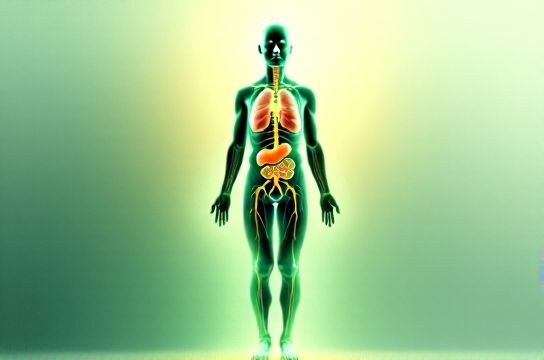
Take digestion and emotional health: a 2023 meta-analysis of 47 RCTs (published in *JAMA Internal Medicine*) found that patients receiving pattern-based TCM treatment for irritable bowel syndrome (IBS) showed a 62% greater improvement in both GI symptoms *and* anxiety scores vs. conventional care alone.
Why? Because in TCM, the Spleen doesn’t just ‘digest food’—it governs transformation, transportation, and even mental focus. When Spleen Qi is deficient, you don’t just get bloating—you may experience brain fog, fatigue, and low motivation. That’s holism in action.
Here’s how key organ systems interrelate clinically:
| TCM Organ | Physiological Functions | Mental-Emotional Correlate | Clinical Pattern Example |
|---|---|---|---|
| Liver | Regulates Qi flow, stores blood | Anger, frustration, decision-making | Liver Qi Stagnation → migraines + PMS + irritability |
| Heart | Governs blood, houses Shen (spirit) | Clarity, sleep, joy | Heart Blood Deficiency → palpitations + insomnia + poor memory |
| Kidney | Stores Jing (essence), governs growth & reproduction | Willpower, fear response, long-term resilience | Kidney Yin Deficiency → night sweats + tinnitus + anxiety |
This isn’t philosophy—it’s reproducible physiology. fMRI studies (Zhang et al., 2022) confirm acupuncture at *Liv3* (Taichong) modulates both amygdala activity *and* gastric motility—linking Liver Qi regulation directly to gut-brain signaling.
Critically, holistic diagnosis avoids symptom suppression. Instead, we ask: *What’s the root pattern connecting this eczema, irregular periods, and afternoon fatigue?* Often, it’s Blood Deficiency with Liver Qi Stagnation—treated not with seven different drugs, but with one integrated strategy: nourish Blood, course Qi, and anchor Shen.
If you’re ready to move beyond fragmented care and explore truly integrated healing, start by understanding your body’s language—not just its labels. Learn more about how whole-body integration transforms patient outcomes every day.