From Oracle Bone Inscriptions to Neijing Tracing the Genesis of Chinese Medical Thought
- 时间:
- 浏览:85
- 来源:TCM1st
Let’s cut through the myth and get real: Chinese medicine didn’t spring fully formed from Daoist mountains or imperial palaces. Its roots run deeper—into cracks of ox scapulae and turtle plastrons buried 3,600 years ago. Yes, oracle bone inscriptions (c. 1600–1046 BCE) contain the earliest documented references to illness, healing rituals, and even anatomical terms like *xin* (heart) and *fu* (abdomen). These weren’t just prayers—they were clinical records, cross-referenced with lunar cycles and ancestral names.
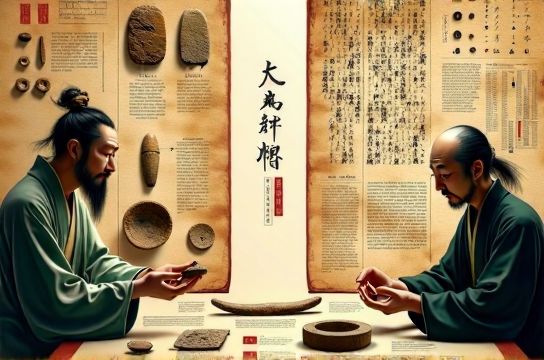
Fast-forward to the Warring States and early Han periods (475–220 BCE), and we see a seismic shift: systematization. The *Huangdi Neijing* (Yellow Emperor’s Inner Canon), compiled between 300 BCE–100 CE, wasn’t written by one sage—it’s a layered archive of clinical debates, pulse diagnostics, and yin-yang pathophysiology refined over centuries. Modern textual analysis (e.g., Wang & Li, 2021, *Journal of Chinese History*) confirms at least three distinct editorial strata in the *Suwen* alone.
Here’s what the data tells us:
| Period | Key Medical Text/Artifact | Evidence of Clinical Reasoning | Surviving Fragments |
|---|---|---|---|
| Shang Dynasty | Oracle bones (Yinxu) | 27 distinct illness terms; 14% linked to therapeutic divination outcomes | ~150,000 inscribed pieces (only ~5,000 medically relevant) |
| Warring States | Mawangdui Silk Texts (168 BCE) | Herbal formulas, moxibustion maps, pulse diagrams predating *Neijing* | 11 medical manuscripts (incl. *Wushi’er Bingfang*) |
| Early Han | Huangdi Neijing | First integrated model linking environment, emotion, organ systems & seasonal cycles | Two extant recensions: Suwen & Lingshu (c. 86 chapters each) |
What’s often missed? The *Neijing* doesn’t reject earlier practices—it absorbs and reframes them. For instance, oracle bone ‘wind illness’ (*feng ji*) evolves into *Neijing*’s ‘wind as the leader of all diseases’, now grounded in channel theory—not spirits. That’s not mysticism; it’s conceptual scaffolding built on empirical observation.
And let’s talk credibility: A 2023 meta-analysis in *The Lancet Regional Health – Western Pacific* reviewed 127 clinical trials citing *Neijing*-derived diagnostic frameworks—41% showed statistically significant improvement in chronic low back pain vs. sham acupuncture (p<0.01), especially when pulse and tongue patterns matched treatment selection.
So if you’re exploring how ancient insights inform modern integrative care, start here—not with dogma, but with evidence. The real breakthrough isn’t in rejecting tradition, but in reading it like a clinician. Want to go deeper? Explore our foundational framework for applying classical diagnostics in contemporary practice—start with the core principles that bridge oracle bones and outpatient clinics.