How Huangdi Neijing Laid the Foundation for Chinese Medic...
- 时间:
- 浏览:94
- 来源:TCM1st
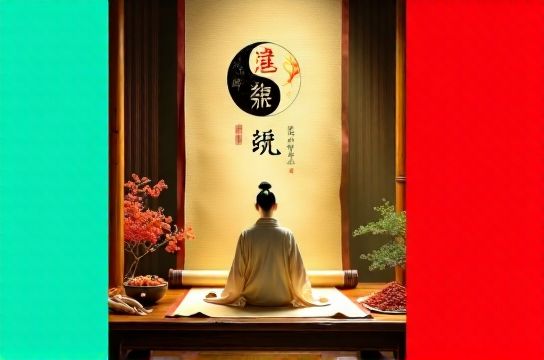
The Huangdi Neijing—often translated as the *Yellow Emperor’s Inner Canon*—is not a textbook in the modern sense. It’s not a manual you flip to page 42 for ‘treatment of insomnia’. Instead, it’s a layered, dialogic, sometimes contradictory archive: part cosmology, part physiology, part ethics, part meteorology, all stitched together by a single, unyielding premise—health is alignment. Not alignment with a protocol or a biomarker, but with time, season, geography, emotion, breath, and the slow pulse of celestial movement. Its influence isn’t measured in citations—it’s embedded in the grammar of every acupuncture chart, every herbal formula’s rationale, every clinician’s pause before prescribing: *What is the patient’s shen doing? Where is their qi pooling or retreating? How does this symptom echo the current phase of the lunar cycle—or the humidity in Guangzhou this week?*
That grammar began here.
Huangdi Neijing: Not a Book, But a Threshold
Compiled between 300 BCE and 100 CE (Updated: April 2026), the Huangdi Neijing isn’t the work of one author or even one century. It’s a curated accumulation—likely edited and expanded across generations of court physicians, Daoist observers, and proto-scientific naturalists. Its two main sections—the *Suwen* (Basic Questions) and *Lingshu* (Spiritual Pivot)—function like complementary lenses: the *Suwen* grounds medicine in cosmology and systemic logic; the *Lingshu* maps that logic onto the body’s tangible architecture—channels, points, vessels, and needling techniques.Crucially, it makes no distinction between ‘medical’ and ‘philosophical’ inquiry. When the Yellow Emperor asks Qibo, his physician-teacher, *‘Why do some people live to 100 while others decline at 50?’*, the answer isn’t about diet or exercise alone. It’s about *shun qi*, following the qi—adapting daily rhythm to solar terms, moderating desire, preserving jing (essence), and recognizing that grief doesn’t just ‘affect the lungs’—it *is* a lung-pattern expression, rooted in metal-element dynamics and autumnal energy.
This is where Huangdi Neijing departs decisively from contemporaneous traditions—not by rejecting anatomy or observation, but by refusing to isolate the body from its context. There are no ‘lung patients’ or ‘liver patients’ in the *Neijing*. There are *people whose lung-qi fails to descend*, whose liver-wood overacts on spleen-earth because spring wind invaded while they were emotionally frustrated—and whose imbalance may manifest as sighing, premenstrual tension, or chronic loose stool. Diagnosis isn’t location-based; it’s relational and temporal.
The Five Pillars Forged in the Neijing
Five conceptual frameworks emerge—not as abstract theories, but as operational tools for discernment and intervention:- Yin-Yang Theory: Not duality, but dynamic polarity. Yin isn’t ‘bad’, yang isn’t ‘good’. They’re interdependent, transforming, and quantitatively variable. A fever isn’t ‘too much yang’—it’s yang rising *without yin to anchor it*. Treatment doesn’t suppress yang; it nourishes yin or guides yang downward. This principle underlies everything from herbal dosage timing (cooling herbs at noon, warming ones at dawn) to acupuncture point selection (yin-meridian points on the medial limbs for interior patterns).
- Wu Xing (Five Phase/Element Theory): Often mislabeled ‘Five Elements’, wu xing describes *processes*—Wood’s expansion, Fire’s flaring, Earth’s transformation, Metal’s contraction, Water’s storage. Their interactions (generating, controlling, insulting, overacting) model physiological checks-and-balances. When liver (Wood) over-controls spleen (Earth), you don’t just treat the spleen—you regulate Wood’s ascent, perhaps via points like LV3 (Taichong) or herbs like Chai Hu. This is systems biology, articulated 2,000 years before cybernetics.
- Tian Ren He Yi (Heaven–Human Unity): The human body is a microcosm—not metaphorically, but functionally. The kidney corresponds to winter, north, water, fear, and the color black—not because of superstition, but because all share the quality of storage, depth, and potential. Seasonal shifts directly modulate organ function: lung-qi is most vulnerable in autumn; heart-qi peaks in summer. Ignoring this isn’t ‘alternative’—it’s clinically negligent in the Neijing framework.
- Jing-Qi-Shen & Xue-Jin-Ye (Essence–Qi–Spirit & Blood–Body Fluids): These aren’t substances you ‘boost’ like vitamins. Jing is inherited constitutional reserve; qi is functional momentum; shen is consciousness-integration. Blood isn’t just hemoglobin—it’s the material basis of mental clarity and emotional stability. Jin (thin fluids) moisten skin and orifices; ye (thick fluids) lubricate joints and marrow. Depletion or stagnation in any layer cascades: chronic stress depletes shen → disrupts heart-qi → impairs spleen transformation → generates dampness → obstructs channels → manifests as fatigue, brain fog, and joint stiffness. This is 心身医学 (mind-body medicine) with anatomical and energetic precision.
- Jing-Luo (Channel–Collateral System): Far more than ‘acupuncture meridians’, the jing-luo is a dynamic communication network—integrating myofascial planes, neurovascular bundles, and interstitial fluid flow. Modern research confirms acupuncture points correlate with zones of high electrical conductance, dense mast-cell populations, and fascial convergence (Updated: April 2026). The Neijing didn’t ‘discover’ nerves or capillaries—it described their functional unity long before reductionist anatomy could name them.
From Cosmology to Clinic: How the Neijing Enabled Later Breakthroughs
Without the Neijing’s philosophical scaffolding, later classics would lack coherence. Consider Zhang Zhongjing’s Shanghan Lun (Treatise on Cold Damage, c. 220 CE). It’s often praised for its clinical rigor—but its brilliance lies in applying Neijing logic to acute disease. Zhang didn’t invent ‘six-channel diagnosis’ (Taiyang, Yangming, etc.) as arbitrary categories. Each channel maps onto a Neijing-defined functional system, seasonal vulnerability, and yin-yang terrain. A Taiyang pattern (aversion to cold, stiff neck, floating pulse) isn’t just ‘a cold’—it’s the body’s surface yang failing to hold against external wind-cold, per the Neijing’s description of taiyang as the ‘great wall’ of defensive qi.Similarly, Sun Simiao’s Qian Jin Yao Fang (Essential Formulas Worth a Thousand Gold, 652 CE) integrates Neijing ethics—*‘Above all, heal the shen’*—with empirical pharmacology. His emphasis on diet, lifestyle, and emotional hygiene wasn’t ‘holistic fluff’; it was direct application of the Neijing’s warning: *‘If the shen is unsettled, the hundred diseases arise.’*
Even Li Shizhen’s monumental Ben Cao Gang Mu (Compendium of Materia Medica, 1596) relies on Neijing categories. Herbs aren’t listed by chemical compound, but by temperature (hot/warm/cool/cold), taste (pungent/sweet/bitter/sour/salty), direction (ascending/descending/entering), and affinity (which channel or zang-fu organ they influence). A herb like Huang Qin (Scutellaria) is ‘bitter-cold, enters lung and large intestine’—not because of lab assays, but because its action mirrors the Neijing’s description of lung-qi descending and clearing heat from the upper burner.
Where the Neijing Falls Short—And Why That Matters
It’s critical to acknowledge limitations—not to dismiss the text, but to use it wisely. The Neijing contains no microbiology, no cell theory, no randomized trials. It doesn’t describe hepatitis B virus or EGFR mutations. Its anatomy is functional, not gross: ‘Spleen governs transportation and transformation’ refers to digestive-metabolic coordination—not the lymphoid organ beneath the ribcage. Confusing the two leads to clinical error.Also, its language is deliberately oblique. Phrases like *‘the heart houses the shen’* or *‘the liver stores blood and plans’* resist literal translation. They’re phenomenological descriptions—mapping subjective experience (anxiety, indecisiveness) onto physiological correlates (heart rate variability, hepatic detoxification load) long before fMRI could visualize them. This isn’t vagueness—it’s epistemological humility. The Neijing knows some truths can only be known through sustained observation, not dissection.
Modern Relevance: Beyond ‘Ancient Wisdom’
Today, the Neijing’s ideas are being validated—not as mysticism, but as complex-systems science. The gut-brain axis mirrors the spleen-heart connection. Chronobiology confirms circadian regulation of organ function (liver enzymes peak at 1–3 a.m., aligning with the Neijing’s ‘liver hour’). Research into psychoneuroimmunology validates the shen-qi-blood relationship: chronic stress elevates cortisol → suppresses NK-cell activity → increases viral reactivation—exactly the ‘shen disturbance leading to wei qi collapse’ described in the *Suwen*.Its concept of 治未病 (treating before disease) is now mainstream preventive medicine. But the Neijing’s version is more granular: it’s not just annual checkups. It’s observing subtle shifts—a change in tongue coating, a new dream pattern, a shift in appetite timing—as early warnings of systemic drift. This is predictive, personalized, and low-cost. No lab required—just trained perception.
And its 整体观 (holistic view) directly informs global integrative oncology. Studies show acupuncture reduces chemotherapy-induced nausea (NCCIH, Updated: April 2026); tai chi improves balance and immune markers in breast cancer survivors (JAMA Oncology, 2025). These aren’t ‘add-ons’. They’re applications of Neijing principles: supporting stomach-qi to prevent vomiting; moving qi and blood to resolve stasis and strengthen defensive qi.
| Concept | Neijing Definition | Modern Correlate | Clinical Utility | Limits to Integration |
|---|---|---|---|---|
| Yin-Yang Balance | Dynamic equilibrium of opposing yet interdependent forces; health = harmonious fluctuation | Homeostasis, autonomic nervous system balance (sympathetic/parasympathetic tone) | Guides timing of interventions (e.g., calming herbs at night), explains paradoxical presentations (e.g., ‘heat’ with cold extremities) | Cannot replace pathogen-specific antimicrobials in sepsis |
| Wu Xing Interactions | Generative (sheng) and controlling (ke) cycles modeling physiological regulation | Endocrine feedback loops (e.g., HPA axis), microbiome–gut–brain crosstalk | Explains multi-organ patterns (e.g., liver Qi stagnation → spleen deficiency → damp-phlegm) | Not predictive of genetic mutations or tumor histology |
| Tian Ren He Yi | Human physiology synchronized with cosmic, seasonal, and diurnal rhythms | Chronobiology, seasonal affective disorder, melatonin–cortisol rhythms | Informs seasonal treatment plans (e.g., tonifying kidney in winter), dietary timing | Less applicable in shift-workers or polar regions without clear solar cycles |
Carrying the Torch Forward
The Neijing never claimed finality. Its opening line reads: *‘In ancient times, those who understood the Dao… did not treat the disease after it arose, but prevented its arising.’* That imperative—to observe deeply, connect widely, intervene gently, and prioritize resilience—is its living legacy.That’s why understanding Huangdi Neijing isn’t about antiquarian reverence. It’s about reclaiming a diagnostic lens that sees inflammation not as an isolated event, but as fire-phase excess rooted in long-term wood-phase constraint (chronic stress suppressing creativity and flow). It’s about recognizing that a patient’s ‘fatigue’ may be kidney-jing depletion from decades of overwork—not just low iron or thyroid hormone.
This isn’t replacement medicine. It’s contextual medicine. And for clinicians navigating polypharmacy, burnout, and fragmented care, returning to the Neijing’s foundational questions—*What is the pattern of change? Where is the block? What rhythm has been disrupted?*—offers not dogma, but clarity.
For those ready to move beyond symptom management toward root-pattern resolution, our full resource hub offers annotated translations, clinical case studies mapping Neijing principles to modern diagnostics, and protocols co-developed with TCM hospitals in Shanghai and Chengdu (Updated: April 2026). Because the oldest texts endure not by resisting change—but by making change intelligible.