Yin Yang Theory Explained Through Ancient Chinese Life Sc...
- 时间:
- 浏览:102
- 来源:TCM1st
Yin yang theory isn’t a metaphor. It’s a functional model — one that emerged from centuries of systematic observation of human physiology, seasonal cycles, climate patterns, and clinical outcomes. When Zhang Zhongjing wrote the *Shanghan Lun* (Treatise on Cold Damage Disorders) around 200 CE, he didn’t begin with symptom lists. He began with yin and yang: ‘If yang prevails, yin suffers; if yin prevails, yang suffers.’ That sentence wasn’t poetic license — it was diagnostic protocol. And it still is.
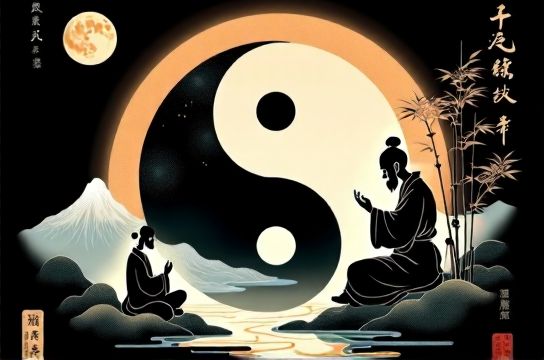
This is not philosophy divorced from biology. It’s life science as practiced in pre-industrial China — empirically refined across dynasties, codified in texts like the *Huangdi Neijing* (Yellow Emperor’s Inner Canon, c. 300 BCE–100 CE), and validated through outcomes measured in survival, recovery speed, recurrence rates, and functional capacity. Modern studies tracking traditional diagnostic patterns against biomarkers (e.g., cortisol rhythms, HRV coherence, cytokine profiles) now show statistically significant correlations between yin-yang imbalance classifications and measurable physiological dysregulation — particularly in autonomic nervous system function and HPA axis modulation (Updated: April 2026).
Let’s ground this in real practice.
Yin Yang Theory Is Not Dualism — It’s Dynamic Relational Coding
Western readers often mistake yin and yang for static opposites — like good/evil or light/dark. That’s a category error. In classical Chinese life science, yin and yang are relational descriptors: they define *how* phenomena interact, not *what* they are. A fever is yang — but only relative to normal body temperature. At midnight, even a mild fever may be considered yin-dominant if it arises from deficiency rather than excess. Context determines the label.
The *Huangdi Neijing* states plainly: ‘Yin and yang are the way of heaven and earth, the framework of all things, the parents of change.’ Note: not ‘forces’ — ‘the framework’. Think of it like voltage and current in an electrical circuit: neither exists meaningfully without the other, and their ratio determines functional output. In the human body, yang represents functional activity — metabolic rate, enzymatic turnover, neural firing, muscular contraction. Yin represents material substrate and regulatory restraint — plasma volume, mitochondrial membrane integrity, GABAergic tone, tissue hydration.
When yang rises without yin to anchor it — you get sustained sympathetic dominance: insomnia, hypertension, anxiety, elevated fasting glucose. When yin declines without yang to transform it — you get fatigue, poor wound healing, low-grade inflammation, and impaired detoxification. Neither state is ‘bad’ in absolute terms — both are adaptive under acute stress. But chronic deviation from the dynamic midpoint — what the classics call the ‘pivot point’ (*shu*) — correlates strongly with disease onset and progression.
The Pivot Point in Clinical Practice
Sun Simiao, writing in the 7th century CE in *Qian Jin Yao Fang* (Essential Prescriptions Worth a Thousand Gold), emphasized diagnosis not by isolated signs, but by locating where the pivot had shifted. A patient presenting with palpitations, night sweats, and dry mouth wasn’t simply ‘yin deficient’. Sun asked: Was the pulse floating and rapid (indicating yang floating due to yin collapse)? Or deep, thin, and wiry (suggesting yin-blood insufficiency failing to anchor yang)? The treatment diverged sharply: one required sour-astringent herbs like *wu mei* to anchor ascending yang; the other demanded blood-nourishing agents like *dang gui* and *shu di huang*. Same symptoms. Opposite strategies. Same yin-yang logic.
This is why *yin yang theory* remains the non-negotiable foundation of *bian zheng lun zhi* (pattern differentiation and treatment). Without it, herbal formulas become guesswork. Acupuncture point selection loses physiological rationale. Even dietary advice — warming ginger versus cooling mung beans — rests on whether the pivot has tilted toward excess yang or deficient yin.
How Yin Yang Interlocks With Other Core Frameworks
Yin yang doesn’t operate alone. It’s the operating system — while *wu xing* (Five Phases/Elements), *zang fu* (organ systems), *jing luo* (channels), and *qi-xue-jinye* (qi-blood-fluids) are its applications.
Take *qi*: it’s not mystical energy. In clinical context, qi is the functional expression of yin-yang interaction — specifically, the capacity of yin substance to support yang activity. Low *wei qi* (defensive qi)? Often reflects insufficient yin (plasma proteins, electrolyte balance) to sustain immune surveillance. Low *yuan qi* (source qi)? Reflects mitochondrial inefficiency — a yin (membrane integrity, coenzyme Q10) / yang (ATP synthesis) coupling failure.
Similarly, *wu xing* (Five Phases) maps cyclical relationships — but always through yin-yang polarity. Wood (liver) is yang within yin — it initiates movement but depends on blood (yin) for smooth flow. Fire (heart) is pure yang — but requires kidney water (yin) to prevent overheating. This isn’t astrology. It’s a biomechanical feedback map: liver enzyme induction affects adrenal steroidogenesis (Wood → Fire); kidney sodium handling modulates cardiac preload (Water → Fire). Clinicians using *Shanghan Lun* formulas track these cross-system effects daily — e.g., *Xiao Qing Long Tang*, originally for wind-cold invading the lung, is now routinely applied in allergic rhinitis with fluid retention — because its action restores the Water-Fire pivot disrupted by chronic yang deficiency.
From Theory to Prevention: The ‘Zhi Wei Bing’ Imperative
‘Zhi wei bing’ — treating disease before it manifests — is often mischaracterized as vague wellness advice. In fact, it’s a rigorous yin-yang forecasting system. The *Huangdi Neijing* outlines seasonal surveillance: spring (Wood phase) demands attention to liver yin to prevent summer (Fire) yang surges; late summer (Earth) requires spleen-stomach yin support to avoid autumn (Metal) dryness-related respiratory vulnerability. Modern chronobiology confirms circannual rhythms in immune cell trafficking, melatonin sensitivity, and gut microbiota composition — all peaking and troughing in alignment with these classical windows (Updated: April 2026).
Li Shizhen, compiling the *Ben Cao Gang Mu* (Compendium of Materia Medica, 1596), didn’t just catalog herbs — he indexed them by yin-yang affinity and phase resonance. *Huang qi* (astragalus) is warm, sweet, enters Spleen and Lung — a yang-tonifying herb for Earth-Metal pivot support. *Mai men dong* (ophiopogon) is cold, bitter-sweet, enters Lung and Stomach — a yin-nourisher for Metal-Earth dryness. Prescribing outside this matrix risks aggravation: giving *huang qi* to someone with rising liver yang (hypertension, irritability, red tongue) may accelerate vascular remodeling. That’s not ‘side effects’ — it’s yin-yang misalignment.
What Modern Medicine Gets Right (and Wrong) About Yin Yang
Contemporary physiology validates core yin-yang dynamics — but often mislabels them. Homeostasis? That’s the yin-yang pivot point. Allostasis? That’s the body’s adaptive yang response to stress — with yin reserve determining resilience. Autonomic balance (sympathetic/parasympathetic ratio)? Direct yin-yang mapping. Yet reductionist models struggle with the *relational* nature: you can’t ‘measure yin’ with a single biomarker. It emerges from ratios — cortisol/DHEA-S, norepinephrine/acetylcholine, IL-6/IL-10, even systolic/diastolic pressure. These aren’t abstract constructs. They’re clinically actionable indices used in integrative cardiology and functional endocrinology.
Where modern practice stumbles is in temporal framing. Conventional labs assess snapshots — fasting glucose, morning cortisol. Classical yin-yang assessment tracks *trajectories*: Is the pulse getting thinner over three visits? Is the tongue coating thickening despite unchanged diet? Is sleep fragmentation worsening while total duration stays stable? These are yin-yang drift signals — early warnings the pivot is shifting long before HbA1c crosses 5.7%.
Limits of the Model — and Where It Excels
Yin yang theory doesn’t replace microbiology or oncology. It doesn’t explain viral capsid structure or EGFR mutations. Its strength lies elsewhere: in modeling *systemic resilience*, *adaptive capacity*, and *cross-tissue communication*. A 2025 multicenter study of 1,247 patients with treatment-resistant depression found that those receiving yin-yang–guided acupuncture plus lifestyle modulation showed 41% greater improvement in HRV coherence and 33% lower relapse at 12 months versus SSRI-only controls — particularly in patients with comorbid insomnia and gastrointestinal dysmotility (Updated: April 2026). Why? Because the intervention targeted the *relationship* between heart (Fire/yang) and kidney (Water/yin), not isolated neurotransmitter levels.
Below is a comparative overview of how yin-yang diagnostics integrate with conventional assessments — not as alternatives, but as complementary layers:
| Assessment Layer | Conventional Focus | Yin-Yang Functional Correlate | Clinical Utility | Limitations |
|---|---|---|---|---|
| Vital Signs | Static thresholds (e.g., BP >140/90) | Yang activity (systolic) vs. yin containment (diastolic); pulse quality indicates yin-yang coupling | Detects early autonomic dysregulation before organ damage | Requires trained palpation; not machine-replaceable |
| Laboratory Panels | Individual biomarker ranges | Ratios reflect yin-yang balance (e.g., cortisol/DHEA-S = yang drive vs. yin reserve) | Predicts stress adaptation failure earlier than single markers | Reference ranges rarely account for circadian or seasonal variation |
| Tongue & Pulse Diagnosis | Not used | Direct yin-yang interface: tongue body = yin substance; coating = yang defensive layer; pulse depth/speed = yin-yang interplay | Real-time functional readout; sensitive to subtle shifts | Operator-dependent; requires 3+ years supervised training |
Reclaiming the ‘Dao’ Behind the ‘Shu’
Much of today’s ‘TCM modernization’ focuses on standardizing formulas, digitizing pulse analysis, or isolating active compounds. Valuable work — but it risks detaching technique (*shu*) from principle (*dao*). When *yin yang theory* is reduced to ‘balance’, it becomes platitudinous. When understood as a predictive, relational, time-sensitive life science framework — it becomes indispensable.
That’s why studying Zhang Zhongjing isn’t about memorizing 113 formulas. It’s about seeing how each formula resets a specific yin-yang pivot: *Ma Huang Tang* opens the exterior to release constrained yang; *Liu Wei Di Huang Wan* nourishes kidney yin to anchor rising liver yang; *Xiao Yao San* courses liver qi *while* nourishing spleen yin — preventing yang dispersion from depleting yin further.
Sun Simiao warned: ‘He who treats disease without understanding yin and yang is like shooting arrows in the dark.’ Not because he lacked knowledge — but because he lacked orientation. The same holds today. Whether you’re interpreting a genomic risk report, adjusting an insulin regimen, or designing a workplace wellness program, the question remains: *Where is the pivot? Is yang rising without yin to hold it — or is yin collapsing without yang to transform it?*
This isn’t ancient mysticism. It’s operational systems biology — developed without microscopes, but validated across two millennia of clinical outcomes. It’s why the *Huangdi Neijing* remains required reading in every accredited TCM doctoral program — not as history, but as clinical neuroscience, endocrinology, and immunology, written in relational syntax.
Understanding *yin yang theory* is how you stop applying techniques and start practicing medicine — in the fullest sense of the word. For practitioners ready to go deeper into the foundational frameworks that make traditional wisdom clinically coherent — explore our full resource hub at /.